TL;DR
The small rise in long-term U.S. Treasury yields is not a sign of a bond market collapse, but the huge national debt and unwise policies still warrant caution.
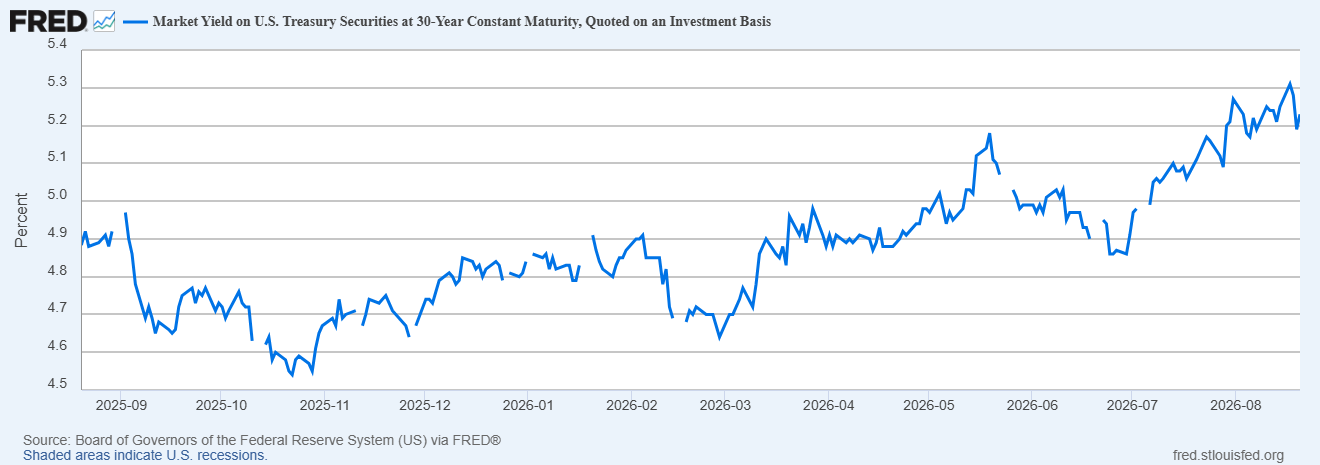
A recent blip in the 30-year Treasury yield had people crying that the U.S. is going bankrupt. Hold on, don't rush to conclusions — the rise is actually quite small, and most of it happened years ago.
What the market fears
A rise in long-term rates means bond prices fell, so fewer people want to buy them. That could signal fear of inflation, or fear that the U.S. government won't pay its debts. The investors doing the worrying are called 'bond vigilantes', and they're scared by high national debt and reckless government spending.
The Trump administration, seeing rates rise, jumped in to buy long-term bonds, pushing rates down for exactly one day before they bounced back. The market isn't really panicking.
How much did rates actually rise?
Looking at the last decade, long-term rates jumped sharply in 2022 and 2023. This year's rise is only a few tenths of a percent — small potatoes by comparison. A heavily indebted government would indeed have a headache if rates stayed at this level, but evidence of a bond market collapse is nowhere near enough.
So the U.S. debt problem is worth worrying about, but this little wiggle in rates should only make you a tiny bit more worried, not panic-level.
Curated from high-quality sources, with concise summaries and key takeaways.

