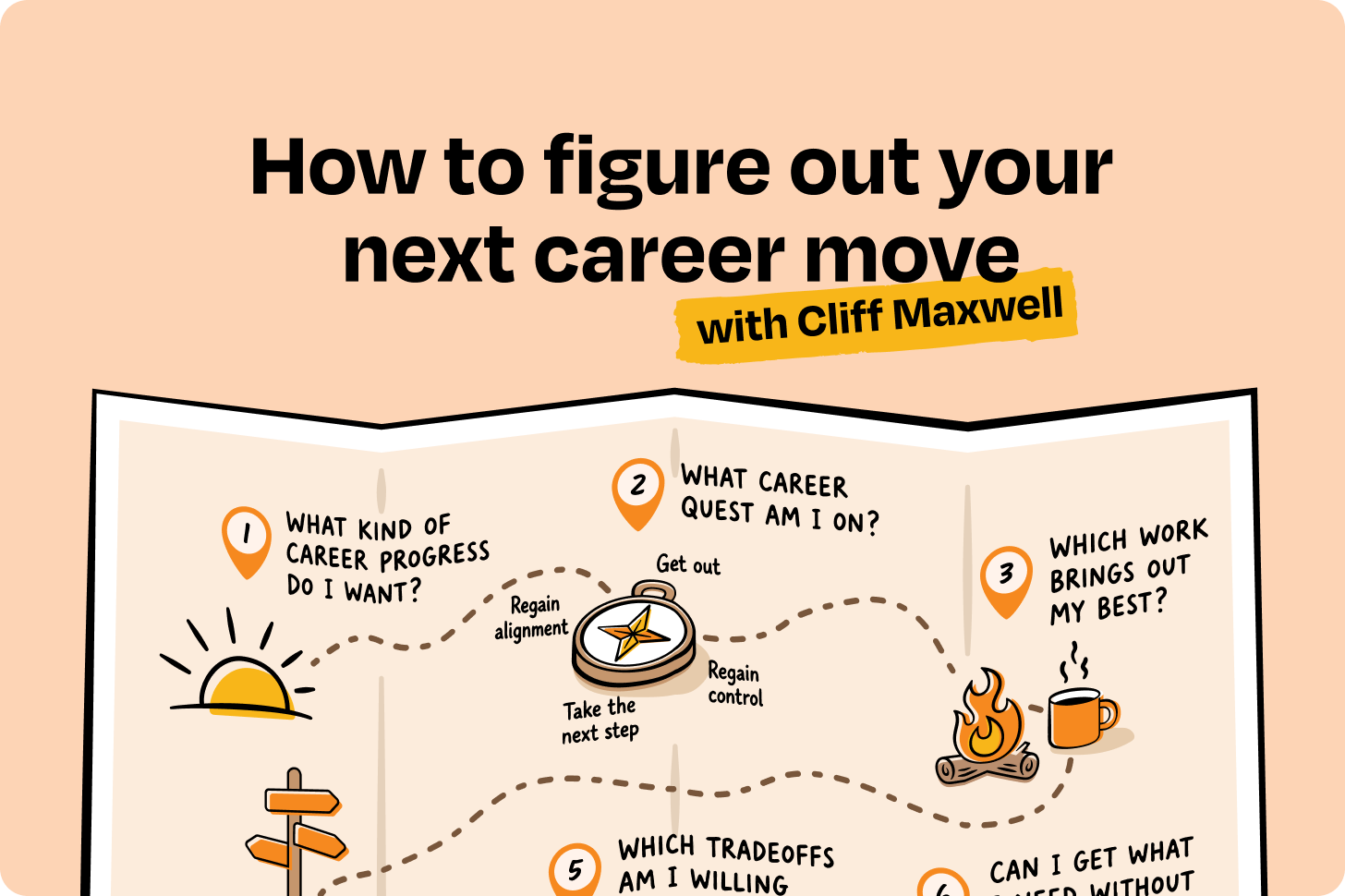
TL;DR
Facing AI's uncertainty, instead of climbing the traditional career ladder, define your own 'progress' and find a path that truly fits you.
AI is making the tech world both exciting and unsettling. The World Economic Forum predicts that by 2030, 39% of skills will change, 90 million jobs will be displaced, and 170 million new ones will appear. Job boundaries are blurring, and the traditional ladder is becoming obsolete.
The author, teaming up with Cliff Maxwell, co-founder of career navigation platform Vocation, offers a systematic approach based on over 1,000 interviews to help you find your next step.
1. What kind of 'progress' do you want?
Most people think of careers in terms of 'advancement': start junior, get promoted, climb the imaginary ladder. But in the AI era, roles and titles keep shifting, and this ladder is increasingly rickety.
Instead, 'progress' is personal and contextual. It might mean more autonomy, better balance, or solving your most pressing life problem.
Try this exercise: write down everything pushing you away from your current job, and what you want your next chapter to give you. Circle the two or three most emotionally charged items from each list—their combination forms your career quest.
2. What career quest are you on?
People often act on surface emotions—like frustration with a boss—only to land in a new job with the same problems. The author identifies four deep motives behind change:
'Get out' of an intolerable situation; 'Regain control' of your time or workload; 'Regain alignment' between your work and your strengths and values; 'Take the next step' toward a new challenge.
Complete: 'My next move most importantly needs to ______.' Your answer helps you identify the dominant quest and avoid a wrong decision.
3. What brings out your best?
Most people know their skills better than the conditions they need to do their best work. They take a shiny title and end up miserable.
Build an 'energy profile': review the past month's calendar and list which activities energize you and which drain you. Repeat for previous jobs. Look for themes. You'll see your career story written in the language of energy.
Curated from high-quality sources, with concise summaries and key takeaways.

