TL;DR
Major volcanic eruptions have repeatedly reshaped human history by cooling the climate, which in turn triggered famines, plagues and even the fall of empires.
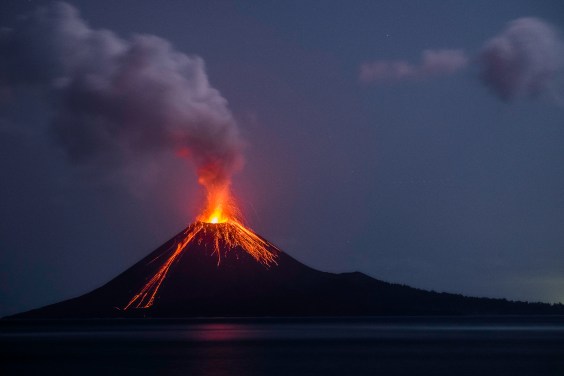
In 1883, Krakatau in Indonesia erupted violently, triggering a tsunami that killed 36,000 people. Thanks to the telegraph, the world witnessed the disaster in near real-time for the first time. Afterward, people noticed that volcanic ash high in the atmosphere cooled the globe and produced spectacular sunsets.
How do eruptions affect history? The key is sulfur. Eruptions inject sulfur into the upper atmosphere, where it forms tiny particles that act like mirrors, reflecting sunlight and cooling Earth. When the climate cools, crops fail, leading to famine, disease, and social unrest.
Scientists use polar ice cores and tree rings to find fingerprints of ancient eruptions. For instance, in 536 CE, the sky was dark for 18 months, harvests failed, and a great plague soon followed. Although the volcano remains unidentified, sulfur in ice cores points to a major eruption.
Then came the Samalas eruption in 1257, considered the biggest sulfur producer in millennia. It cooled the Northern Hemisphere for three years, causing famine in England and damaging rice crops in Japan. Some scholars suspect the resulting climate shift fueled a plague that hastened the fall of the Mongol Empire.
A mysterious eruption in 1345 cooled Europe for three years, ruining harvests. Europeans imported grain from the east, and rats aboard the ships brought the Black Death, which killed nearly half of Europe's population. In 1783, Iceland's Laki eruption killed a fifth of Iceland's people through toxic fog and famine.
The 1815 Tambora eruption made 1816 the 'year without a summer.' Crop failures caused famine across Europe, prompting mass emigration to America. But some port cities thrived by importing grain, showing that trade networks can boost resilience.
Scientists study these historical events to remind us that the next big eruption is inevitable. With climate change already stressing societies, being prepared is more important than ever.
Curated from high-quality sources, with concise summaries and key takeaways.

