TL;DR
Using a new technique, scientists found that Mars's southern mantle is 400–750°F hotter than its north, offering a clue to the planet's mysterious two-faced geography.
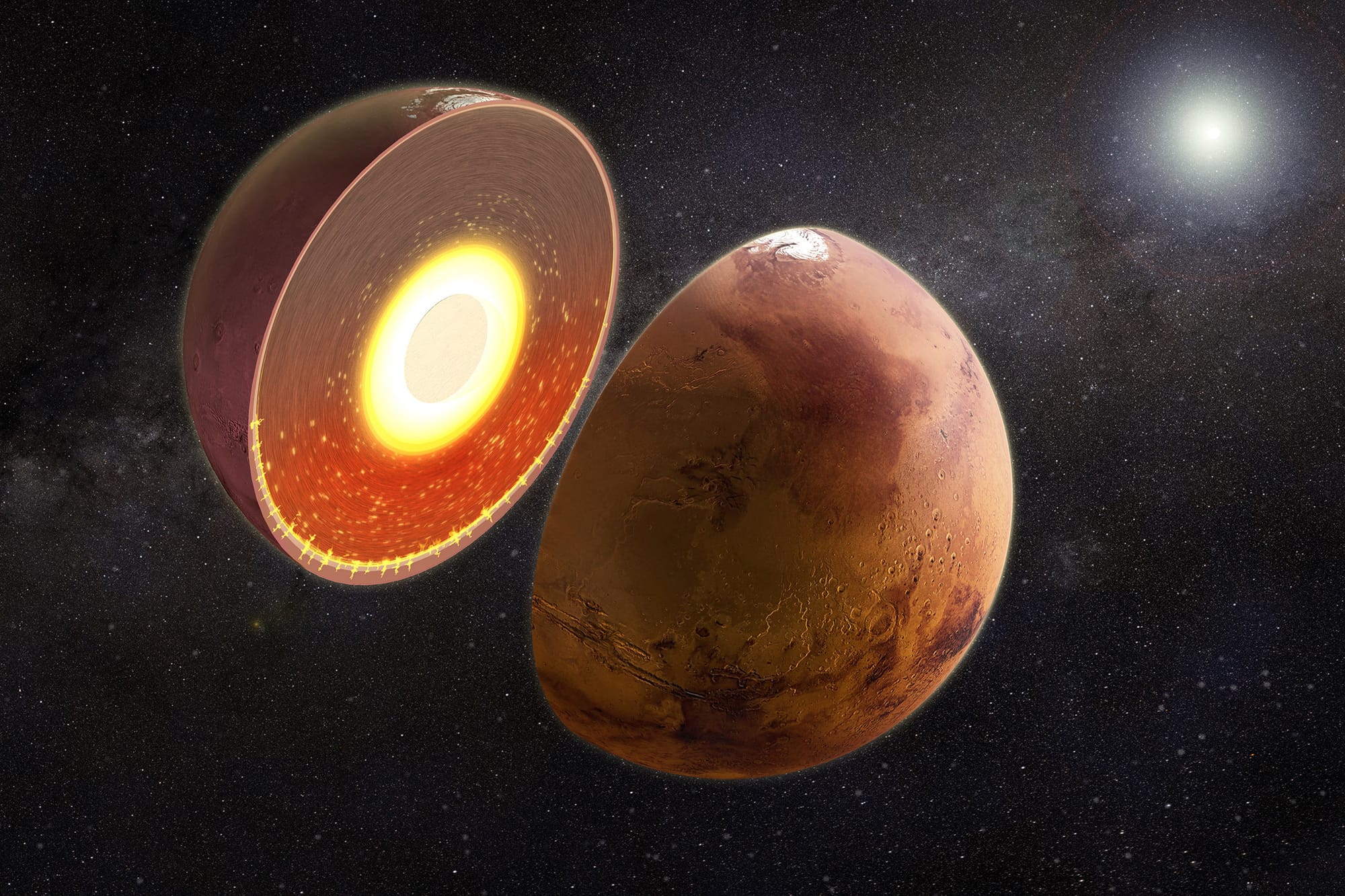
A new study has found a giant thermal anomaly deep under Mars: the southern mantle is 400 to 750°F hotter than the northern one. That could explain the long-standing mystery of the 'Martian dichotomy.'
Mars's split personality
Mars's northern half is mostly lowlands that may once have held an ocean; the southern half is highlands miles higher on average. This stark difference has puzzled scientists for decades.
Some thought it came from an ancient impact; others suspected internal activity. Now researchers have a new clue.
A CT scan for Mars
The team used a novel approach called tidal tomography, analyzing 16 years of tracking data to measure tiny wobbles in Mars's orbit.
The results showed the interior is also split: the southern mantle is clearly hotter, mirroring the surface difference.
Big implications
The finding is striking, but it doesn't fully explain the dichotomy. The anomaly could be due to convection in the mantle, or it could be insulation under the highlands.
More importantly, this is the first time tidal tomography has been used on Mars. It could help probe other planets' interiors and assess habitability.
Curated from high-quality sources, with concise summaries and key takeaways.

