TL;DR
The brain is not a single organ but two separately originated ones fused together: one runs breathing and heartbeat, the other runs memory and poetry.
Textbooks call the brain one organ. A Dutch embryologist named Peter Nieuwkoop proposed in the 1950s that the whole brain descends from a single ancestral cell, and that idea ruled neuroscience for decades. A team at Stanford looked at mouse embryos and found otherwise.
The split happens the moment it puts on its brain hat
They watched a seven-and-a-half-day-old mouse embryo — just a U-shaped clump of cells with no visible head or tail. Two genes, Otx2 and Gbx2, lit up in two different groups of cells: one destined to become the forebrain and midbrain, the other the hindbrain.
In other words, the moment a cell decides to be brain, it has already picked a lane. There is no general-purpose brain cell that divides the work later; from the start there are two crowds.
Two Lego bricks pushed together
As the author puts it, if scientists had studied jellyfish first, the conclusion might have arrived years earlier. A jellyfish has no single brain. It has two physically separate nervous systems at opposite ends of the body, and nobody would call those one thing.
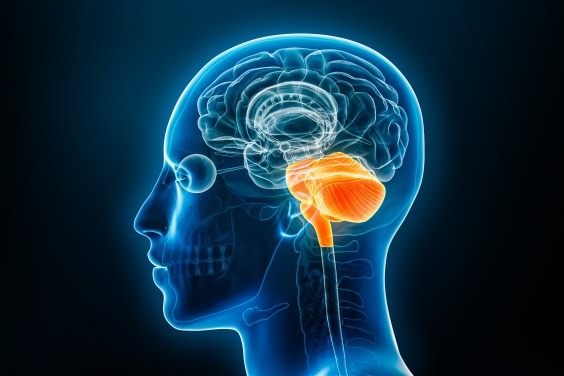
It is just that mice and humans came first, and inside those skulls sits one big squishy grey mass. Yet the team found both sets of progenitor cells in monkeys, humans, chickens, zebrafish and acorn worms — including acorn worms, which split off more than 500 million years ago. What evolution did was take the existing bricks and shove the two pieces together.
The headless rooster and Ozempic
In 1940s America a farmer beheaded a rooster named Mike. He did not cut cleanly, the hindbrain survived, and the bird lived another eighteen months. Eating, sleeping, heartbeat and breathing all sit in the hindbrain, which is why it could.
Weight-loss drugs work through the same door. People spent decades trying to curb appetite via the hypothalamus in the forebrain, and it never worked. A recent experiment destroyed the hindbrain neurons in mice that bind Ozempic, and the drug stopped working at once. Hunger, like breathing, is ancient, and the hindbrain runs it.
The hindbrain also holds the motor neurons needed for speech and swallowing. Spinal muscular atrophy, the number one genetic killer of infants, often kills because patients cannot swallow and choke. Hindbrain cells could not be grown in a dish before; now that the concealed side entrance is known, they can be made for the first time.
In one line: the brain you thought was one piece is two parts from different eras welded together.
Curated from high-quality sources, with concise summaries and key takeaways.

