TL;DR
The animals that live alongside us in cities are delivering wild viruses to our doorstep, and the mass death of Chile's sea lions was an early warning.
Scientists call them synanthropes — literally 'together with man.' Not pets, not livestock, but pigeons, sparrows, gulls and bedbugs: neighbours that have long since put down roots in cities, live off us, and cannot be got rid of.
Chile's sea lions are one of them
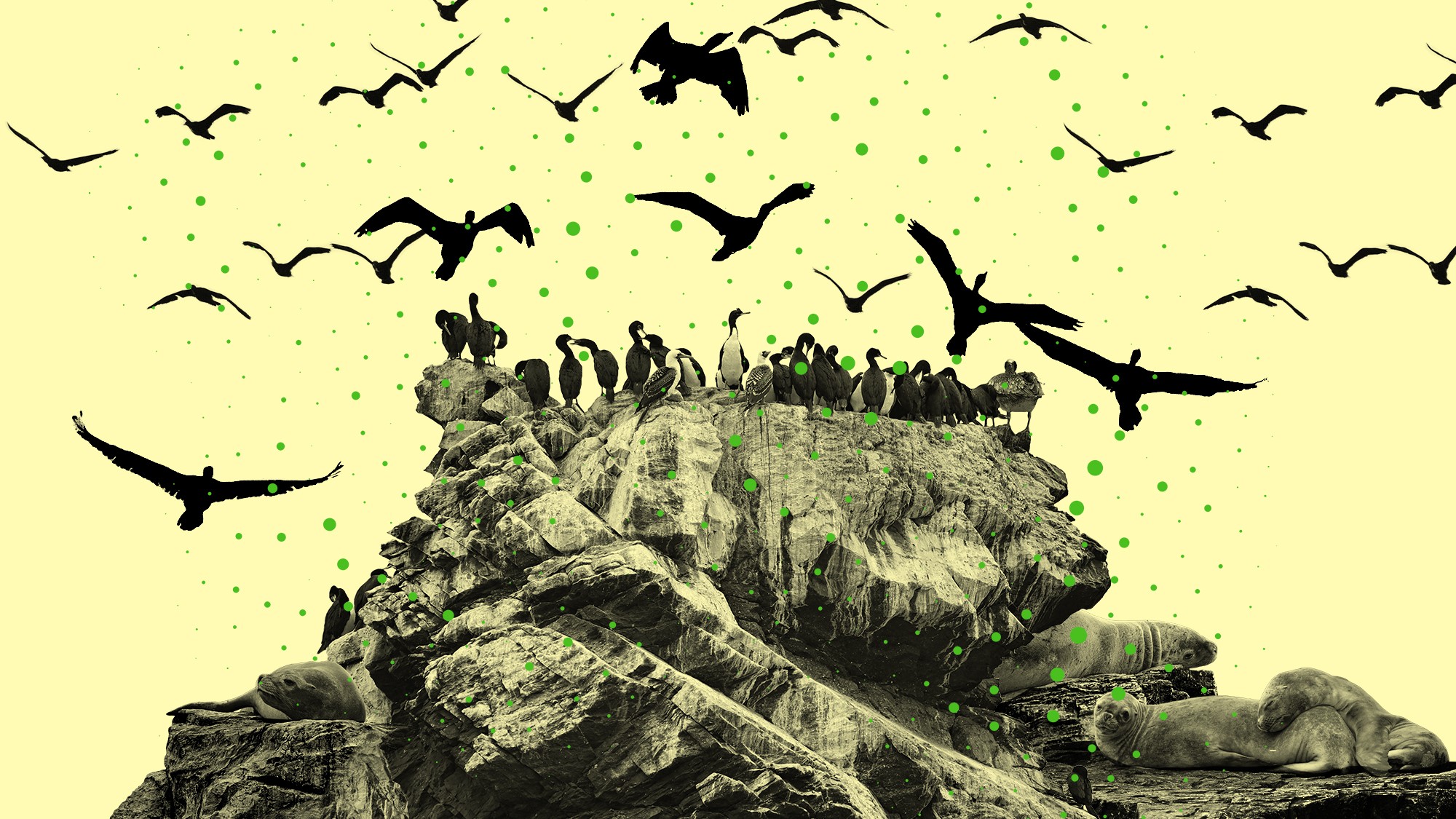
Chile's coastline runs 4,000 miles and holds about 130,000 South American sea lions, some weighing as much as 660 pounds. They loiter near fish plants waiting for scraps, are used to people, and usually will not attack — though if you get close, they will bite.
For a decade the virologist Victor Neira has been hunting new viruses in wild birds and marine mammals. His logic is simple: find it in animals first, and humans get time to stop it.
In December 2022 he found H5N1 in blood samples from migratory birds. It is a flu that kills birds. He braced for an avian outbreak.
It was not only birds
In January 2023 seabirds began washing up dead. That same month, the first cases appeared in sea-lion colonies. Monthly strandings had never passed 100; January hit 250, doubled a month later, and by June exceeded 4,500.
Within six months, somewhere between 10 and 25 percent of Chile's sea lions had died. Carcasses piled up on the shore and drew flies; the government eventually built halls to store the remains. The virus had learned to kill mammals, not just birds.
More epidemics have been caused by new viruses in the past two decades than in all of the 20th century.
One step from us
H5N1 is still moving through animals worldwide. More than 1,000 US dairy herds have tested positive; since 2024 there have been 71 human cases and two deaths, with no evidence of human-to-human spread.
But a 2024 Scripps Research study found the variant in US cattle is a single amino-acid mutation away from efficiently infecting people. Luck does not last forever.
In one line: wildlife moving into cities is not scenery. It is the virus's path to us getting shorter.
Why it matters
As cities and wildlife habitat overlap, the risk structure changes: a virus no longer needs to jump from a remote jungle into a metropolis, just from a sea lion to the fish plant door. Watching sea lions and migratory birds is really buying humanity insurance in advance.
Curated from high-quality sources, with concise summaries and key takeaways.

