
Daily Takes
All
10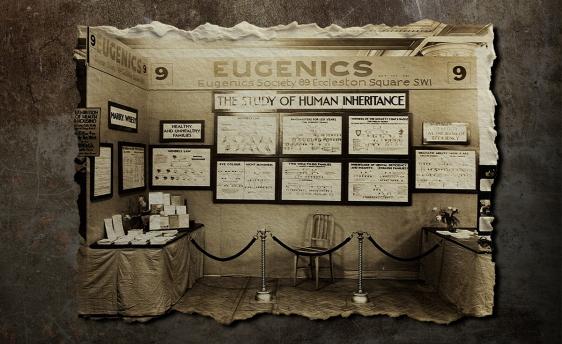
The Return of a Discredited Pseudoscience
Eugenics, though scientifically discredited, is making a comeback under the guise of politics and technology, threatening social fairness.
Eugenics, a pseudoscience that was once touted as 'science' a century ago, has quietly made a comeback. It believes that humans can select 'good genes' to make humanity 'better' in the same way that animals are bred.
But science has long proven that this idea is completely untenable. Unfortunately, it has now resurfaced in a new guise from the political and tech circles.
1. What is eugenics?
In the 19th century, Darwin proposed the theory of evolution, which says that species are shaped by natural selection. His cousin Galton, however, twisted the idea: if farmers could improve livestock through breeding, why not do the same with humans?
Thus 'eugenics' was born, meaning 'well-born'. It claimed that some people are inherently 'superior' and others 'inferior', and that the 'superior' should reproduce more while the 'inferior' should be restricted.
This theory quickly became entangled with racism. Nazi Germany took it to the extreme, killing millions of Jews, disabled people, and others deemed 'undesirable'.
2. Old tune, new spin: genetic determinism
Today, eugenics is making a comeback with the same old tune of 'genes determine everything'.
Former US President Trump spoke about terrorist attacks, saying the perpetrators had 'bad genes'; Health Secretary Kennedy said measles specifically harms people with 'poor physique'; tech mogul Elon Musk advocates for 'high-status men' to have more children and even wants to contribute sperm for colonizing Mars.
Behind these statements is 'genetic determinism': the belief that intelligence, morality, and even social status are predetermined by heredity. But scientific research has long shown that IQ is the result of multiple genes plus environment, the genetic differences between races are minimal, and there is no such thing as a 'superior gene'.
3. New technology, old tricks
The new guise of eugenics is the latest reproductive technology.
An ad appeared in the New York subway: 'Have the best baby', claiming to screen embryos for eye color, hair color, and even IQ. The company, Nucleus Genomics, already has thousands of people on its waiting list.
Testing embryo genes to select the 'perfect baby' may sound like personal freedom, but it is fraught with problems: who has the right to choose? If the rich can select and the poor cannot, will the wealth gap widen?
More frighteningly, this practice of 'selecting people' is essentially the same as the eugenics of a century ago, which forced sterilization and discriminated against 'inferior' populations.
How Thailand resisted colonization
Thailand preserved its independence during the colonial era by showcasing its civilization, practicing flexible diplomacy, and modernizing proactively.
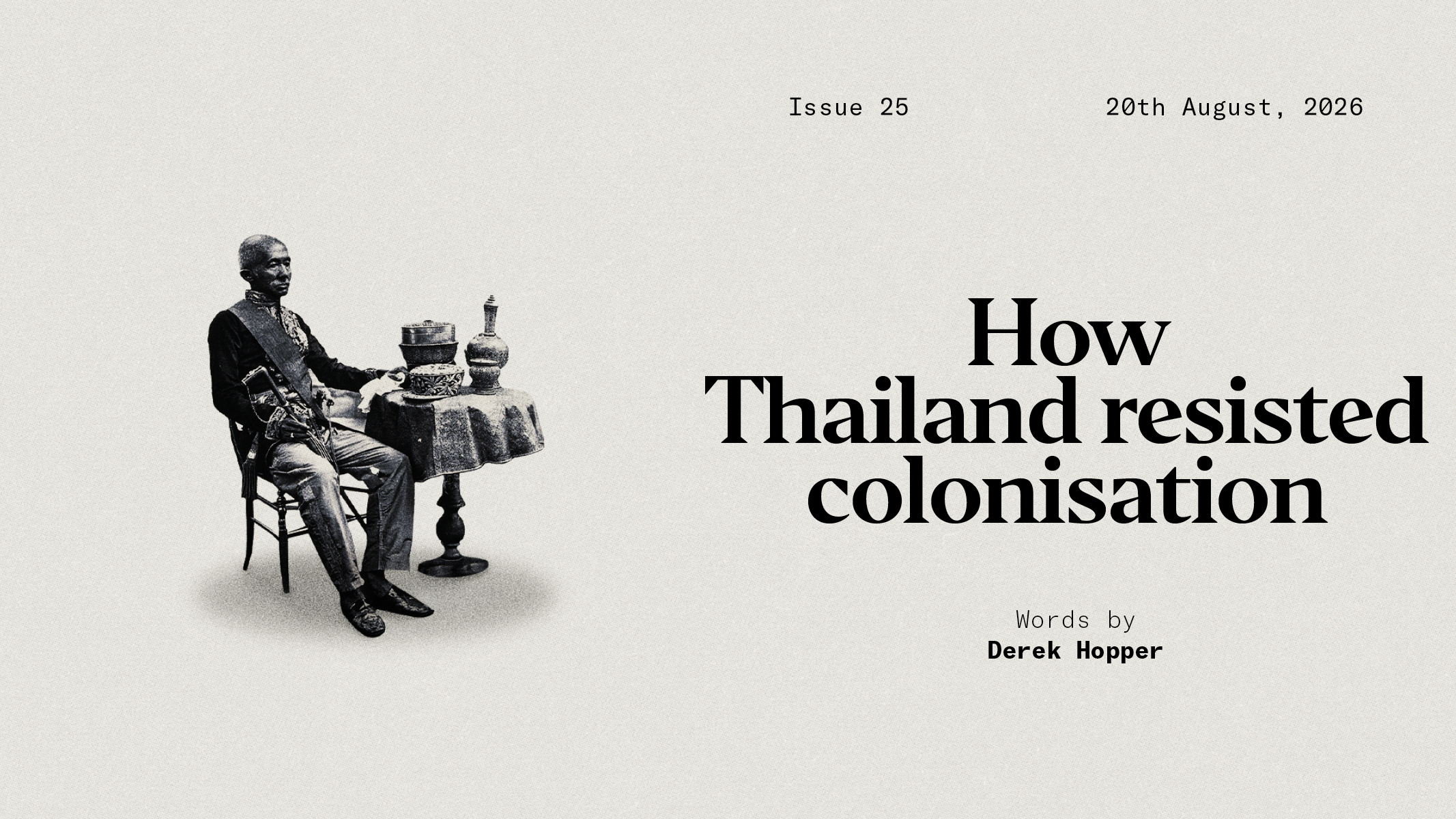
In the 19th century, European powers nearly swallowed the whole world, but Thailand (then Siam) became one of the few survivors. How? Not by hard resistance, but by three tactics: showcasing civilization, engaging in diplomacy, and transforming itself first.
1. Came across an 'ancestral brand' plaque
In 1833, a monk named Mongkut discovered a stone inscription in the ancient capital Sukhothai. It was carved with ancient Thai script, telling of a glorious ancient kingdom. This plaque later became proof of Thailand's 'ancient civilization'.
At the time, Europeans loved using 'barbaric and backward' as an excuse to grab territory. The Siamese king thought: you say we have no culture? Look, we had writing and laws hundreds of years ago! This move was called 'branding'.
2. Be friends with the great powers, not fight them
Mongkut later became king (Rama IV). He spoke fluent English, loved cigars, and directly discussed literature and science with the British during negotiations. The British envoy, seeing this, thought: Oh, this king is one of us, it's hard to make a move.
The treaties he signed were disadvantageous (low tariffs, privileges for Britons), but they preserved sovereignty. Compare with Burma, which directly confronted Britain and was annexed as a result. Thailand chose to 'join them if you can't beat them,' trading concessions for survival.
3. Turn itself into a 'civilized state'
Rama V (Chulalongkorn) continued to escalate: abolish slavery, build schools, construct railways, draw borders, and even adopt European-style 'national identity'. On the international stage, he toured Europe in Western suits, projecting an attitude of 'I am on par with you'.
This whole performance made Europeans feel: Siam is already a 'civilized state', it would be unjustifiable to seize it. Although it still lost 40% of its territory, it preserved its core.
In one line: to survive the colonial era, fighting alone wasn't enough; you had to 'perform'—perform civilization, perform friendship, perform modernity. Thailand's operation was a perfect score.

Subtlefakes: Slightly Altered Nonconsensual AI Images Are Taking Over X
A new type of AI fake image, 'subtlefakes', which are less explicit but more realistic, are spreading on X and are harder to detect and regulate.
When I first saw a deepfake in 2017, the technology was crude but already shocking. Now, AI fake images have evolved, and a new form called 'subtlefakes' is spreading on X.
These images do not involve nudity or sexual acts, only slight alterations — making a red-carpet photo more revealing, making a body more exaggerated, or faking a gym selfie. Their realism is so high that even experts find it hard to tell them apart from real photos.
1. Why are they hard to detect?
Traditional deepfakes have obvious flaws, but subtlefakes only have slight changes, lacking 'contextual clues'. Actor Xochitl Gomez's parking lot photo, modified by AI, was almost indistinguishable from a real one.
2. Who profits?
Verified accounts on X are posting large numbers of these images, earning money from ad revenue sharing programs based on views. X turns a blind eye, and some images are even generated by X's own Grok.
3. Why are they harder to regulate?
Generating subtlefakes has almost zero barrier to entry — there is no need to bypass safety restrictions, and mainstream AI tools all allow generating realistic but non-explicit images of real people.
In one line: AI abuse is shifting from crude and explicit to subtle and realistic, and both platforms and regulators are falling behind.

How Households Drive History
What truly shapes history is not emperors, generals, and wars, but the daily needs of countless ordinary families striving to put food on the table.
Textbooks always put emperors, generals, and wars in the spotlight, but if you pull the camera closer, you'll discover that the ones who truly hold the entire production together and drive the plot forward are actually the everyday lives of countless ordinary households.
Let's rewind to the ancient Middle East 4,000 years ago and see how an ordinary family 'leveraged history':
1. Filling their stomachs was the ultimate KPI
In ancient Mesopotamia, the most important task for a family was to grow barley. Two great rivers provided irrigation and fertile land, and more grain meant more people could be fed.
In ancient times, population equaled labor, labor equaled military strength, and military strength equaled national power. Wherever families had more children and enough food, that region could grow into a superpower.
2. When one family can't manage it all, the 'state' is born!
Some major undertakings simply couldn't be accomplished by a single individual or one family alone:
Building irrigation works: to water farmland and guard against floods, thousands of households had to dig canals together. This required someone to organize, direct, and even compel people to work—thus, the earliest states and governments were 'forced' into existence.
Chipping in for big-ticket items: items like oxen and iron plows were 'heavy equipment' too expensive for ordinary families to purchase alone, so they pooled money to buy them collectively and took turns using them.
3. Shopping sprees led to 'civilization'
No household could produce everything it needed. Beyond self-sufficiency, they had to go to the market to buy things they couldn't make themselves—pottery, timber, bronze, and even other vegetables.
When millions of families had the need to 'shop till they drop,' trade emerged, cities became bustling, and trade routes expanded. To compete for these scarce resources, nations went to war, and civilizations rose and fell in succession.
In a nutshell: it was not kings and generals who 'created' history, but the needs of countless ordinary families striving to feed themselves and live better lives that step by step propelled human society into the modern era.

Neo-Etiquette Basics: The New Rules of Being Human
Technology has made selfishness easier, but basic respect remains the bottom line of society; new etiquette is about restoring our awareness of other people's real existence.
Etiquette is not an old-fashioned relic; it reminds you that other people are living, breathing humans with their own inner lives, not your material or backdrop. Technology makes it too easy to be selfish—treating friends as an audience, turning strangers into content, and taking private moments as evidence.
The new etiquette is simple, with three main threads:
1. Attention: Don't make people compete with machines for you
Write letters to your loved ones in your own words, not with AI ghostwriting. Awkward truth beats perfect fake. Take off your earphones before ordering coffee so the person knows they're seen. Don't dump a 7-minute voice message on someone; that's just shifting your burden onto them. In group chats, ask before adding people, and not replying to a read message isn't a crime.
2. Privacy: Don't turn other people's lives into your content
Don't use devices with hidden cameras. Other people's children, screenshots of group chats, and strangers' breakdowns are not your content. Be honest about whether you used AI. Point your surveillance at your own yard, not your neighbor's.
3. Public life: Don't be a digital mob
Don't block the way, don't join in online pile-ons, and verify the source before forwarding. Do small kindnesses: return the shopping cart, give up your seat, let people off before you get on. Don't announce others' private matters, don't use AI to respond to someone's sincerity, allow others to grow, and remember that behind every post is a body that can feel pain.
In one line: other people are not tools for your use; they live for themselves.
AliExpress runs silent WebAudio fingerprinting that breaks Bluetooth multipoint
The author found that Alibaba's security scripts run WebAudio fingerprinting quietly on the AliExpress homepage, which keeps the computer's audio channel active and causes Bluetooth headphones to fail switching back to the phone.
The author ran into a strange issue: Bluetooth headphones support multi-device connection and work fine normally, but as soon as the AliExpress page is opened, the phone's sound stops, and closing the page immediately restores it. Muting the tab doesn't help either, and there is no visible video or music on the page.
1. The 'silent band' hidden in the page
The author installed a 'monitor' on the page and discovered that AliExpress secretly creates two audio processing contexts, both running and connected to the system's audio output. However, the volume is set to zero, so users hear nothing. That's the problem: the browser thinks the page is playing audio, so it keeps occupying the computer's audio channel.
2. Not a prank, but 'fingerprinting'
These two scripts belong to Alibaba's anti-abuse tools. They not only use audio but also collect a large amount of data such as canvas, WebGL, hardware information, and interaction behavior, to 'take a photo' of the browser and identify whether you are a human or a bot. Audio is just one of them, but it inadvertently interferes with hardware.
3. How to fix it? Add two blocking rules
The author used uBlock Origin to block these two scripts, and the page displays normally without any audio contexts. However, after blocking, you may encounter more CAPTCHAs because this is part of the anti-fraud system.

Economists should be worried about birth rates
Acemoglu's new paper claims low fertility raises living standards through automation, but the author argues the evidence is weak and contradicts Acemoglu's own research.
The Economist recently criticized economics Nobel laureate Acemoglu, and the author got named too. The author admits to regularly critiquing Acemoglu but argues this 'speaking truth to power' is good for economics.
The target of this critique is Acemoglu's 2026 paper on low fertility.
1. Low fertility is not a bad thing?
The paper makes a bold claim: lower birth rates actually make GDP and wages grow faster. Because with fewer workers, firms are forced to use automation to replace labor, thereby boosting productivity.
The author thinks there is some sense to this mechanism, but disagrees: fewer people means not only fewer workers, but also fewer consumers. Without demand, why would firms buy machines?
2. Logic is self-contradictory
More damning, Acemoglu's own previous research says robots and AI will lower wages and reduce productivity. If so, how can automation compensate for an aging population?
On one hand 'don't fear low fertility, automation will save us,' on the other 'beware automation, it will harm workers' — isn't that contradictory?
3. Evidence is shaky
The paper's key results lose significance once control variables like education and urbanization are added. The author suspects the real driving factor is not birth rate but things like 'talent moving to coastal cities.'
Moreover, the paper only uses data from 1940 to 1970 with mild population changes, which cannot predict the future of extreme low fertility seen in Korea and Japan today.
In short, the author remains worried about human shrinkage and believes readers should keep worrying.
Conceptual integrity and counting lines of code
Although counting lines of code is often mocked, it has become meaningful again in the era of AI-assisted programming, because engineers' cognitive capacity has become the new bottleneck, and conceptual integrity is the biggest hidden risk in AI-generated output.
Many people say that measuring a programmer's output by lines of code is meaningless. The author disagrees, because in the era of AI-assisted programming, it has become meaningful again.
1. From 200 lines a day to 1,000 lines a day
In the past, an engineer writing a few dozen lines of working code in a day was considered good, and 200 lines was exceptional. Now with AI assistants, writing 1,000 lines of debugged code in a day is entirely possible.
The premise is that code quality must not be compromised—it must be maintainable and tested. This really tests experience, so senior engineers are actually more valuable than ever.
2. Cognitive capacity becomes the new bottleneck
Since one person can do the work that used to take ten, does that mean a company only needs to hire one engineer? Of course not.
First, a 'one-person team' is too fragile to risk—if that person leaves, everything collapses. More critically, code output can double, but the human brain cannot keep up—it is impossible to simultaneously master 100 times the amount of code. So teams and division of labour are still needed, with everyone sharing the cognitive load.
3. The 'haunted house' hidden danger of AI efficiency
There is a concept in software design called 'conceptual integrity'—in well-designed software, all parts naturally coordinate and there are no surprises.
But AI programming is too 'cheap': want to add a feature, make a request, and it's live in five minutes. Software becomes like the Winchester Mystery House—the owner, to ward off ghosts, kept adding rooms for forty years, finally creating a bizarre house with 140 rooms.
AI-generated code is the same: adding a bit here, patching a bit there, the whole becomes messier and messier, until nobody dares to change it.
It all boils down to a 'discipline' problem. In the past, development cycles were long, which forced people to think 'is this feature worth doing?'. Now it's done in an hour, so impulse purchases multiply.

How Listening to Ocean Waves Can Predict Volcanic Eruptions
By measuring how the speed of ocean wave sounds changes as they travel through volcanic rock, scientists can predict volcanic eruptions in advance.
In 2010, a massive volcanic eruption in Iceland grounded all European flights for a week. The U.S. Geological Survey (USGS) now has a new trick: using ocean wave sounds to predict volcanic eruptions. It sounds far-fetched, but the principle is fairly simple.
1. Ocean wave sounds as an 'ultrasound scanner'
Pacific waves crash against the Hawaiian islands, and the sound travels through the underground rock. Seismometers on the island, originally meant to monitor volcanic activity, can now pick up these sounds as well.
The speed at which sound waves travel through rock can tell scientists about changes in the underground structure—like giving a volcano an ultrasound.
2. The speed changes hold a clue
Before an eruption, magma builds up underground, cracking the rock and creating fissures. These fissures slow down the ocean wave sounds. When magma moves into the vent, molten rock fills the fissures, and the speed increases.
So by comparing the sound speeds measured by seismometers at the volcano's base and its edge, scientists can infer whether an eruption is imminent.
3. Validated twice
The USGS used this method to re-analyze data from Kilauea: two months before the 2020 eruption, the sound speed measured by the bottom seismometer began to slow, reaching its slowest just before the eruption. Four days before an eruption in 2025, the edge seismometer recorded the fastest speed.
However, the USGS admits the technique is still being tested, and it's just one more forecasting tool. Ocean wave sounds aren't just relaxing white noise—they could save lives.

“Syntax often breaks down just at the point where a new or significant meaning is beginning to break out”
Writer's block can be a good sign, because it often means new meaning is about to emerge, and the key is to learn to revise rather than just fix grammar errors.
When you can't write, maybe you should be happy—this might be the edge of having something new to say. In 1984, Donald Murray wrote in an essay: syntax often breaks down just at the point where a new or significant meaning is beginning to break out.
New meaning, when it breaks through, is clumsy and ugly, but if listened to carefully and nurtured well, it can grow into an important idea. Or it may not; it must be understood first and then discarded.
1. Grammar is not everything in writing
In the AI age, generating grammatically correct first drafts is too cheap. The problem is that when people collaborate with AI, they need to know how to revise—not just fix a few words.
Murray said that the common problem with students is: wherever the teacher comments, they only fix that, leaving the rest unchanged. Because they don't feel that good writing is not about avoiding grammar mistakes, but about letting meaning grow.
2. What writing classes should teach
Murray argues that teachers should write in class, showing students the repeated struggles of revision. In the AI age, it's better to take an AI-generated draft and guide students to ask editor-like questions, treating the text as fluid.
3. Rewriting is writing itself
In the old classroom, a grammatically correct draft could get a B+. Nowadays, AI first drafts are already grammatically perfect, and even more so outside the classroom—so teaching writing becomes teaching editing. The old 'writing is rewriting' should be reversed: rewriting is writing.
In one line: writing is hard because meaning is struggling, and in the AI age, learning to edit is more important than learning to write.