TL;DR
People dislike AI-generated content not because it is machine-made but because it lacks deep intent — no thought behind the details.
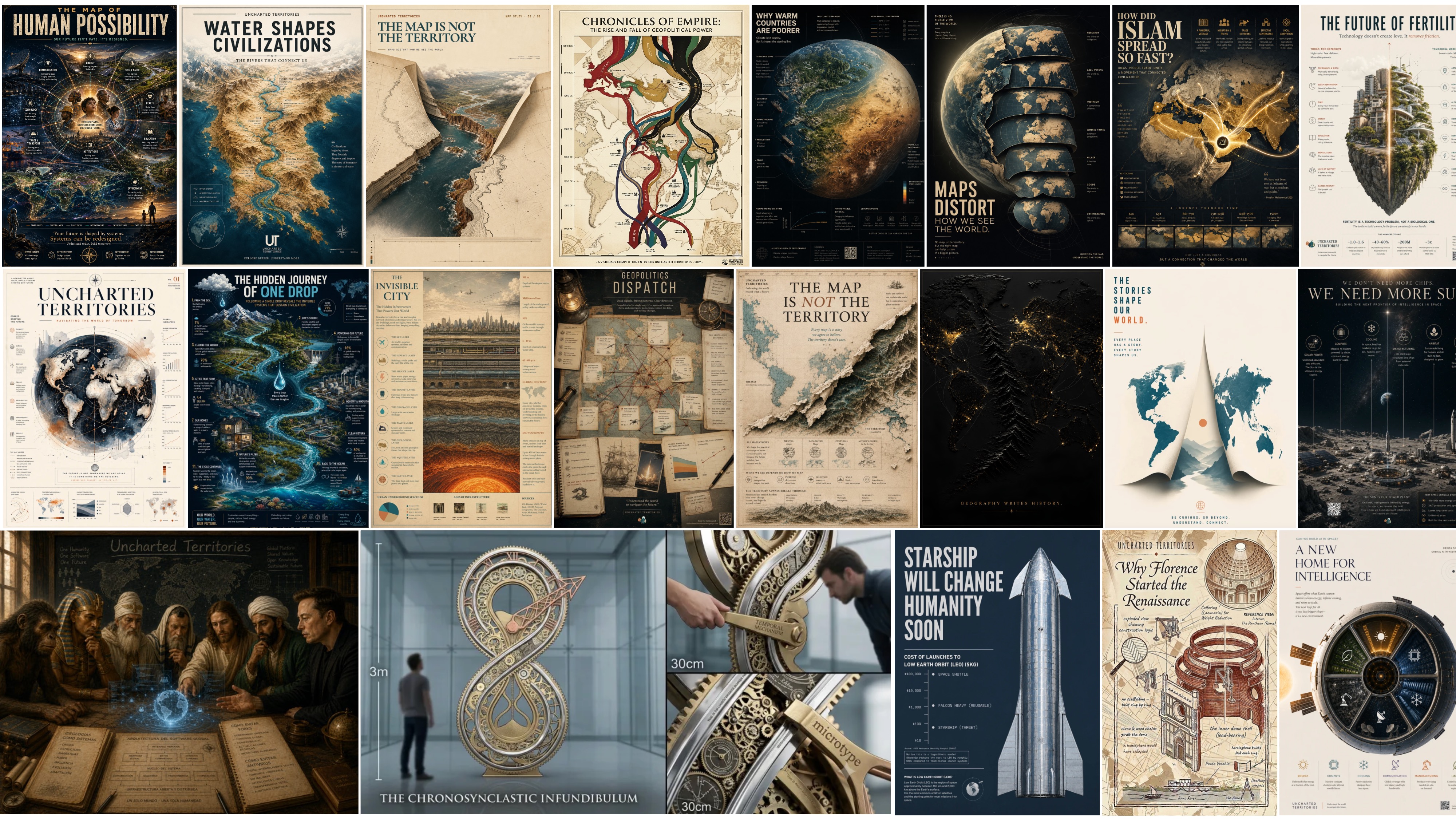
The author ran a poster competition and received many AI-generated entries. Admiring them, he spotted a common flaw in AI art: it looks great at first glance but falls apart on closer inspection.
Details give AI away
The first poster had a grand vision, depicting the 'burn the ships' story. But look closely and it falls apart: the figure wears 19th-century English clothes while the story is set in 16th-century Spain; the dragon mixes Eastern and Western styles and has an extra tail; worst of all, the man walks toward the ships — the exact opposite of the story's meaning.
Human creators think through every element, stroke by stroke. AI only stitches together fragments of images it has seen. It mimics the appearance of intent without the thought, and the viewer feels cheated.
Texture becomes AI's fingerprint
AI images also carry a tell: zoom in and the surface is never uniform — irregular textures, ghost edges, pseudo-details. The author calls it 'AI grime.' This texture belongs to no traditional medium, and it's instantly recognizable.
AI generation adds more grime with every pass. It acts like a label saying: this image lacks deep thought.
How to make AI content great?
The author's advice: AI is great for executing ideas, but you need the idea first. Separate concept from execution, use AI to save time on execution, then reinvest that time in polishing details and adding intentional depth.
The winning entry proves the point: a chessboard poster generated by code from real geographic data, where every element has meaning.
In the end, AI is just a tool. Deep intent has to come from a human.
Curated from high-quality sources, with concise summaries and key takeaways.

