TL;DR
Consciousness and matter are not opposites but the subjective and objective faces of a single reality—a view echoed across physics, philosophy, and ancient religious thought.
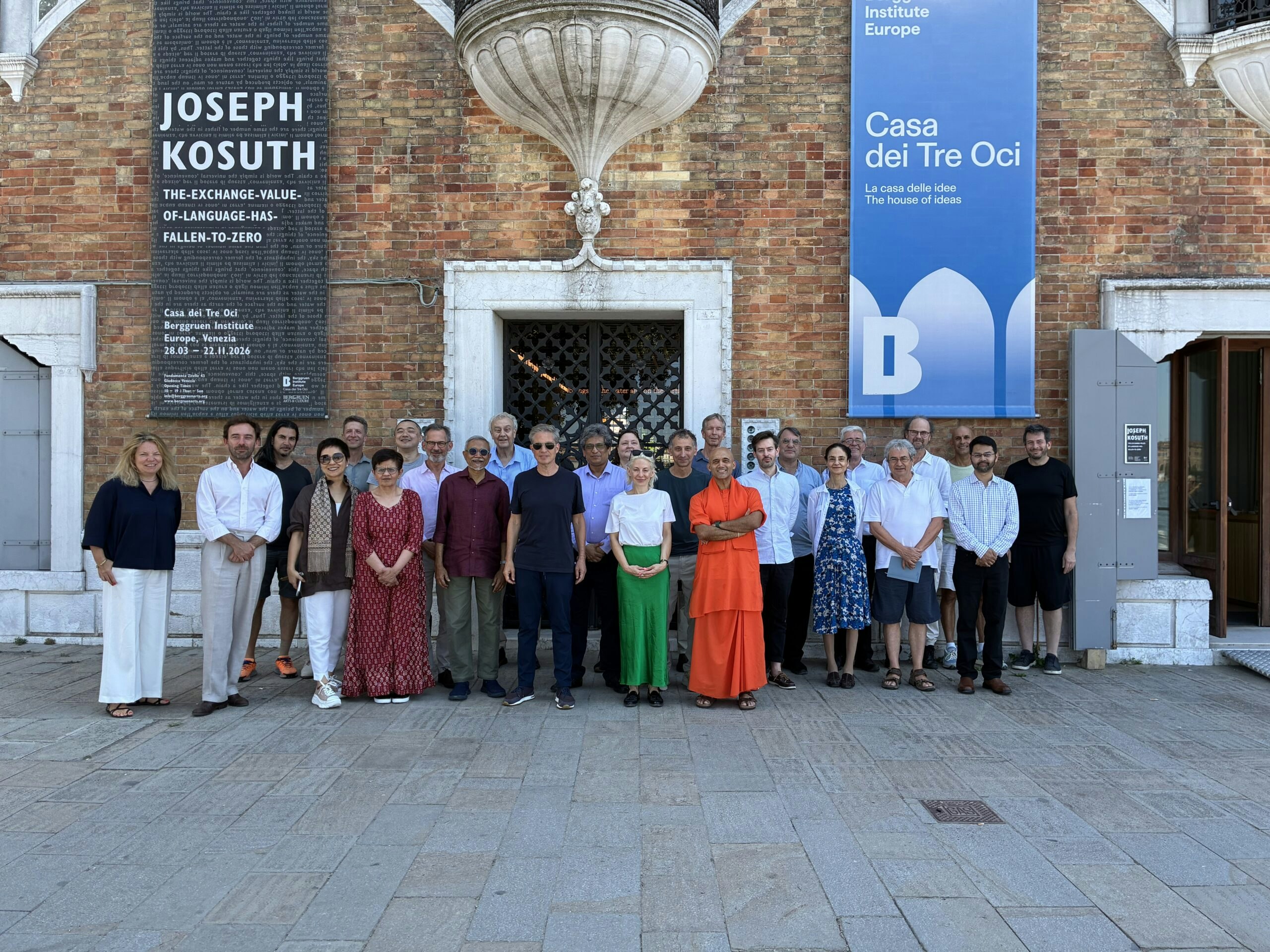
Last August, the Berggruen Institute gathered physicists, neuroscientists, philosophers, and sci-fi novelists in Venice to ponder consciousness. Curiously, their ideas kept colliding with those of medieval mystics.
The ancients had a word for it: all is one
An anonymous 12th-century text, the 'Book of 24 Philosophers,' says: 'God is an infinite sphere whose center is everywhere and whose circumference is nowhere.' In plain terms: there is no 'outside'; everything is inside, and every point is whole.
Hindu monk Swami Medhananda calls it 'polymorphic monism': one ultimate reality, knowable in countless forms—Shiva, Vishnu, Christ, or the formless Brahman.
Consciousness as a membrane, or a controlled hallucination
Philosopher Jenann Ismael offers metaphor: consciousness is a mirror on the wall, belonging to both the room and its reflection, a membrane between inner and outer worlds. Neuroscientist Anil Seth cuts sharper: the brain is a prediction machine, and every experience is a 'controlled hallucination'—a best-guess tethered to reality by sensory signals.
Sci-fi author Ken Liu adds that consciousness is essentially confabulation: we reconstruct memories each time we recall, weaving a coherent self. Building thinking machines might reveal whether this fiction is essential to being conscious.
No subject, no object—no outside
Physicist Carlo Rovelli is blunt: mind-body dualism is a pernicious illusion. Earth and heaven are not metaphysically different, nor soul and body. We are part of the world we observe; our cognition itself is part of that world.
Medieval mystic Meister Eckhart saw it long ago: the divine 'Word' unfolds through human participation, and 'to think is to give birth to God.' So Rovelli concludes: objectivity without a subject is 'the illusion of a science now belonging to the past.'
In one line: the world you open your eyes to is not a ready-made stage but something you help co-create from within—wherever you are, that is where it is 'everywhere whole.'
Curated from high-quality sources, with concise summaries and key takeaways.

