A child who hears the news is already trying to work out what it means about people like them; saying nothing hands the answer to the news, and repeated, explicit affirmation is what actually protects them.
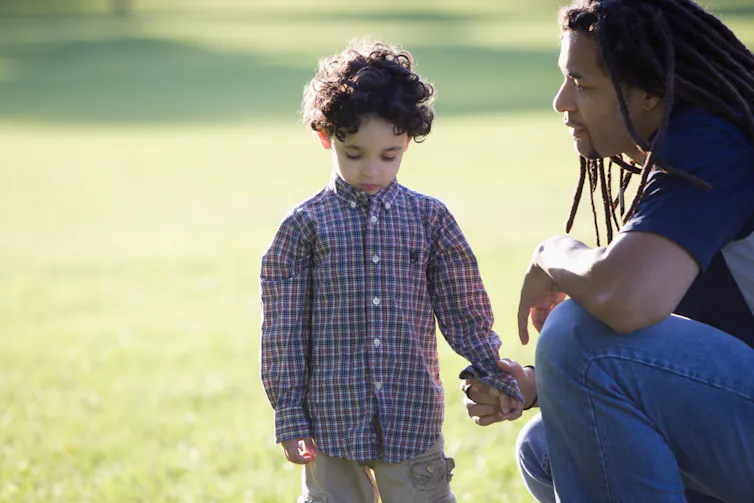
A child will not say 'the news frightened me.' They ask: if we speak Spanish, will they take you away? Or they suddenly want to know what a slur means.
The question is the signal. The child is piecing something together and cannot finish it. You do not know which story they heard, and you do not need to.
Don't wait for the direct question
Children often lack the words to name a fear, or the confidence that the subject is safe to raise. So they ask sideways: is that classmate's family safe, could that happen to us too. Or they make a joke, or go quiet.
Research on how children answer questions has found that open prompts — 'tell me more' — draw out far more than 'are you scared?' If a child says 'I don't know,' leave it. 'Tell me if you think of it later' works better than pressing.
Don't leave the meaning blank
If a child has heard people like them called dangerous, defective or unwanted, changing the subject does not cancel the words, and neither does silence. It just leaves the child to draw their own conclusion.
Say it plainly: some people believe that, we don't. Research on ethnic-racial socialisation finds that talking about culture, tradition and pride matters as much to a child's self-esteem as preparing them for prejudice. Among LGBTQ+ youth, greater family acceptance is tied to higher self-esteem and lower rates of depression, substance use and suicidal thoughts.
It is not one conversation
Adults move on from a disturbing story in a couple of days. Children may not. Studies following African American and Latino adolescents have linked experiences of discrimination to depressive symptoms years later.
So come back to it a week or two later: that comment that made your stomach feel bad — has it come back? Repeatedly naming a child's identity as worthy, the research suggests, buffers them against discrimination that keeps coming.
Most children in the US are children of colour, LGBTQ+ or neurodivergent, or live with at least one undocumented family member. They are growing up inside these debates. The news is not background noise.
And what a child is really asking, underneath it all, is one thing: is someone like me fine, or a problem?
Why it matters
'We'll talk about it when they're older' is the default setting for most parents, but children are already taking the class on their own, from the news. The mechanism here is that silence is not neutral: it leaves a child alone with the question of whether people like them count, and the answer tends to fall the wrong way.

Curated from high-quality sources, with concise summaries and key takeaways.

