Thermal receipt paper often contains bisphenols that can be absorbed through skin, but the average person's exposure is thousands to tens of millions of times below safety limits; the real question is the cashiers handling hundreds of receipts a day.
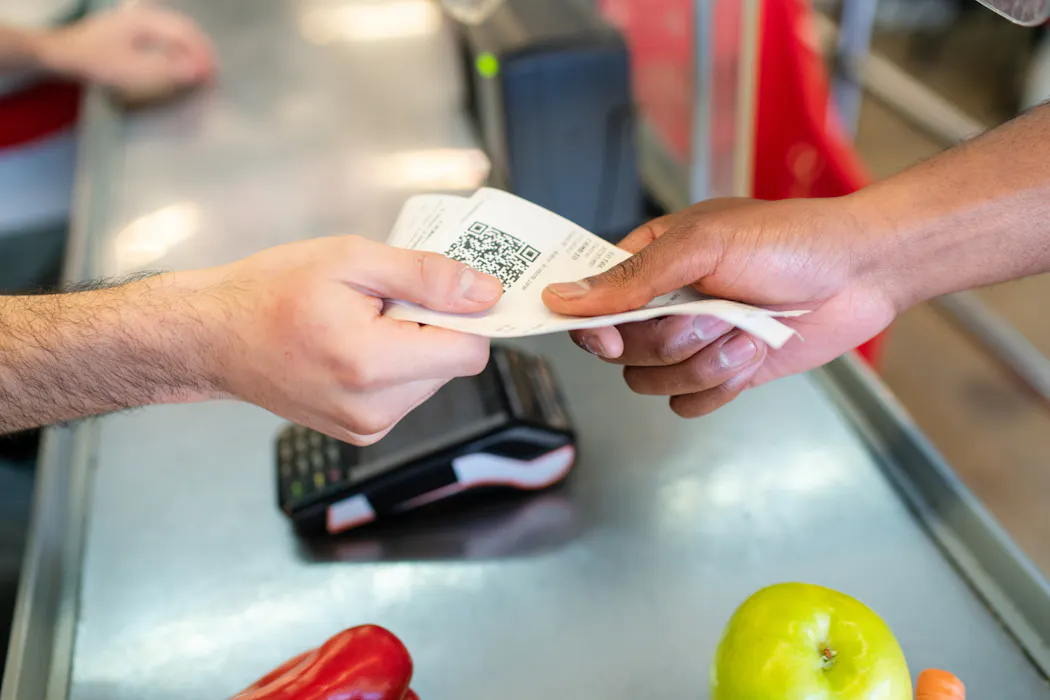
You have heard the question at the till a thousand times: would you like your receipt? Warnings have circulated for over a decade that saying yes lets toxic chemicals soak into your fingertips.
Why a receipt prints without ink
Receipts are not printed with ink. They use thermal paper, coated with a colourless dye and a bisphenol — usually BPA or BPS. The printer's heated head triggers a reaction, and the dye turns from invisible to black. Old fax machines worked the same way.
Bisphenols are man-made chemicals classed as endocrine disruptors: they interfere with the body's hormone signalling. BPA, the most studied, mainly disrupts oestrogen. Oestrogen is not a female hormone — everyone produces it, and it helps govern how organs form in a foetus.
That is why the potential risk matters more for a pregnant person and a developing foetus than for an adult. High BPA exposure has also been linked to preterm birth, heart disease and diabetes, and Europe has banned it outright.
It always comes down to dose
Toxicology has an old rule: the dose makes the poison. Cyanide can kill, yet the body makes a little every day and clears it. Drink too much water and your brain swells; that can kill you too.
A 2023 estimate put the average person's BPA exposure from receipts somewhere between 5,000 and 50 million times below the European Food Safety Authority's limit. Less than a drop in a glass of water.
That average does not cover cashiers and food service staff, who handle hundreds of receipts a day — roughly a hundred times the average exposure. That is the part worth paying attention to.
And if your hands are greasy from moisturiser or hand sanitiser, your skin absorbs more.
Receipts are not even the main source. Most bisphenol exposure comes from food and drink packaging. Receipts are one small slice of the pie.
Avoiding it is not hard
For most people, handling a receipt is very low risk. If you would rather not, the fixes are simple: take the emailed receipt, or tuck the paper one into a bag instead of holding it for ages.
People who work a till should skip hand sanitiser and moisturiser before a shift, wear gloves, or push their employer to buy bisphenol-free paper. Pregnant people, infants and those with endocrine conditions should limit contact.
Strip away the alarming numbers and the plain truth is this: a receipt is not worth panicking over, but the people who touch hundreds a day deserve someone to do something about it.
Why it matters
Toxic and harmful are separated by a dose, and that step almost never survives the trip onto social media. The cost runs both ways: people fret over a receipt while ignoring what they actually eat every day.



Curated from high-quality sources, with concise summaries and key takeaways.

