Runway bets that a model trained to predict the next frame of enough video can power robots, interfaces and operating systems on one shared foundation.
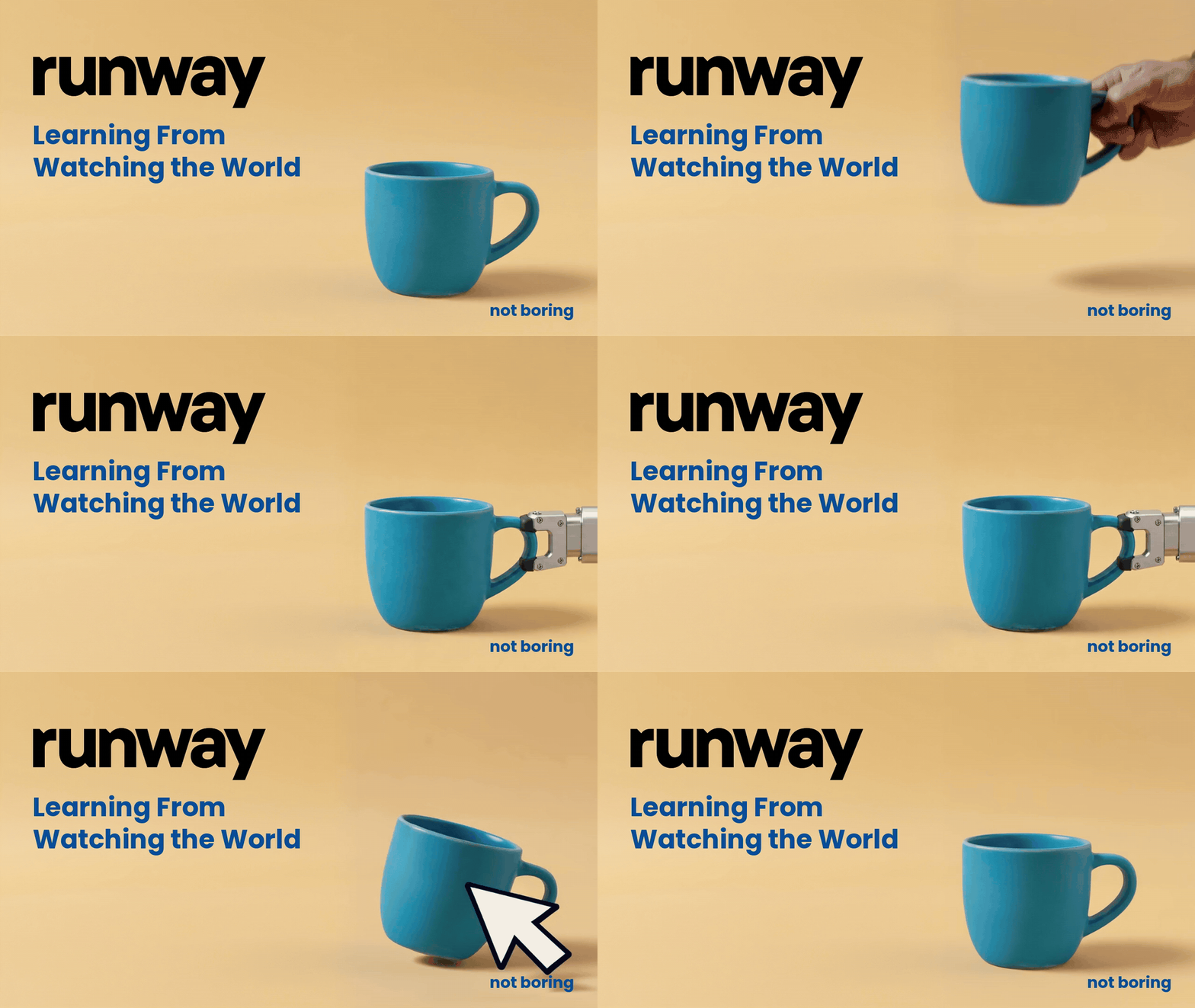
In the past six weeks Runway has shipped a string of new things: Solaris, which generates interfaces in real time; Praxis-1, an open robotics model; and Continuum, a preview of an operating system.
These look scattered, but they rest on one bet. The idea is that models learn the way babies do, by watching. Video carries motion, objects and physical rules, which brings it closer to the world than text does, and there is nearly endless supply.
One Base, Many Outlets
The method is to pretrain one base model on huge amounts of video so it learns to predict the next frame. Feed it a user's clicks, drags or a robot's movements as inputs, and a video generator becomes a model that simulates the world.
Solaris applies this to interfaces. Instead of coding buttons, it paints each frame, so dragging a mouse changes the screen live. Praxis-1 runs on the same base, with its actions turned into where a robot's hand should go next.
Robots are short on data, since having a human puppeteer an arm to record one task is slow and costly. Runway reports that a model pretrained on web video needs only about 30 minutes of robot data to fine-tune.
On placing objects, the final error was 16.1 centimeters for web-video training and 16.0 for teleoperated robot video, essentially a tie. The result suggests that knowledge from ordinary video transfers to robots.
Can the Bet Pay Off?
The article admits real difficulties: text rendering is unstable, long sessions drift, and generating every frame costs more than a normal app. Runway estimates that video models trail language models by a year or two, and their compute needs may even exceed those of LLMs.
On the business side, the company sells ads and film tools while using that revenue to fund research. It says it added over $100 million in annual recurring revenue in a single quarter.
Put plainly, Runway is betting that a model which has watched enough of the world can replace many specialised ones. If it wins, interfaces, robots and film all become uses of one base. If it loses, it is just a good video company.
Why it matters
If one video model can serve as a robot's brain and an interface's rendering layer at once, the line between generative tool makers and robotics companies starts to disappear. The race then becomes about whose base model has watched enough of the world first, not about any single feature.


Curated from high-quality sources, with concise summaries and key takeaways.

