From 2015 to 2018, anthropologist Jessica Katzenstein observed Maryland police trainings and found the simulations mostly stage worst-case encounters, built on a racialized idea of the 'thug'.
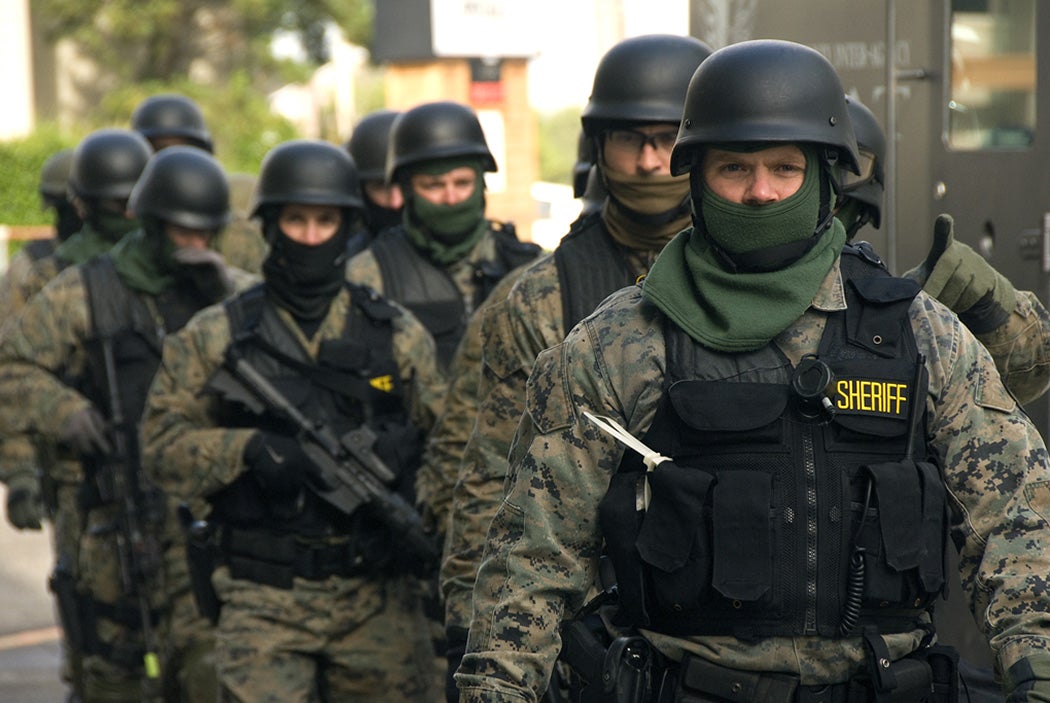
Police training now sells itself as community service: officers are meant to be 'guardians', not 'warriors'. Anthropologist Jessica Katzenstein spent 2015 to 2018 observing trainings at several Maryland police departments, and found the drills had not caught up with the pitch.
The drills only rehearse the worst case
In one virtual-reality scenario, an injured woman lies in a parking lot, a little girl nearby. The phone in the girl's hand turns out to be a gun, and she shoots. A person holding a gun in real life may not shoot an officer; in the simulator, they almost certainly will.
Deterrence depends on the neighbourhood
Training prizes 'command presence': the more a troublemaker provokes, the harder the officer must push back, and never back down. The posture also depends on which part of town you work in. Instructors told recruits that in a poorer, Blacker area, going soft means 'they'll walk all over you'.
Katzenstein argues the logic assumes a 'thug' who is poised to attack the weak, understands only dominance, and that the image itself already carries a racial presumption.
Training rehearses for an enemy who exists only in imagination, and the imagination decides who gets treated as the enemy.
Why it matters
Split-second reflexes come from training, so training decides what gets read as danger before anyone thinks. If the drills treat a neighbourhood's race as a warning sign, extra hours will not fix it; the imagined enemy has to change first.


Curated from high-quality sources, with concise summaries and key takeaways.

