A KfW study estimates that if AI lifts productivity by an extra 0.4% a year, the US debt-to-GDP ratio could fall from 185% to 113% by 2056.
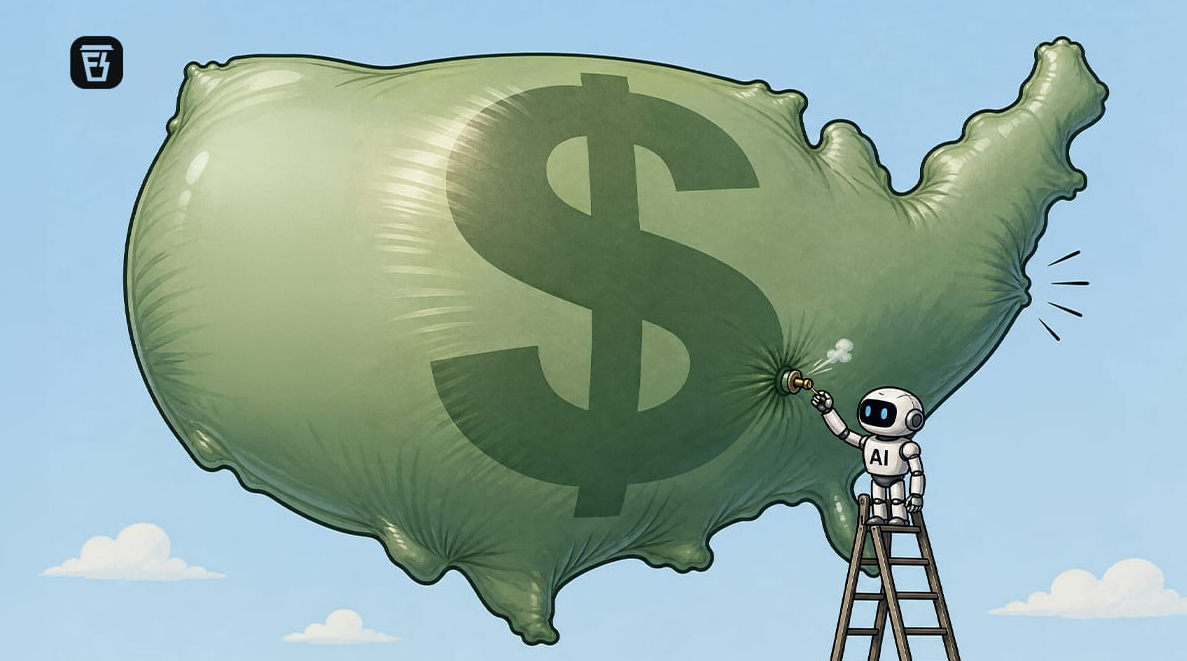
Whether the US government's books balance may depend on whether AI makes the economy faster. A KfW analysis runs the numbers: higher productivity lifts GDP growth, tax revenue rises, welfare spending falls, and the deficit shrinks.
Smaller deficits, falling debt ratio
On these projections, if AI adds 0.2% a year to productivity, the US primary deficit (before interest) could shrink by 2056 from 2.8% of GDP to 1.5%. At 0.4%, it could be wiped out within thirty years.
By 2056 the debt-to-GDP ratio would sit at about 185% in the baseline, about 143% with a 0.2% boost, and about 113% with a 0.4% boost.
Buying long bonds is betting on AI
Lower interest bills could also push bond yields down. The author leans the other way, expecting productivity to rise only about 0.1% a year. Steam engines, electricity and computers each had decades of hype before productivity took off.
Put plainly, buying 30-year Treasuries is a bet that AI will make the US books balance.
Why it matters
A long-dated Treasury price quietly carries a view on technology: if AI's productivity gains fail to arrive, yields could climb, and today's buyers of long bonds are backing a breakthrough that has not happened yet.



Curated from high-quality sources, with concise summaries and key takeaways.

