Scientists got living human neural tissue to classify Braille letters, with a single organoid reaching about 61% accuracy and a trio hitting 83%.
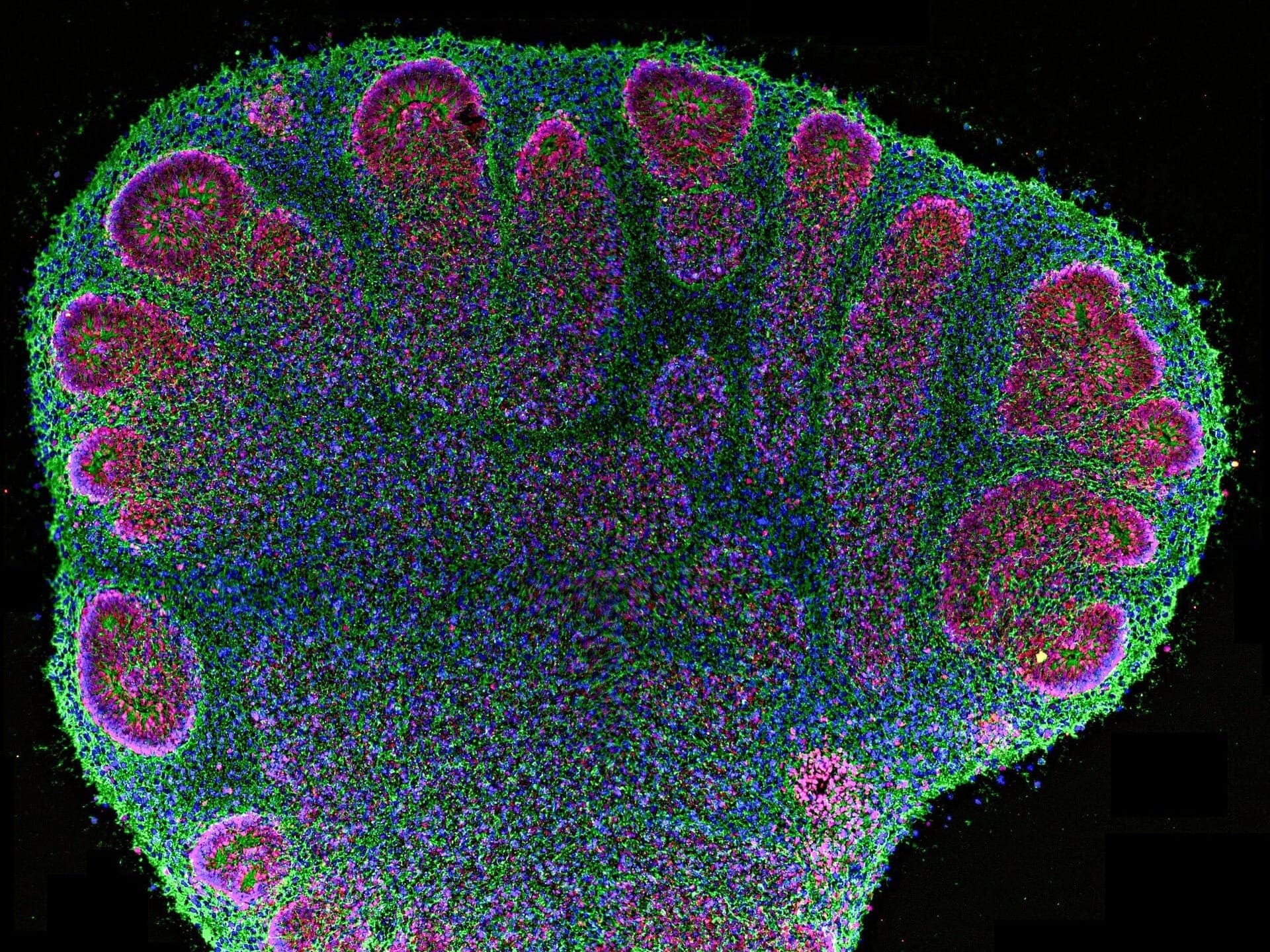
It sounds like sci-fi: clumps of human brain tissue grown from stem cells, hooked up to electrical signals, can now recognise Braille letters. One organoid of about 10,000 neurons got it right roughly 61% of the time; a team of three reached 83%.
Not aiming to 'understand', just to 'process'
The experiment turned the raised dots of Braille into electrical pulses and fed them to organoids smaller than a millimetre. The team's goal was not to make them 'read' Braille like a human, but to test whether real biological neural networks could process data coming from robotic tactile sensors.
Earlier experiments had already let organoids recognise Japanese vowels and play Pong. Braille was chosen because the team works on robot touch, which naturally converts tactile information into the kind of electrical stimuli an organoid can receive.
Three heads beat one
Why a group does better is still unclear. The guess is that different organoids respond to the same input in similar but not identical ways, like three people looking at the same object: one spots one feature, another catches something else, and pooling the observations gives a more reliable call.
Two steps short of the sci-fi version
This was an open-loop experiment: the organoids received inputs but got no feedback on whether they were right, so no 'learning' was proven. The next step is a closed loop, where the organoid's neural activity actually helps drive a robot's perception and decisions, and the results feed back into the tissue.
The real-world barriers are also clear: organoids can't be standardised, they need to be kept alive in cultures, and they're far behind silicon chips in reliability. But the path points to a genuinely different kind of computing.
Why it matters
This is not simulating the brain in silicon but using living human neural tissue as computing hardware. It turns the 'biological computer' from a metaphor into an engineering problem, and puts both the computing power and the ethical questions of brain cells on the table.



Curated from high-quality sources, with concise summaries and key takeaways.

