While he pushed stablecoin legislation in the White House, Trump's crypto adviser Bo Hines' family consulting firm took millions from Tether; three weeks after he left, Hines became CEO of Tether's US arm.
Tether, the crypto industry's largest stablecoin issuer, keeps pulling Trump's crypto advisers into its revolving door.
Money arrived before the bill landed
Bo Hines was a strange appointment even by Trump standards: college football, two failed congressional bids, and a small consultancy called NXUM that he co-owned with his father. This man became executive director of the White House's crypto advisory council and a key architect of the Genius Act.
According to the Wall Street Journal, weeks after Hines started work on the bill, NXUM pitched Tether on 'strategic lobbying'. The contract has paid NXUM at least $6.3 million, with payments starting while Hines was still in the White House.
Hines pushed legislators to double the grace period for crypto exchanges to stop offering noncompliant stablecoins — a change that mainly benefited Tether. In NXUM's Signal chats, he personally attacked Republican holdouts as 'bought and paid for by democratic shills like coinbase and a16z'.
Three weeks after the bill was signed, Hines left the White House. A month later, he was named CEO of Tether's US arm.
The White House crypto council is emptying out
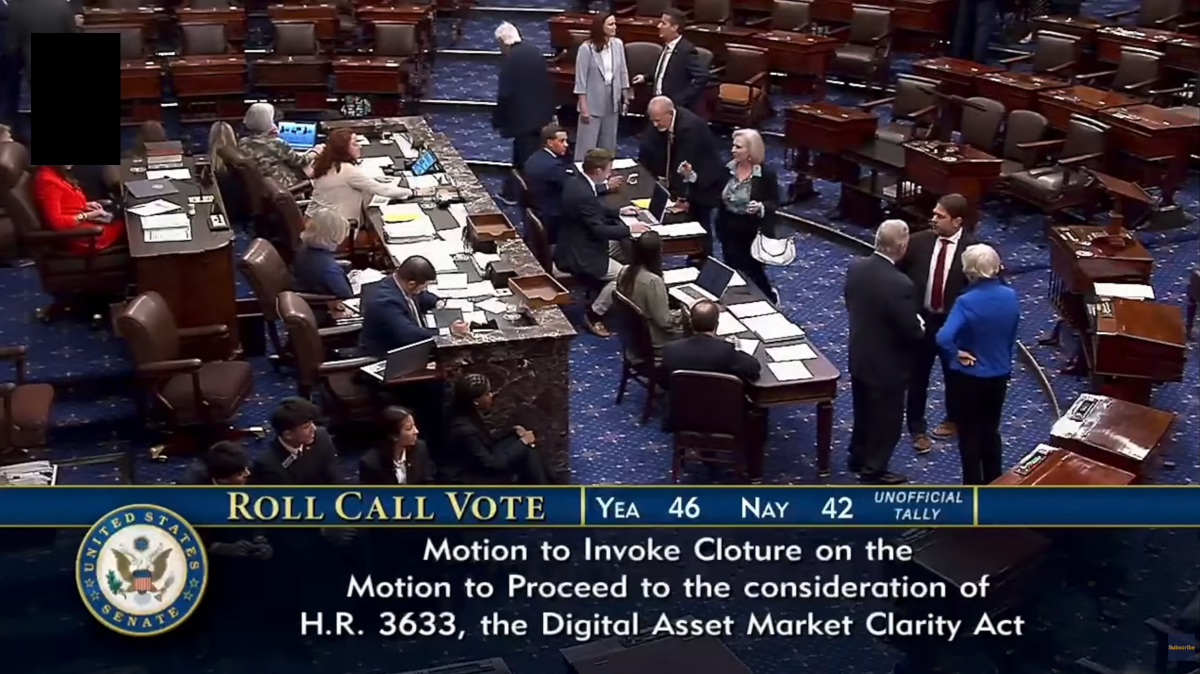
His successor, Patrick Witt, had a similar résumé: college football, failed campaigns, and the Clarity Act crypto market structure bill. That bill recently died after falling short of the votes needed for cloture.
By October, Witt was gone too. The council has no director and no deputy director. Its only deputy, Harry Jung, resigned in July — to join NXUM, naturally.
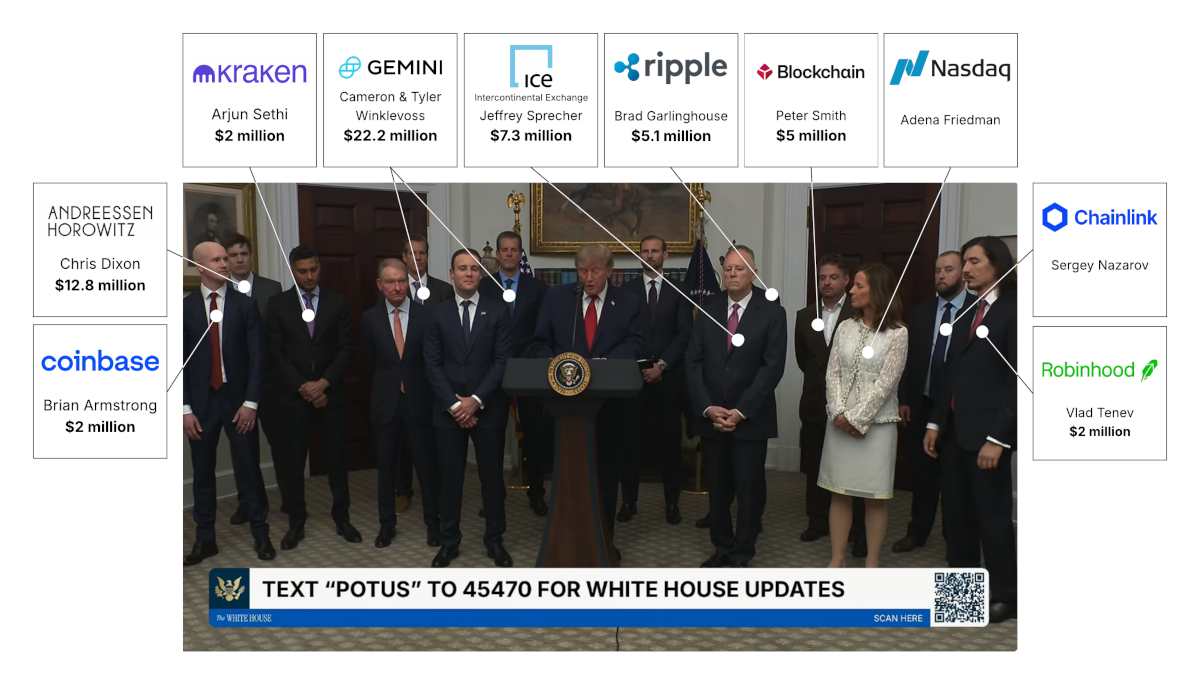
If I were one of the crypto executives who has poured over $250 million into super PACs since 2024, I might start to worry that the administration has extracted what it needed and is moving on to newer, shinier things.
'Divestment' that just hands the business to your sons
Commerce Secretary Howard Lutnick's firm Cantor Fitzgerald holds a 5 percent stake in Tether. A Senate subcommittee is now probing that relationship.
Lutnick claimed to have satisfied ethics rules by handing the firm to his sons and a trust for his four children. His 2025 disclosure reported a $192 million distribution from the firm.
The stake's value has grown from $600 million when Trump took office to $10 billion. Senator Richard Blumenthal spelled that out in a letter to Cantor's new CEO.
Why it matters
When the people drafting financial regulations are the same ones being paid by the companies they regulate, and recusing yourself means handing the business to your children, public trust in financial oversight does not survive.
Curated from high-quality sources, with concise summaries and key takeaways.

