A Tel Aviv University team found that sunflowers, which have no brain, bend toward a third weaker light when faced with two opposing lights of equal intensity.
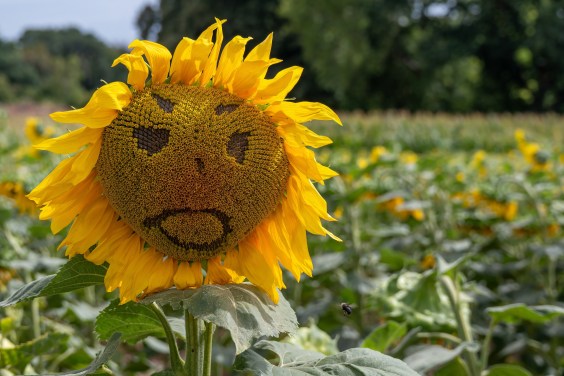
Sunflowers have no brain, yet they can be fooled by an optical illusion. Given two opposing lights of equal intensity plus a weaker light from the side, a sunflower bent toward the weak one.
The reason lies in the light-sensing system spread across the stem: light signals are transduced non-linearly, distorted in strength first and then summed by direction. Two bright lights pointing opposite ways simply cancel out.
I had assumed misperception was the brain's prerogative. It turns out how a body arranges its sensors can decide what a living thing sees.


Curated from high-quality sources, with concise summaries and key takeaways.

