Wednesday, 4 November 2026
Dozens of blogs and magazines, read for you every morning — the few worth talking about

Swing into books. Book week, November 1-7, 1964.
Bruno Munari, artist · Wikimedia Commons · Public domain
Venture capital is an extreme instrument built for rocket companies and frontier labs; pour it into a tidy little to-do app and it melts the engine block.

Republicans lost Senate seats in deep-red states like Texas and South Carolina, and even lost districts they had gerrymandered to be unbeatable.
The reason is not complicated: voters are fed up with high prices, the war in Iran and what increasingly gets called the Trump administration's corruption.
The article flags something easy to miss: Trump is still president until 2028, and with the midterms over he has fewer political constraints, so he could become more erratic abroad. The world should brace for a politically wounded and angry president.

Cory Doctorow paid for a lifetime subscription to his receipt-scanning app. Last week it quietly removed the little x he used most when titling a scan and put in its place a button selling a $40-a-year AI tool.
He says he has tapped it about a hundred times now, because that spot used to be the x. Every receipt now costs 16 extra backspaces, and all the company wants is to tell investors that users are keenly interested in its AI features.
The worst part is that he has already paid, so there is no way to punish them for it.

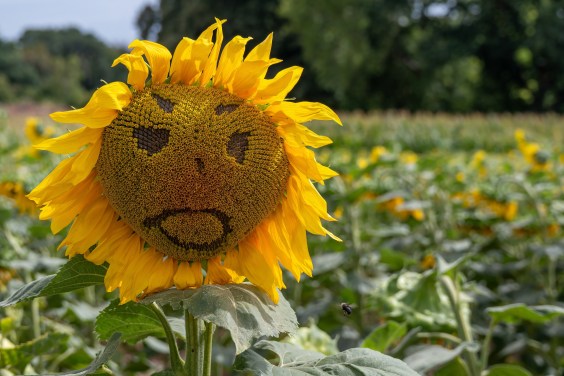
Sunflowers have no brain, yet they can be fooled by an optical illusion. Given two opposing lights of equal intensity plus a weaker light from the side, a sunflower bent toward the weak one.
The reason lies in the light-sensing system spread across the stem: light signals are transduced non-linearly, distorted in strength first and then summed by direction. Two bright lights pointing opposite ways simply cancel out.
I had assumed misperception was the brain's prerogative. It turns out how a body arranges its sensors can decide what a living thing sees.
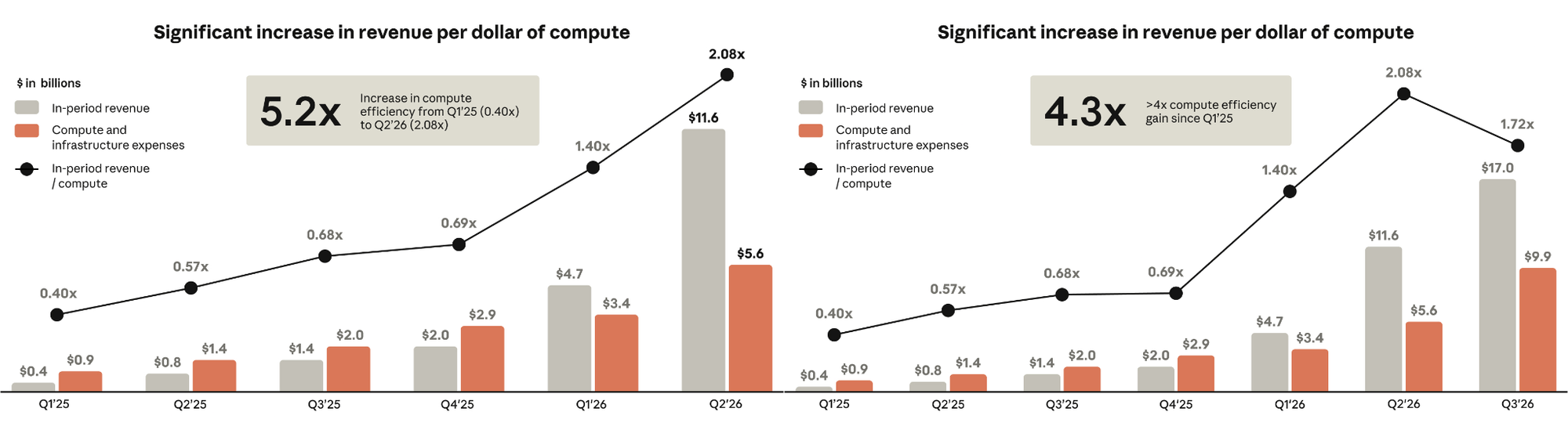
OpenAI raised $11 billion last week at a $1.25 trillion valuation. Per the Wall Street Journal it had hoped for up to $20 billion and turned to family offices and high-net-worth individuals.
The author does the arithmetic: per The Information, OpenAI spent $12.1 billion on cost of revenue and R&D in Q1 this year. The whole round does not cover a single quarter of compute.
What struck me is that it had no choice left: sovereign wealth funds, VCs and private credit had already given all they were willing to. Where the next cheque comes from, the piece does not say.
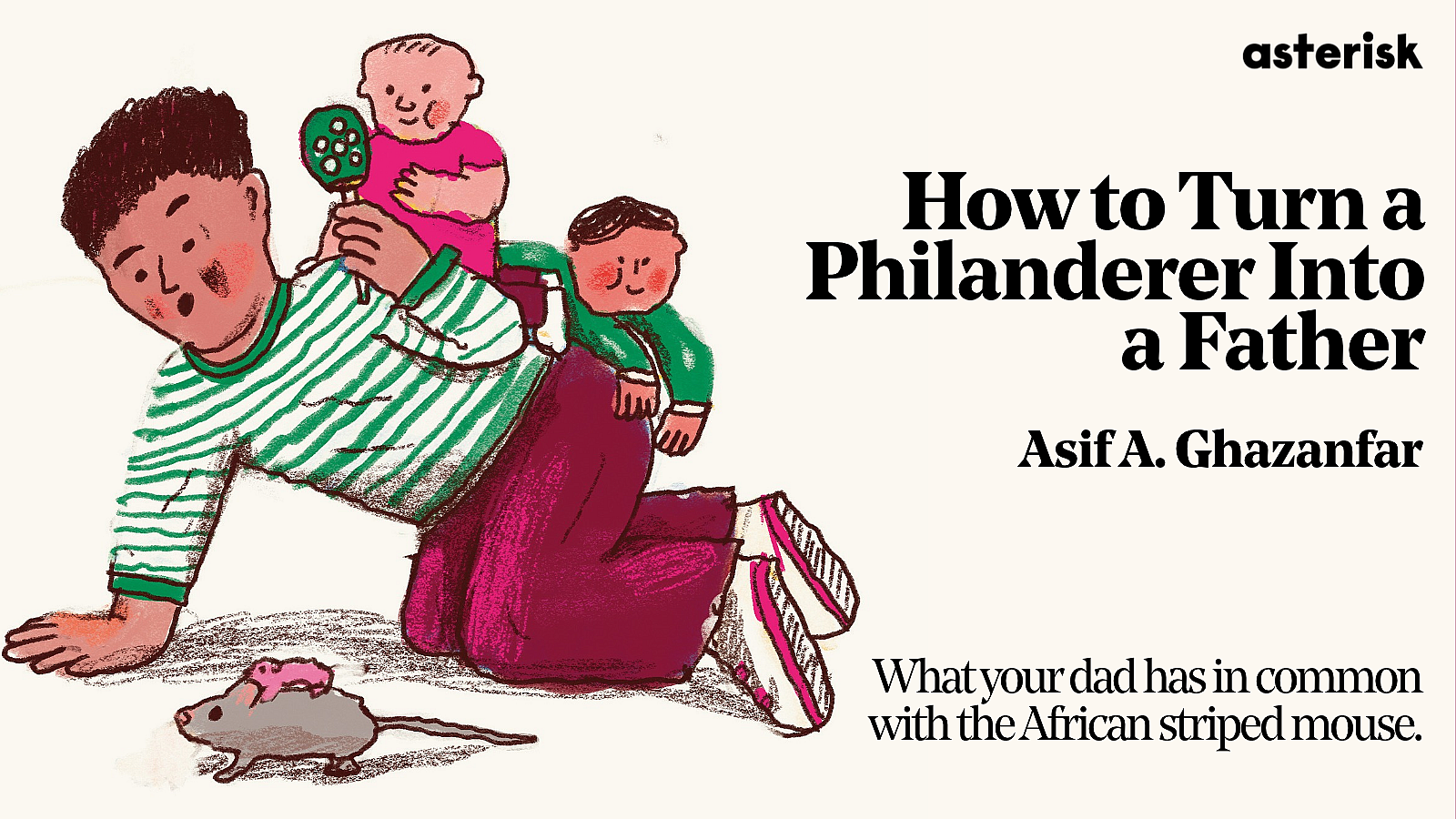
Male house mice hate kids: stumble on a pup and they will usually kill it. Yet in experiments, a male forced to live with a pregnant female starts caring for the pups about 18 days later, and the longer he stays, the more care he gives.
Fatherhood is not a switch but a system that environment and hormones can tune up and down: less testosterone, more proximity, the smell of a mate's urine.
The author ends by teasing his own brother and suggesting he get a dog. What I want to know is how much of this survives the jump to humans.
A young woman insists she died two weeks ago and, looking around the consulting room, asks whether this is heaven. The author is a psychologist who studies belief and delusion, and he is used to treating such convictions as specimens.
Then his own father died suddenly, and for a while he wanted to believe in heaven, before retreating behind the labels of scientist and atheist.
What stayed with me is his child's framing: being trans is not a mistake but a refusal to hand the question of who you are to God or to biological chance.
He says his careful speech in the car, and turns around to find his son was not listening at all.
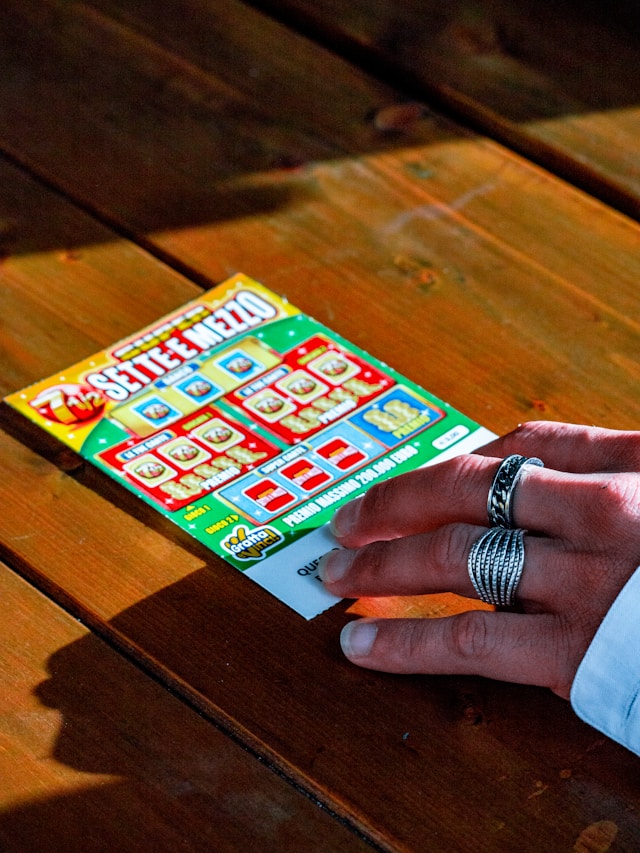
Even if 50,000 euros fell out of the sky, most households in the euro area still would not buy stocks. Researchers asked households in Germany, France, Italy, Spain, the Netherlands and Belgium, via the Eurozone's Consumer Expectation Survey, what they would do with a sudden lottery win.
The result is almost funny: among people who held no stocks, the participation rate rose by at most 8.4 to 12.8 percentage points, and more than 60% of households still would not buy a single share.
Handing people money and still failing to get them into the market — that is probably not a money problem.
A correspondent in Tokyo recalls London mayor Boris Johnson arriving to pitch cashless payments, only to be told Japan had built the technology years earlier. The problem was that Japan never pushed it. For decades the country has been scolded for its poor English, its poor storytelling, and for the fact that even the University of Tokyo's most prestigious startup incubator has a single part-time PR rep who does not speak English. A former Apple director recalled the education minister turning down teaching tech in schools with a polite no: come back when the floor indicator above the ministry's elevator goes digital. Thirty years on, that refusal does not look merely stubborn. Sweden has already reversed its push into screens after a drop in student literacy and returned to paper and textbooks. What surprised me most is that the piece ends by treating Japan's slowness as restraint: a society can choose not to adopt every technology.

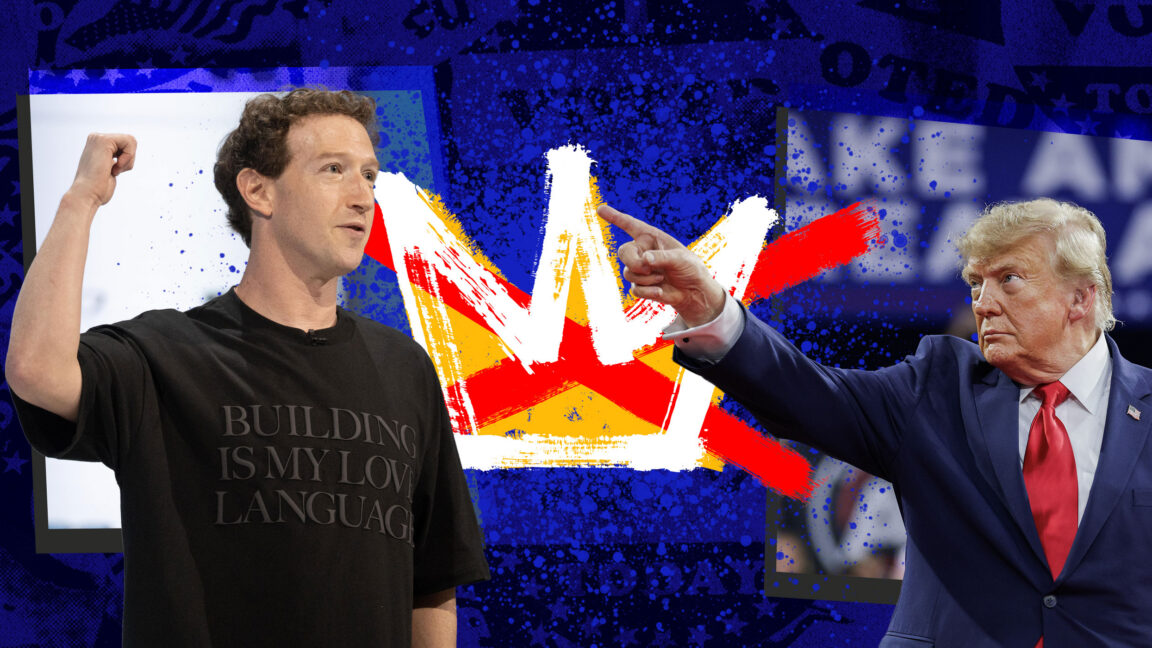
The No Kings coalition's Instagram account was suspended for four hours during an early-voting push. Meta explained that it had used a Claude tool to search keywords and hashtags, and that the activity looked like a bot's.
The account was restored after four hours, but in a meeting Meta said it has 'no plans' to change the policies. No Kings said an apology without action guarantees nothing.
What bothers me is not the four hours. It's that Meta never said whether it discussed this account with the Trump administration during them.
“The world should prepare itself for the possibility that a politically wounded and angry Trump could now decide to vent his frustrations abroad.”
“Even if you're paying for the product, you're still the product.”
“Our work shows how the physical organization of a sensory system can determine how an organism perceives and responds to its environment.”
“All of this ends when the money runs out — when seemingly-unlimited data center debt becomes distressingly hard to raise, and when AI startups can't rely on the perpetual availability of venture capital to keep them alive.”
“What seemed like a fixed behavioral program — aggression towards pups — disappears, turns into something altogether different just by a simple change in context.”
“I can't help seeing the rise in trans identification not as a wave of delusion but, in part, as a wave of visibility.”
“Meta acknowledged that it made a mistake, but an apology without action does nothing to ensure that this kind of censorship won't happen again.”

