Thursday, 5 November 2026
Dozens of blogs and magazines, read for you every morning — the few worth talking about

Dune landscape with fingerpost (to the wreck) in the Lower Saxony Wadden Sea National Park, Norderney, Lower Saxony, Germany
Security researchers found devices on the Executive Office of the President's network running residential proxy software, reselling White House IP addresses that 28 different proxy services could exit through.

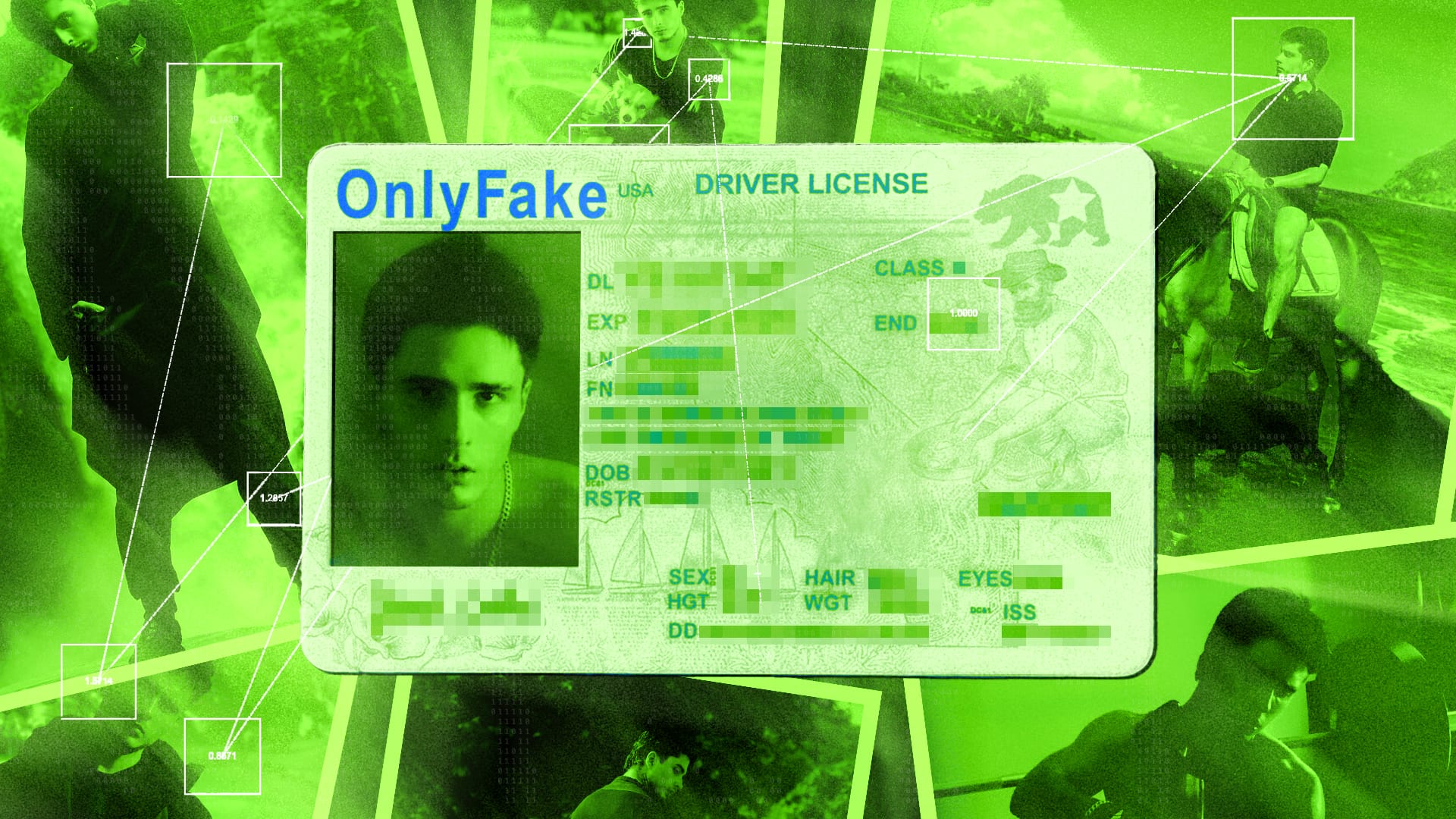
A 28-year-old Ukrainian used to sit in his grandfather's apartment editing passports pixel by pixel in Photoshop, spending up to a week on a single document. Then he turned the craft into a website called OnlyFake, charging $15 a pop and even generating photos of fake IDs lying on sofas, carpets and desks, as if someone had pulled out a wallet and snapped a phone picture.
What surprised me most is that the UN wrote to him directly: North Korean IT workers were using his service to forge documents for applying to remote jobs in the U.S.
Turning crime into something shaped like a startup may be the business model nobody in the AI era wants copied.
A thirty-year-old mailing list nearly died because of a 26-word American law.
Someone sanctioned for racist language sued the volunteer board for libel, seeking tens of thousands of dollars, far beyond the organisation's cash reserves. The threat was quickly dropped, but mounting just that initial defence incinerated a sizeable fraction of its assets.
What surprised me is who most wants the law gone: Mark Zuckerberg has repeatedly called for CDA 230 to be deleted, because Meta can afford enough moderators and lawyers.
Small communities cannot.

In the same lecture, one person transcribes every word while another jots a few words and arrows, and the second often remembers more. Cynthia Nebel, who studies learning strategies, says the difference is whether you process the information as you write.
What surprised me is why paper works better: it's not the pen's magic but the slowness. You can't copy verbatim, so you must first decide which point matters, and that choice is itself learning.
As for letting AI take the notes, her verdict is blunt: if you still want to remember, don't rely on it alone.

Musk spent $474 million on politics this year, roughly a quarter of all campaign donations Republicans received.
The result? Ken Paxton, the Texas Senate candidate Musk backed with more than $168 million, lost yesterday to the first Democrat elected to the Senate in Texas in 38 years. His opponent, Talarico, made Musk a centrepiece of the campaign and told 'every billionaire megadonor' in his victory speech that they would not be conquered.
The number I keep coming back to: for Musk, this spending was the equivalent of someone worth $1 million donating about $500. He could afford it. He just couldn't make it work.

Spending heavily to encourage births while investing heavily in machines that replace people: the author calls this the defining contradiction of our moment.
His fix is the 30/30 equilibrium: a 30% smaller population and a 30% smaller labour demand cancel out, leaving public finances no worse off.
The best part is that he quietly overturns the idea that population decline is a catastrophe, arguing that fewer births may be the shock absorber the intelligence revolution needs. It sounds a little like a theoretical alibi for not having children, but I have never seen the arithmetic framed this way.

Jack Lindsey at Anthropic performed a kind of digital neurosurgery, dialling a thought straight into a language model's internals and asking whether it noticed. The most capable version of Claude got it right in 20% of trials, while control runs never raised a false alarm.
Follow-up work split the result open. The models seem able to notice that something is off, but not what it is: spotting the anomaly and naming it turn out to be separate processes.
And who trained them to do this? Nobody ever tampered with their neural activity during training.
About a dozen workers at Micron's Taoyuan plant in Taiwan went on strike for a day. It was the first strike the island's semiconductor industry has ever seen.
Micron posted record profits this year on AI memory demand, and the union wants profit-sharing like Samsung and SK Hynix offer. The company says it has already agreed with the Taichung union on raises and quarterly bonuses; the Taoyuan union rejects the deal and calls the talks opaque.
The detail that sticks is the scale: in a few months, membership in Micron's two unions jumped from around 440 to more than 13,000. Good chips or not, if the rank and file doesn't get a share, people walk.

Seven years into the trade war, Western firms have been busy reducing their dependence on Chinese goods, but China is doing the same thing, and it is the West that is losing export markets first.
The economists at the Bank of Finland used a somewhat odd test to draw the blocs: a country that recognises Taiwan or has diplomatic ties with it counts as Western, one that follows China's line counts as Eastern. Measured against China's imports from 2015 to 2025, the map for iron, steel and nickel shifted fastest after the pandemic.
The most interesting part is where China pivoted: it pulled orders mostly from the US, Germany, Japan and South Korea, and handed them to Brazilian soybeans and Russian oil and gas.
Decoupling was never one-sided. It is just that someone gets replaced first.

Data centers had a worse night than the Republicans: of 41 ballot measures about them across the country, 40 resolved to halt, freeze or ban. Residents of Edgewater, Florida, went so far as to write a ban into the city charter.
The money is the most striking part. Elon Musk spent nearly half a billion dollars backing Republican candidates and, by the author's account, is not sure he won a single race; $212 million went to the Texas Senate candidate Ken Paxton alone, who lost to a Democrat by twelve points.
In NBC's exit polls, more than half of voters called data centers a crucial or major factor in their vote.
Calling these local ballots NIMBYism underrates them: in the NBC exit polls, 23% of voters called data centers a crucial factor. What people objected to was not just noise and power bills but the way these projects arrived with NDAs, assuming no one would push back.

“Repealing CDA 230 won't hurt Facebook – it will just force every independent community to move there.”
“When you use AI to take notes rather than doing it yourself, you are bypassing the kinds of mental processing that will help you learn.”
“Perhaps Musk saw his donations as a means of cementing himself as a main character in an election where he was not on the ballot.”
“A possibility emerges that remains almost unthinkable in the discourse today: Population decline, discussed almost exclusively as an economic catastrophe, may prove to be an essential corrective during the intelligence revolution.”
“The fact that it can notice the anomaly is insane. That is a mind-bending fact.”
“Making a profit is perfectly fine, but the rank and file should get a share of the profit instead of this unequal distribution between high-level executives and the rank and file.”

