Countries at U.N. climate talks routinely use five tactics to delay, weaken or redirect action: pleading poverty, promising future fixes, diluting commitments, pledging without paying, and shutting some delegates out of key decisions.
Nearly every country agrees climate change is a problem. Yet round after round of negotiations ends with record emissions and ever-weaker deals.
A professor who has studied these talks for over a decade lists five ways to obstruct without saying no — all more effective than open opposition.
Plead poverty, even when money exists
The favourite move is 'we can't afford it.' At COP29 in Baku in 2024, rich countries cited tight budgets, pandemic debt and inflation to resist the $1.3 trillion developing countries wanted, offering a target of $300 billion a year instead.
Yet in 2024 governments handed fossil fuels more than $1.2 trillion in public support — roughly five times what clean energy got. Military budgets tell the same story. The money is there; it just goes elsewhere.
Agree first, dilute later
The second tactic bets on future technology. A 2004 'stabilization wedge' approach sliced emission cuts into pieces that included carbon capture — letting fossil fuel burning continue. Reporting later traced money behind the idea to BP.
The third tactic is agreeing and then watering it down. The Glasgow draft called for 'phasing out' fossil fuels; after a push led by India and others, it became a 'phase-down' of unabated coal, with oil and gas unmentioned.
Pledges look good, payments don't
Rich countries promised $100 billion a year in 2009 and missed that target for over a decade; some counted airports and ice cream shops as climate aid.
The Loss and Damage Fund has received about half of roughly $822 million pledged, five years on, and has paid out nothing to a disaster-hit country. Nepal's 2026 glacier flood caused $2.7 billion in damage; it asked for $20 million, and the fund provisionally set aside $21.6 million — still paperwork.
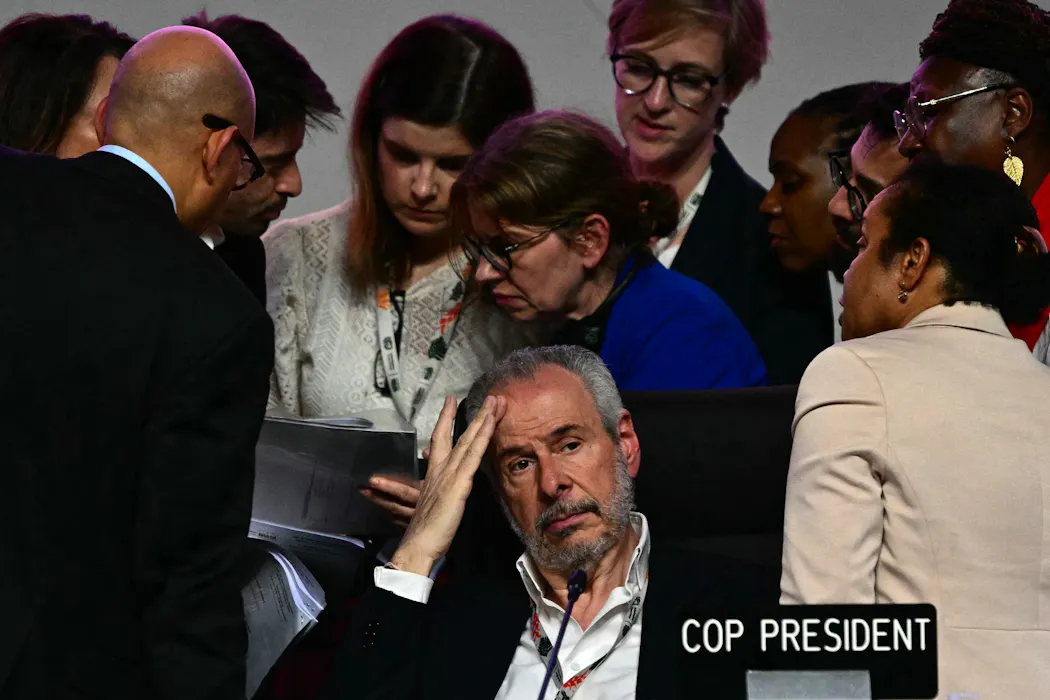
The fifth tactic is gavelling decisions through while people are out of the room. A key decision passed before small-island delegates arrived; Colombia's request to speak was ignored until after the gavel, and the president apologised but refused to reopen it.
Why it matters
These tactics work because the obstacle is rarely someone saying no outright; it is someone who looks cooperative while slowing everything down. Summit language is settled in small closed rooms, so what survives to the final text matters more than who speaks loudest in plenary.

Curated from high-quality sources, with concise summaries and key takeaways.

