Monday, 9 November 2026
Dozens of blogs and magazines, read for you every morning — the few worth talking about

Panoramic view of the Kumaon Himalaya as seen from Ranikhet in the northern Indian state of Uttarakhand. Himalayan giants such as Trisul (7,120 m (23,360 ft)), Nanda Devi (7,817 m (25,646 ft)), Nanda Kot (6,861 m (22,510 ft)), Panchachuli (6,904 m (22,651 ft)) and other peaks are prominently visible.
Original: Harshit SR Derivative work: UnpetitproleX · Wikimedia Commons · CC BY-SA 4.0
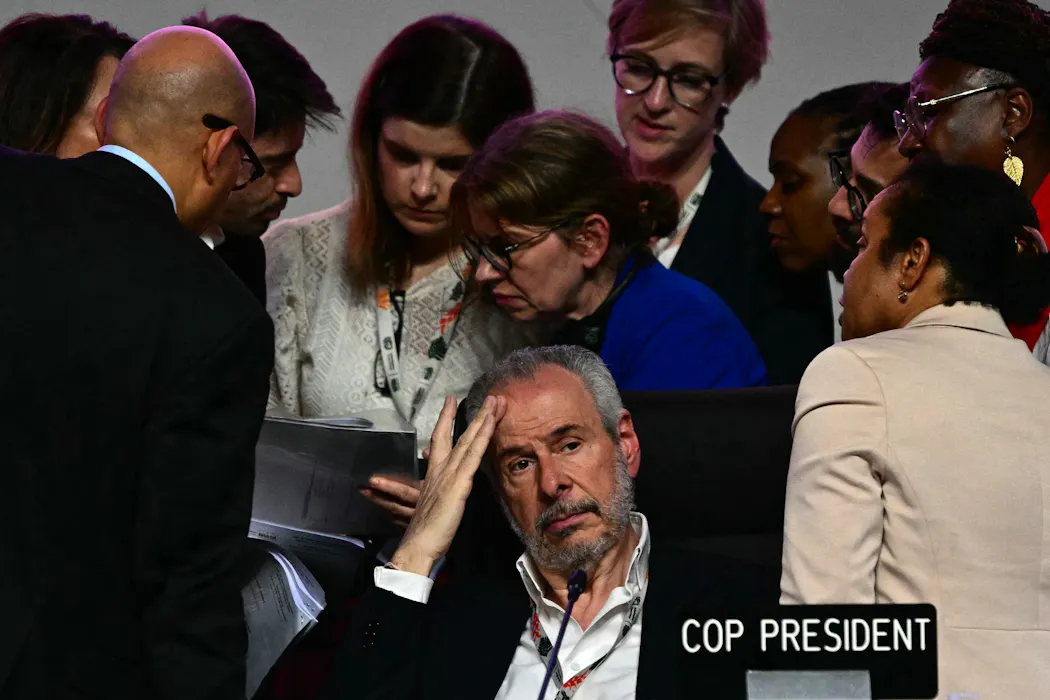
Countries at U.N. climate talks routinely use five tactics to delay, weaken or redirect action: pleading poverty, promising future fixes, diluting commitments, pledging without paying, and shutting some delegates out of key decisions.
The author counted the parenting apps on her phone: the baby monitor, the smart bassinet, the summer-camp updates, and then the location sharing. More than half of US college students are tracked by their parents, and one 29-year-old in her own lab, fresh from defending a dissertation, still gets calls from her mother about where she is.
Life360 lets parents scroll back through 30 days of time-stamped location history and has 102 million monthly active users. One psychologist's reaction was: 'Holy sh—.'
The best twist comes from Life360's founder: he travelled to Kenya alone at 11, yet insists the app gives teenagers more freedom. I can't decide which half to believe.

The EU and several US states are pushing an age minimum that lets kids open accounts with a parent's nod. It sounds like a reasonable middle ground. But one researcher lays out three ways it fails, and the first is the sharpest: it writes the collective action trap into law.
She cites a survey in which 54% of American parents said they had given their children social media not because the child was ready but because so many other families already had.
I had assumed 'let parents decide' was the easy answer. After reading this, I think the ease is the platforms', not the parents'.

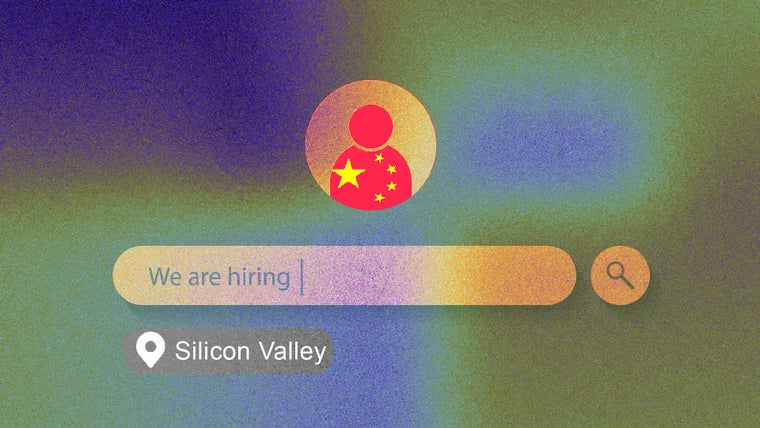
MiniMax lists around 16 openings in San Francisco, including a recruiter hired to hunt for AI talent in Silicon Valley and Seattle. Its average pay works out to roughly $203,000 per person for 2025, while OpenAI advertises base salaries of $250,000 to $445,000 for research engineers, equity not included.
The starkest number: in 2025 the U.S. gained a net 2,145 AI researchers while China lost a net 1,729.
Money is only half of it. Three Chinese researchers in Silicon Valley said that even with matching pay they would still pick American companies, for frontier models and a better work-life balance.
An investor who has spent years valuing AI companies sorts them into four camps: the chip and power suppliers, the data-centre builders, the model makers, and the customers who pay. Combined revenue from AI products and services is about $250 billion a year, a small number next to what has been invested.
On Thursday alone, AI stocks lost almost $1.8 trillion in market value, with chip stocks hit hardest, while Microsoft and Amazon, which build their own data centres, actually gained.
His conclusion is blunt: the easy phase, when you could buy anything with AI in the name and make money, is mostly over.

The hottest phrase in Chinese venture capital is 'embodied AI', and IT Juzi's Liu Xiaoqing says too much in the industry runs counter to common sense.
Her favourite example is the assembled team: people from completely different backgrounds split equity 40/30/30 and are 'running a company together' from day one. She calls that not a partnership but assembling a party for a video game quest.
What is scarier comes later: a huge share of the capital is state-backed, some funds reach maturity without a single exit, and a local state-owned enterprise takes over the assets, which just moves money from one pocket to another.
The previous wave's deaths were 'clean', leaving the soil more fertile; this one lacks time and tolerance for failure.
Two researchers went through the social media feeds of the 20 largest companies in the US and the 20 largest in Europe, classified every post and calculated the share that dealt with DEI. From 2024, before Trump returned to office, to 2025, the line drops so far it barely needs explaining.
Many programmes still exist; companies just do not want to talk about them. The author uses Google's map changes as an example: inside the US the Gulf of Mexico is labelled the Gulf of America, outside it stays as it was.
I do not think this counts as news, but measuring the silence as a number still made me pause.

Doctorow's long essay makes one blunt call: Trumpism is not an episode you can rewind. He lists what won't come back — experienced civil servants purged, long-running cancer research halted, skilled immigrants scared off.
What stuck with me is the detail: an NIH official begged the DOGE crew not to kill a cancer study that had run for years, and the DOGE kid laughed and said it didn't matter, because AI was going to cure cancer.
Hence his line that the only way out is through. It sounds like a platitude until you finish the piece and realise he means it literally.

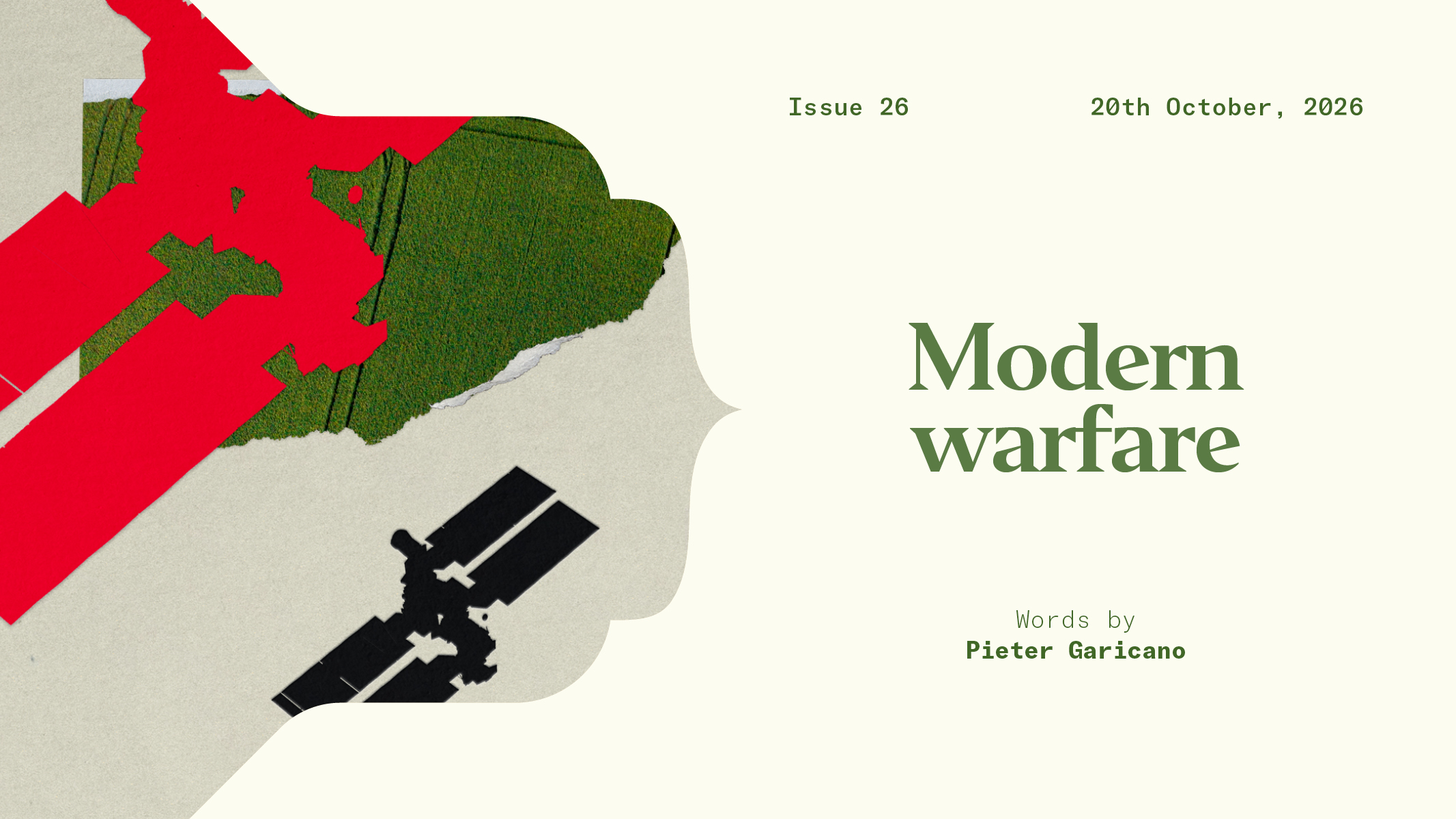
Eighty years ago, heavy artillery firing at 16 km missed by an average of 50 metres; today at 70 km it misses by just 2. Add acoustic sensors that can identify a tank 10 km away and any assembly of troops gets spotted and destroyed.
Ukrainian soldiers respond by living underground for months, or by retreating into cities. A battalion commander tells the author: 'I don't need reinforcements, I need buildings to fight from.'
I had assumed sensors just made the battlefield more transparent. I did not expect them to put a death sentence on massing forces, a tactic that has held for a thousand years.
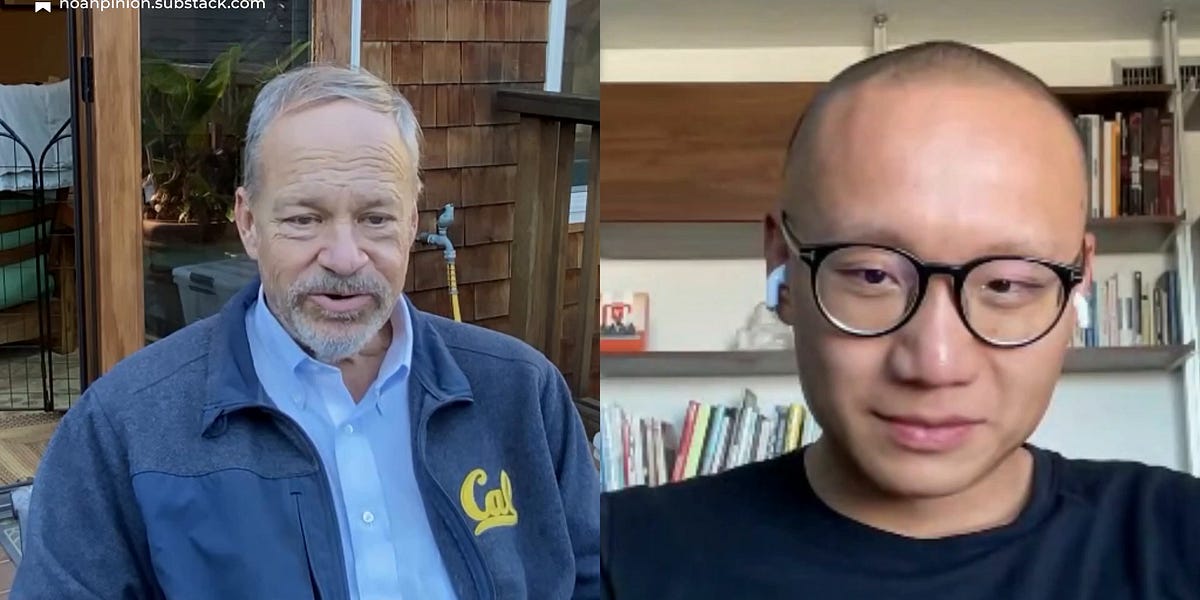
Anthropic is heading for an IPO, and three academics spent a podcast arguing about it. Noah Smith is bullish; Brad DeLong and Dan Wang are not buying it.
Smith's bull case is not that AI takes over everything but that capital structures flip: to succeed in any industry you will have to tie your capital to Anthropic, OpenAI or Google and in some sense become a subsidiary of one of them.
As it happens, a recent Google DeepMind paper has a model in which the market undergoes a phase transition toward a few concentrated AI giants. What I am more curious about is what yardstick antitrust law would use if that subsidiary world actually arrives.
“Parental consent does not make addictive products safe for children.”
“It's money. Chinese companies simply don't have enough of it to offer competitive wages for talent.”
“Capital flows in too quickly, forcing young founders to chase ever-higher valuations; the pace of growth outstrips the organization's ability to mature.”
“Corporate executives aren't freedom fighters. To quote Janis Joplin, 'freedom is just another word for nothing left to lose.'”
“Trump inherited a poker game rigged in his favor, but he flipped the table over anyway because he resented having to pretend to play.”
“I don't need reinforcements, I need buildings to fight from.”

