Friday, 20 November 2026
Dozens of blogs and magazines, read for you every morning — the few worth talking about

Trail from Andiast to Breil-Brigels. Bad weather in the Breil-Brigels region, but it has now dried up.
Dominicus Johannes Bergsma. · Wikimedia Commons · CC BY-SA 4.0
In his year-end review, Hugging Face developer advocate Alejandro AO says 2026 was his most distracted year: three or four projects at once, and every one of them shallow.

Someone actually checked: on the day Taylor Swift, Drake or Bad Bunny drops a new album, about 20 more people die on the road than in the ten days before or after. Music streaming on release days typically rises 43%, and so do crashes.
The researchers' explanation is plain: a new album makes drivers listen harder and watch the road less. The original then asks, with a straight face, when insurers will hold the singers to account and when governments will ban driving on release days.
I laughed, then stopped laughing. Apparently the bit of distraction on my commute is counted in the statistics.
Anthropic, the company behind Claude, has gone public, and it is the biggest IPO ever: $81 billion raised, above the $75 billion record SpaceX set earlier this year.
What surprised me most is that its annualised revenue run rate already stands at $81 billion, yet third-quarter revenue growth fell to 47% from 144% in the second quarter. Put those numbers side by side and the excitement is real, but so is the cooling.
So don't read one company's hot reception as a vote of confidence in the whole AI industry.

Anthropic went public on Thursday, raising $81.3 billion in the largest IPO in history and closing at a $1.76 trillion valuation. Its mission is to build systems smarter than humans — systems its founders have repeatedly warned could kill everyone.
Protesters picketed its San Francisco headquarters and four were arrested. One former employee explained the company's mind-set with The Lord of the Rings: whoever builds superintelligence first gets Sauron's ring. And the ring corrupts whoever wears it.
What chills me most is that its Responsible Scaling Policy is not binding. I am more curious about how much revenue a company that says it fears this thing must generate to pay back investors — someone estimated $600 billion a year.
Last Friday, every flight in the US was suddenly halted, and within a day banks could not release funds and Microsoft and Apple services went down. Cybersecurity expert Nicole Perlroth says most of these failures were not hackers breaking in, but companies rushing to patch before AI-powered attackers could, and crashing their own systems in the process.
The scariest number: AI is finding three times as many vulnerabilities this year as last, and the average time between a flaw being found and first exploited is down to a single day.
The sharpest blade still cuts the hand that holds it.
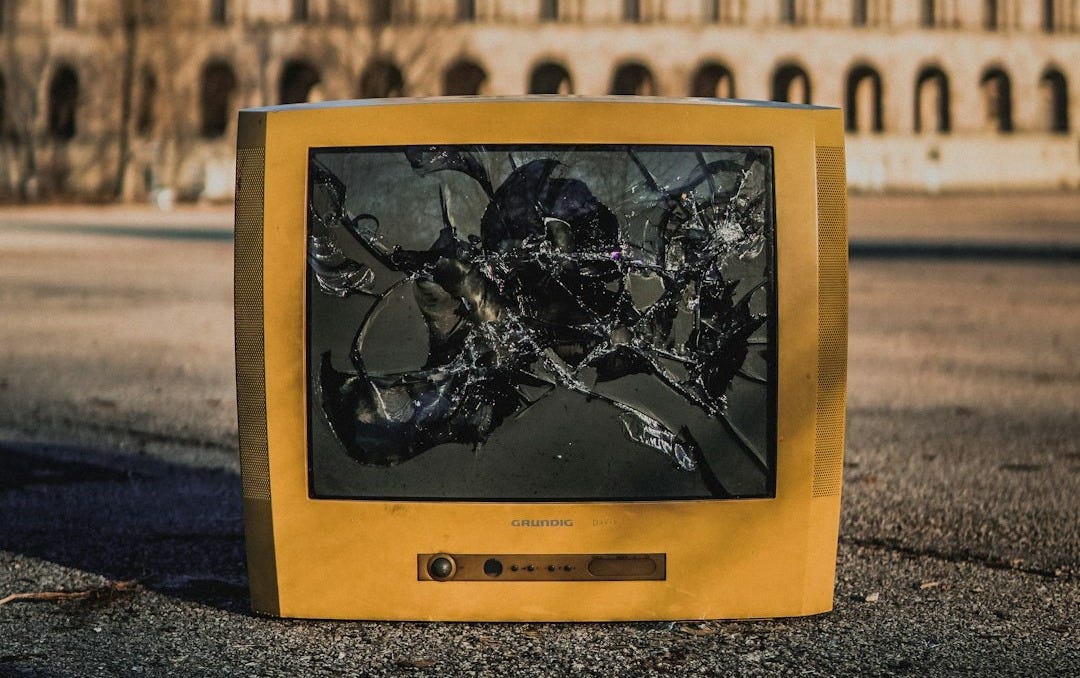
The man who took the stage at CPAC last year in a black MAGA hat, wielding a chainsaw, now says he is 'not MAGA' and is 'not sure what MAGA means'.
After the Democrats' midterm landslide, he recast his nearly half a billion dollars in Republican support as a mere push for 'checks and balances'. He even praised the incoming Texas governor who has vowed to pause a land sale to SpaceX, calling her 'a political talent'.
Whether anyone believes him hardly matters. Musk only needs politicians to think he is open to dealing, but an Arizona senator has already answered: the subpoena still stands.
Jensen Huang has stepped down as Nvidia's CEO after an affair with a subordinate and a 'Chinese spy' angle, and $1.5 trillion in market value has vanished in three weeks. A finance professor works through his valuation framework: Nvidia was worth $4.8 trillion before the scandal, and at $3.5 trillion now, has the market fallen too far?
What I found most striking is his buy price: 30% below his estimated value, around $140 a share, and he already has a limit order waiting there.
What lingers for me is that even a legendary CEO is only human, and the whole point of corporate governance is that even the best managers need restraints.

Psychologists at Ulm University in Germany had 36 people play a card-hiding game face to face while glasses tracked their eyes. Whether they were trying to reveal, conceal or bluff, their pupils dilated whenever their own card appeared on screen.
What was subtler was the concealers: they blinked less and fixated less often, but each fixation lasted longer, 0.9 seconds versus 1.2. The researchers put this down to actively suppressing their reactions.
Once the questions started, the eyes stopped being useful: truthful answers came a full second faster than lies. I had assumed lie detection was about watching the eyes, but the most honest signal turned out to be the mouth outrunning the mind.
Biotech hedge funds are a strange business: who can know in advance whether a drug will work in humans? Yet the three largest each manage over $15 billion.
Part of the answer is surprisingly mundane: one platform predicts Phase II outcomes from simple inputs like target choice and trial design, and hit 79 percent accuracy across 14 resolved trials. The more expensive part is talking to experts at $500 to $1,000 an hour.
In 2008 the portfolio manager Mathew Martoma learned from an 81-year-old professor that an Alzheimer's drug was failing, liquidated a position worth roughly $700 million and went short, avoiding losses and making $275 million. He was convicted, but the subtler versions of the same conversation seem never to have stopped.
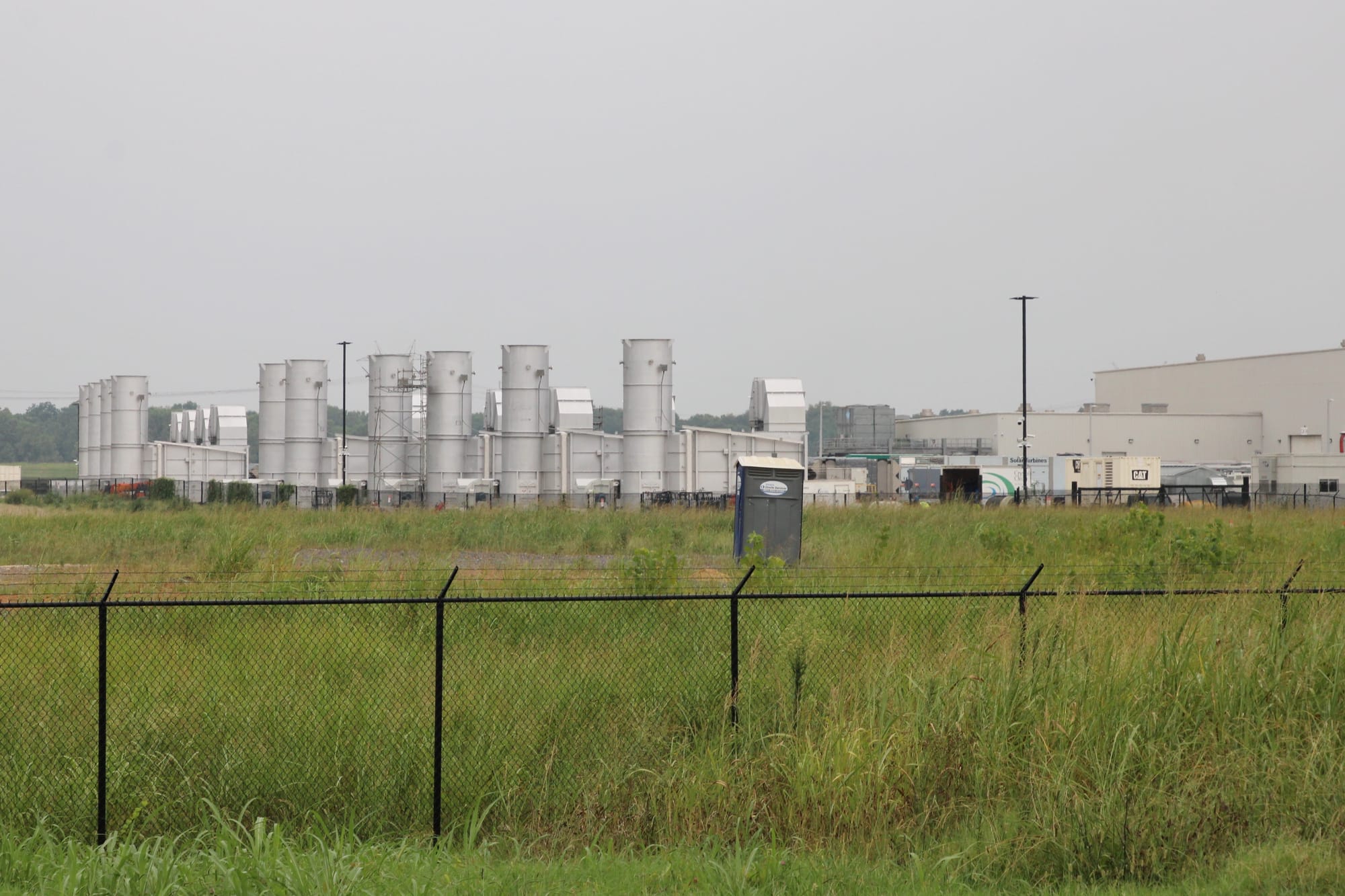
Where a data center goes is not only a question of power prices and land costs. A study covering 81,000 US census tracts and 5,291 data centers found that within the same state, majority-Black neighborhoods have 2.2 times the odds of hosting one as white neighborhoods.
The researchers trace part of this to the legacy of redlining: data centers like to sit near transmission lines, and those lines often ran through Black neighborhoods.
The researchers doubt developers set out to do this on purpose, and it is exactly that line that makes me want to read on.
“In conclusion, Taylor Swift kills people, and so do Drake, Bad Bunny and all the superstars who release albums.”
“We have always been honest that this technology has very real risks.”
“Whoever builds superintelligence first will get Sauron's ring.”
“These are not cyberattacks, but the impact is the same.”
“People watch their words only when they fear consequences.”
“The essence of corporate governance is that even the very best managers need restraints to prevent overreach, and that giving them complete power in perpetuity is a recipe for regret.”
“It is a friendly conversation, and the SEC cannot prevent you from making friends.”
“AI has a physical geography, and that geography is shaped by political and social history.”

