
Daily Takes
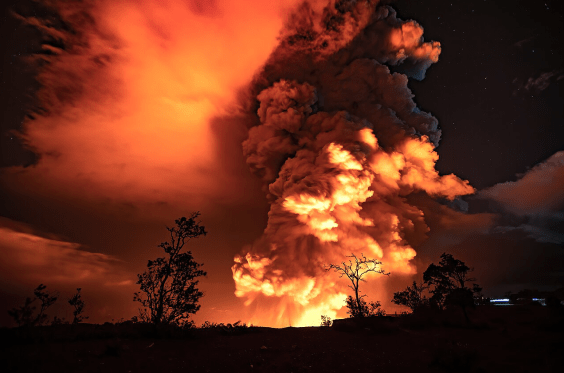
How Listening to Ocean Waves Can Predict Volcanic Eruptions
By measuring how the speed of ocean wave sounds changes as they travel through volcanic rock, scientists can predict volcanic eruptions in advance.
In 2010, a massive volcanic eruption in Iceland grounded all European flights for a week. The U.S. Geological Survey (USGS) now has a new trick: using ocean wave sounds to predict volcanic eruptions. It sounds far-fetched, but the principle is fairly simple.
1. Ocean wave sounds as an 'ultrasound scanner'
Pacific waves crash against the Hawaiian islands, and the sound travels through the underground rock. Seismometers on the island, originally meant to monitor volcanic activity, can now pick up these sounds as well.
The speed at which sound waves travel through rock can tell scientists about changes in the underground structure—like giving a volcano an ultrasound.
2. The speed changes hold a clue
Before an eruption, magma builds up underground, cracking the rock and creating fissures. These fissures slow down the ocean wave sounds. When magma moves into the vent, molten rock fills the fissures, and the speed increases.
So by comparing the sound speeds measured by seismometers at the volcano's base and its edge, scientists can infer whether an eruption is imminent.
3. Validated twice
The USGS used this method to re-analyze data from Kilauea: two months before the 2020 eruption, the sound speed measured by the bottom seismometer began to slow, reaching its slowest just before the eruption. Four days before an eruption in 2025, the edge seismometer recorded the fastest speed.
However, the USGS admits the technique is still being tested, and it's just one more forecasting tool. Ocean wave sounds aren't just relaxing white noise—they could save lives.