
Daily Takes
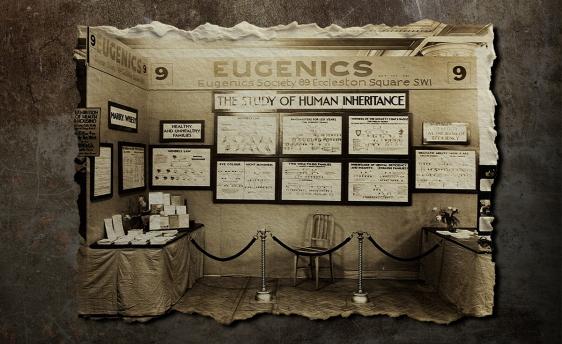
The Return of a Discredited Pseudoscience
Eugenics, though scientifically discredited, is making a comeback under the guise of politics and technology, threatening social fairness.
Eugenics, a pseudoscience that was once touted as 'science' a century ago, has quietly made a comeback. It believes that humans can select 'good genes' to make humanity 'better' in the same way that animals are bred.
But science has long proven that this idea is completely untenable. Unfortunately, it has now resurfaced in a new guise from the political and tech circles.
1. What is eugenics?
In the 19th century, Darwin proposed the theory of evolution, which says that species are shaped by natural selection. His cousin Galton, however, twisted the idea: if farmers could improve livestock through breeding, why not do the same with humans?
Thus 'eugenics' was born, meaning 'well-born'. It claimed that some people are inherently 'superior' and others 'inferior', and that the 'superior' should reproduce more while the 'inferior' should be restricted.
This theory quickly became entangled with racism. Nazi Germany took it to the extreme, killing millions of Jews, disabled people, and others deemed 'undesirable'.
2. Old tune, new spin: genetic determinism
Today, eugenics is making a comeback with the same old tune of 'genes determine everything'.
Former US President Trump spoke about terrorist attacks, saying the perpetrators had 'bad genes'; Health Secretary Kennedy said measles specifically harms people with 'poor physique'; tech mogul Elon Musk advocates for 'high-status men' to have more children and even wants to contribute sperm for colonizing Mars.
Behind these statements is 'genetic determinism': the belief that intelligence, morality, and even social status are predetermined by heredity. But scientific research has long shown that IQ is the result of multiple genes plus environment, the genetic differences between races are minimal, and there is no such thing as a 'superior gene'.
3. New technology, old tricks
The new guise of eugenics is the latest reproductive technology.
An ad appeared in the New York subway: 'Have the best baby', claiming to screen embryos for eye color, hair color, and even IQ. The company, Nucleus Genomics, already has thousands of people on its waiting list.
Testing embryo genes to select the 'perfect baby' may sound like personal freedom, but it is fraught with problems: who has the right to choose? If the rich can select and the poor cannot, will the wealth gap widen?
More frighteningly, this practice of 'selecting people' is essentially the same as the eugenics of a century ago, which forced sterilization and discriminated against 'inferior' populations.