TL;DR
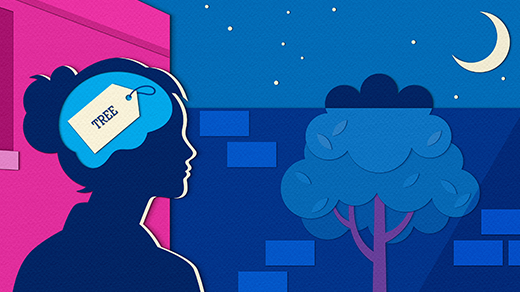
The brain does not passively receive the world and file it away; it actively projects categories onto the world based on the body's immediate energetic needs.
How does the brain handle our noisy world? The traditional view held that the brain works like a filing cabinet: it passively takes in sensory information, then matches it to stored templates to categorize it.
Two leading neuroscientists now offer a new framework: the brain is more of a prediction engine, actively constructing categories based on the body's immediate energetic needs.
1. Categories are survival tools, not objective reality
For example, a scratch from grass in a safe environment is ignored; in unfamiliar tall grass, the same scratch is quickly assumed to be an insect bite or worse. Same sensation, different categories, because the brain predicts threat.
2. Categorization happens throughout the body, not just the cortex
Traditionally, categorization happened at the end of sensory processing. But the new framework argues the whole nervous system is involved, including internal signals — a racing heart, fast breathing are information that primes the 'fear' category.
3. Energy management is the core
The brain's primary job is to maintain the body's energy balance. So categorization serves survival: hungry, a bruised apple is a needed meal; sated, it's subpar fruit to skip.
The new framework overturns the filing-cabinet model, proposing that categorization is a basic organizing principle of the nervous system, integrating memory, perception, and behavior to help us survive in an information-rich world.
Curated from high-quality sources, with concise summaries and key takeaways.

