TL;DR
Beyond vaccines, immunocompromised people have an overlooked option called Pemgarda, while the CDC's politicized handling of measles death data is eroding public trust in health data.
September brings back-to-school sniffles and a Covid wave. The good news: fall vaccines are almost here. But immunocompromised people have an option almost nobody knows about. Meanwhile, the Pennsylvania measles deaths have turned into a political storm, with CDC's own data starting to wobble.
The overlooked Pemgarda
Organ transplant patients on anti-rejection drugs often can't mount a good vaccine response. Few know about Pemgarda, a monoclonal antibody that delivers antibodies directly, bypassing the immune system. In trials, it was 94% effective at 3 months and 84% at 6 months, with protection lasting up to 12 months.
The catch: it requires two IV infusions 90 days apart and isn't available at pharmacies. If you know someone moderately to severely immunocompromised, pass this along.
The political theater of measles data
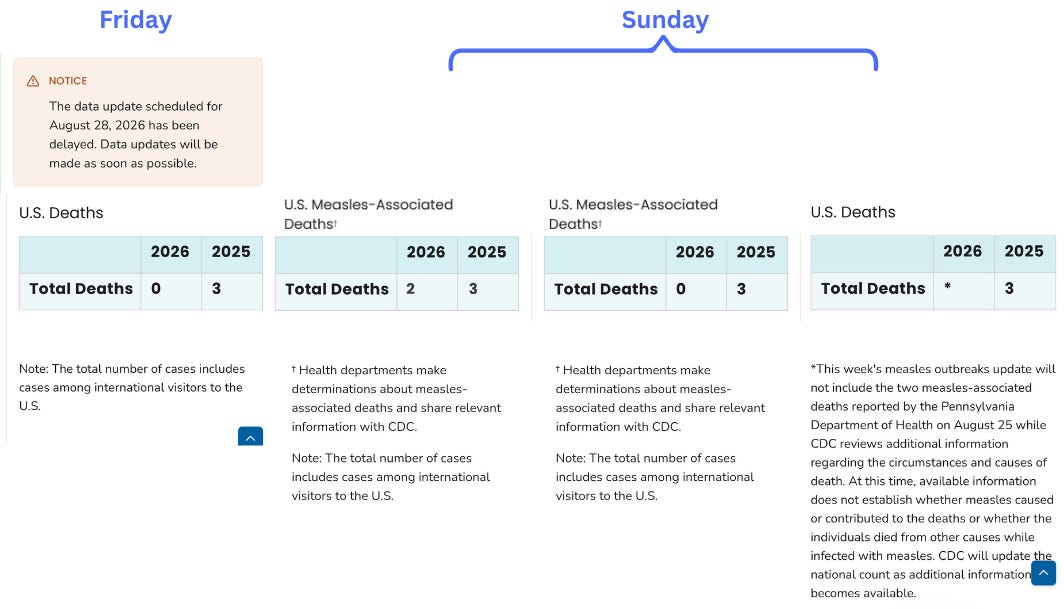
Pennsylvania health officials and the coroner say the child deaths were measles-related; RFK Jr. disagrees. Last Friday, CDC broke precedent by not updating its data. On Sunday, the death count online flipped from 0 to 2 to 0, then to an asterisk.
US public health data flows from local to state to federal levels, and CDC aggregates it. By refusing to accept state reports, the feds are signaling distrust—unprecedented. When data gets politicized, trust erodes, and behind every number is a family grieving a child.
And the good news
AI-assisted brainstem surgery restored a patient's vision. The FDA approved a pancreatic cancer drug that doubled survival time (13.2 vs. 6.7 months)—but at $477,000 a year, it's out of reach for many.
Curated from high-quality sources, with concise summaries and key takeaways.

