TL;DR
Multiple studies link the shingles vaccine to a lower risk of dementia, but one new study found no association; the evidence is suggestive, not definitive, and only randomized trials will settle the question.
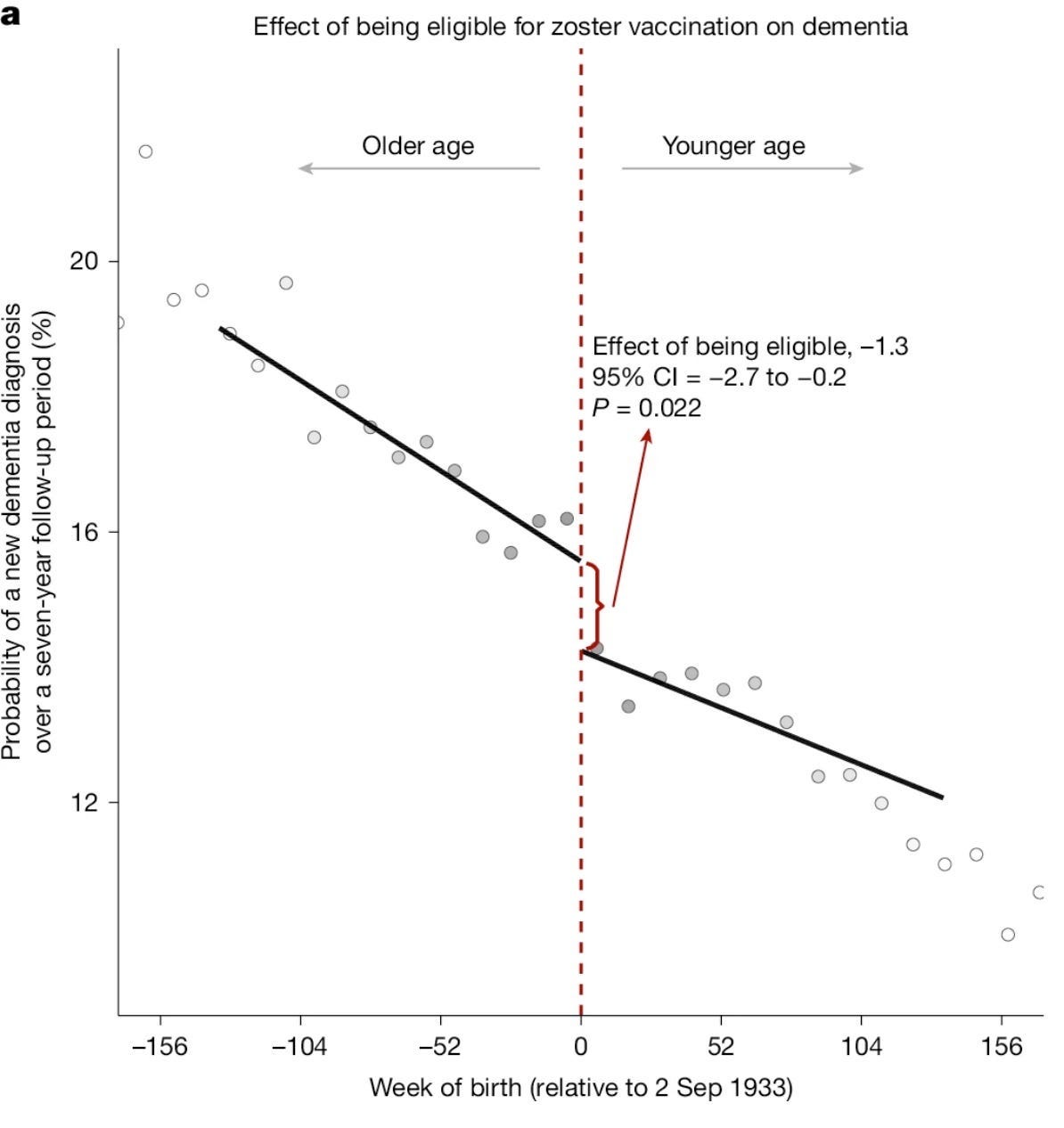
Scientists stumbled on a surprise: people who got the shingles vaccine had about a 20% lower risk of being diagnosed with dementia within three years. This wasn't speculation — it came from a 'natural experiment' created by a Welsh health policy.
In 2013, Wales only allowed people under 80 to get the vaccine. Those born just after the cutoff date of September 2, 1933, could get it; those born just before could not. That arbitrary birthday line split the population into two nearly identical groups, making the comparison almost as fair as a lottery.
A biological reason to believe it
The virus that causes shingles lies dormant in nerves for decades and may quietly fuel brain inflammation and amyloid plaques — the hallmarks of dementia. So the vaccine might do more than prevent a rash.
But one oddity: the first study only saw a protective effect in women, not men. Then follow-up studies in Australia, Canada and the US found a similar link in both sexes.
A new study pours cold water
Recently, Oxford epidemiologist Davey-Smith repeated the Welsh approach on English hospital data and found no link at all between the vaccine and hospital-diagnosed dementia. Online hot takes called it a 'gotcha'.
It isn't. Science advances by trying to prove itself wrong. One unpublished contradictory study doesn't erase several well-designed ones — it just keeps the pressure on.
The real answer is still coming
These clashes are science working as intended, and they are pushing the field toward randomized trials. That will be the true test.
Keep this much: whether or not it helps dementia, the shingles vaccine prevents a genuinely miserable disease — so if you qualify, go get it.
Curated from high-quality sources, with concise summaries and key takeaways.

