TL;DR
The Tale of Genji portrays a world so alien that modern readers need extensive historical and cultural context to truly understand its characters, whose thoughts and behaviors diverge drastically from contemporary norms.
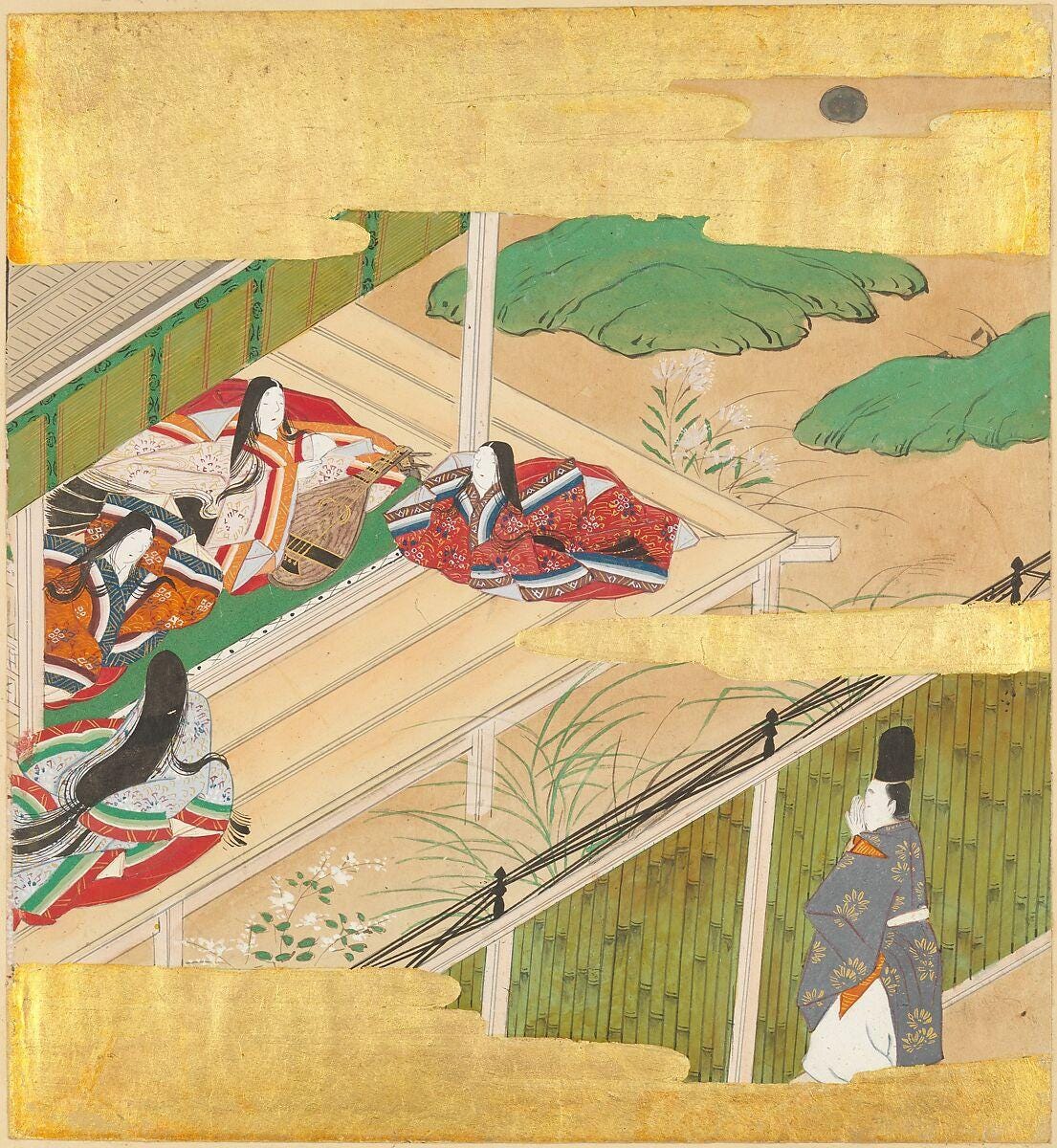
A thousand years ago, the aristocratic court in Kyoto lived a life radically different from ours—obsessed with beauty, rigidly hierarchical, pervaded by a sense of impermanence, and strictly segregated by gender.
Set in this world, The Tale of Genji was written by Murasaki Shikibu, a lady-in-waiting to the Empress. But don't mistake it for a modern novel—the characters' thoughts and actions are baffling to contemporary readers.
Beauty as virtue, blackened teeth and plucked eyebrows
In that era, beauty was almost synonymous with morality. Courtiers believed that a person who was handsome, wrote good poetry, or had neat calligraphy was inherently good. Hence they cared deeply about appearance, even finding it attractive for women to blacken their teeth and replace their eyebrows with painted dots higher on the forehead.
Rigid hierarchy, even in language
The court was strictly stratified, with rank determined by birth, wealth, and talent. A complex system of honorifics allowed precise communication of social standing—nuances largely lost in translation.
Courtship like hide-and-seek, communication through poetry
Men and women were almost completely segregated; women could not show their faces to men. Lovers met in darkness, and poetry was an essential social skill for flirtation, complaint, and apology—much like memes today.
Understanding the book requires copious footnotes
Translating The Tale of Genji is notoriously difficult due to its wordplay, allusions, and ambiguities, leading to widely divergent versions. The author advises readers to choose between Tyler's academic approach or Washburn's more readable one, emphasizing that footnotes are indispensable.
So Royall Tyler's claim that 'anyone can read Genji' is misleading. Yet if you're willing to suspend modern moral judgment and immerse yourself in that strange world, you might find moments of shared humanity across the centuries.
Curated from high-quality sources, with concise summaries and key takeaways.

