TL;DR
Women never left the mines; laws and unions deleted them from the definition of a miner so men could keep the job.
Picture a miner and you picture a bloke covered in coal dust, or a bearded prospector panning for gold. The image is masculine from top to bottom.
Yet women have always worked underground. Two scholars found that in some countries women make up half the workforce in artisanal and small-scale mining — ASM for short, the kind where miners dig with simple tools, as the UN and the World Bank label it.
Mining used to be a family job
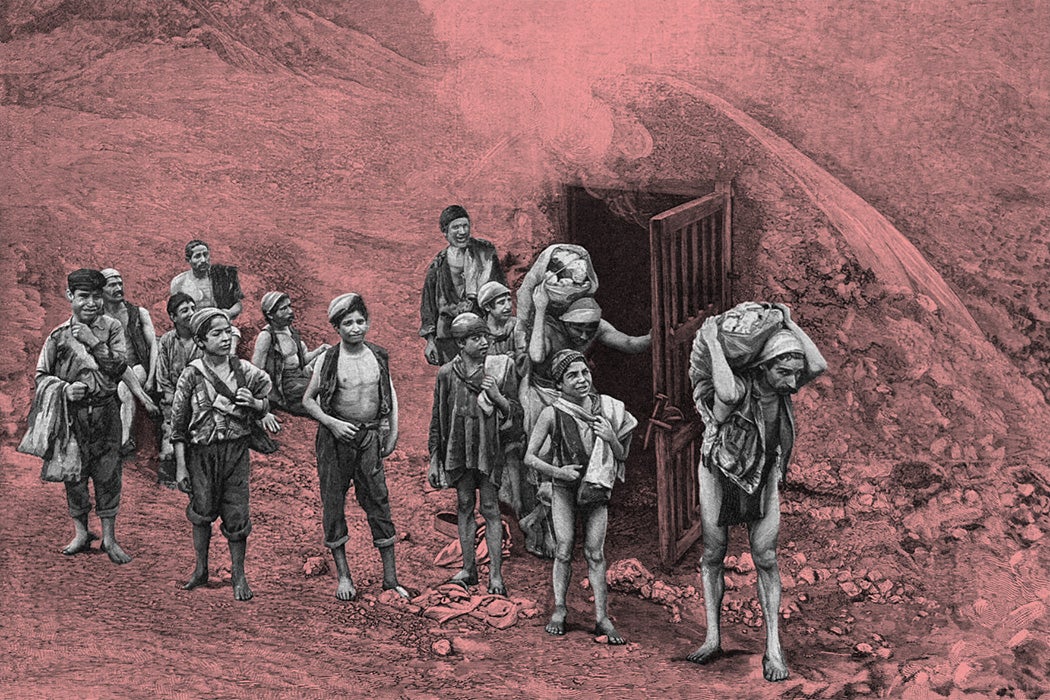
Early mines were family operations: men hewed at the rock, women and children hauled it out, sorted it, crushed it, washed it, dried it.
In the late eighteenth century the small mines were swallowed by bigger capitalist firms. Workers stopped being independent small producers and became wage employees.
Now get the women out
Along the way, laws in Europe and North America started to 'protect' women by banning them from the pits. Britain's Mines and Collieries Act of 1842 was among the very first laws to limit work by gender.
The idea that men should be the breadwinners took hold at the same time. State rules and employer rules squeezed women out of formal work until they had one role left: mother, producer of the labour force.
But someone still had to do the work below ground, so some women put on men's clothes and passed as men in the pits. After the First World War they were thrown out; during it they were heroines, drafted in when needed and dropped the moment it ended.
Women got back underground only 50 years ago
By the mid-twentieth century, shutting women in the home was being called discrimination. In 1974 the US got its first women union members working underground.
Today women are 10 to 50 percent of the ASM workforce across Africa, Asia and Latin America, with Ghana and Nepal highest. Eighty percent of the world's gemstones come from these small mines — poor conditions, dangerous, and they are down there.
In one line: women did not skip mining. The people writing the history crossed their names out, using a pen made of law, unions and the phrase 'men support the family'.
Curated from high-quality sources, with concise summaries and key takeaways.

