TL;DR
Robot vacuums and other home gadgets are producing evidence around the clock, while the law governing it is still a patchwork.
A husband in Taiwan suspected his wife of having an affair. In September 2023 he found a used toothbrush at their holiday home, and garage footage showed an unfamiliar man driving her there. Three months later he opened the robot vacuum's app to talk to her and saw, through its live camera, an intimate encounter. He recorded it and used the video to win about US$16,000 from his wife and her lover for infringing his marital rights.
Then the Taoyuan District Court sentenced him to five months in jail and fined him roughly $4,700 for recording private activity without consent. Both rulings hold up. Together they expose an uncomfortable gap: devices inside homes now generate evidence continuously and often invisibly, while the law governing it remains a pile of separate patches.
The house that watches
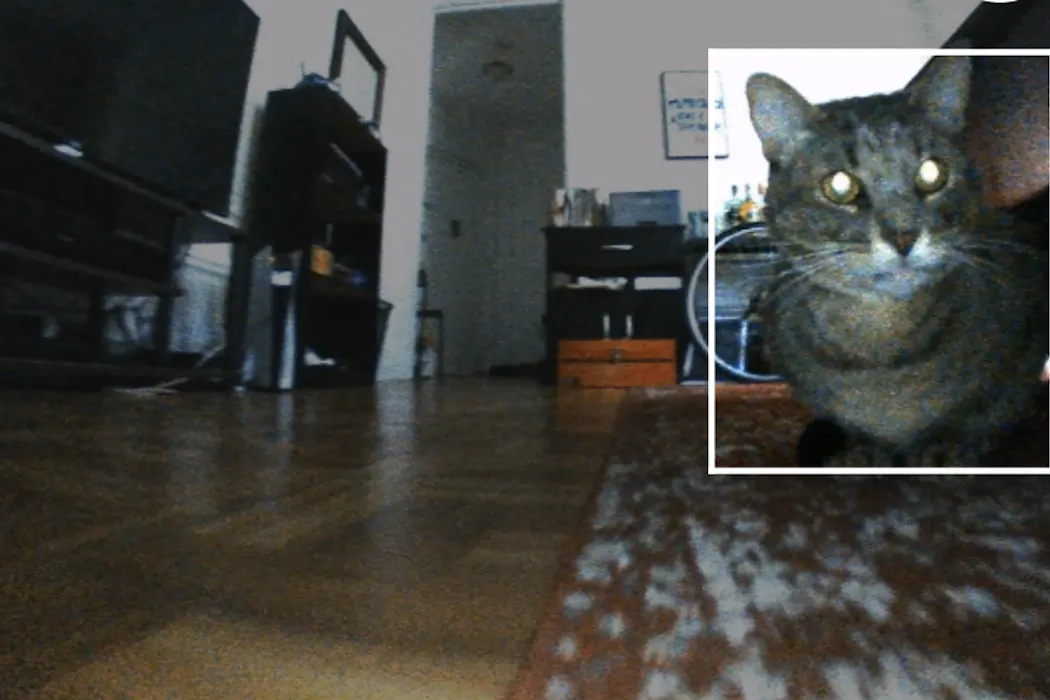
A modern robot vacuum is a moving sensor platform. Some models combine cameras, microphones, laser navigation and remote viewing. App-connected ones draw detailed floor plans and cleaning histories, and that data can reach the manufacturer's servers.
In 2022, MIT Technology Review published images captured by development versions of iRobot's Roomba J7, including a woman on the toilet. Footage from test households had gone to a data-labelling contractor, whose workers posted it in private social media groups. No hacking was involved. The leak came out of the ordinary pipeline used to train object-recognition software.
Digital witnesses have testified before
Prosecutors in Arkansas charged James Bates with murder after a friend died in his hot tub, sought recordings from his Amazon Echo and cited smart-meter data suggesting overnight water use. Amazon resisted until Bates consented. But prosecutors could not rule out other explanations, and the charge was dropped.
In Connecticut, Richard Dabate claimed an intruder killed his wife, Connie. Her Fitbit data contradicted his timeline and helped establish when she stopped moving. A jury convicted him, and in 2025 the state Supreme Court upheld the conviction, calling the Fitbit evidence scientifically reliable.
In Ohio, Ross Compton's pacemaker data was used to challenge his account of a house fire, raising a fresh constitutional question: how much privacy protection should cover intimate medical data from an implanted device? The court upheld the search warrant, found probable cause, and held that retrieving the data remotely was not an unreasonable search. Compton died before his arson trial.
In short: household data can convict, clear or mislead. That makes digital forensics indispensable, and it demands careful guardrails.
Three problems the law has not solved
First, consent and notice. The wife in Taiwan argued that a small indicator light was no meaningful warning. The worry extends to guests, children, domestic workers and estranged spouses. Unlike a mounted security camera, an appliance that roams can record people who never saw its privacy policy.
Second, legality and admissibility do not always line up. The constitutional exclusionary rule restrains government, not private parties, so the Fourth Amendment generally does not bar evidence a private actor obtained wrongly. The Supreme Court established that in Burdeau v. McDowell in 1921. So how do courts admit evidence that private individuals may have generated and extracted? In the Taiwan case, what exactly was recorded? Where was it stored? Was it altered? These questions go beyond whether the video looks authentic; they determine what a court can reliably infer from a digital artifact whose chain of custody may start with a participant in the dispute.
Congress wrote a different rule for sound. Under the federal Wiretap Act of 1968, illegally intercepted wire or oral communications may be excluded, and the interceptor can face criminal and civil liability. Where the act covers recorded sound, illegality and inadmissibility can travel together.
On one spouse recording another at home, courts disagreed for decades. The Fifth Circuit created an interspousal exception in Simpson v. Simpson in 1974, but most circuits rejected it, including the Tenth in Heggy v. Heggy in 1988. The Eleventh Circuit overruled its inherited exception in 2003, leaving Simpson a conspicuous outlier.
A robot vacuum adds another twist: the Wiretap Act covers intercepted sound, not silent video. Camera-only recording therefore falls outside that federal regime. Liability and admissibility then depend on state laws that differ sharply in scope, consent requirements and penalties.
Third, reliability. Consumer devices were designed to clean floors, not to withstand cross-examination; timestamps, firmware updates and retention policies complicate interpretation. A remote-access log may identify an account without proving who used it. Lawyers in the Dabate case challenged the Fitbit evidence on reliability grounds, though the court admitted it after expert review. Every new device category raises similar questions. Examiners need validated methods to acquire, authenticate and interpret data, as the Scientific Working Group on Digital Evidence recommends for novel devices.
Charting a path forward
Consumers would have a better idea of their exposure if manufacturers said at the point of sale what a device records, where the data goes and how long it lasts. Federal trade regulators already urge clear pre-purchase disclosures and data minimisation for connected products. Those principles could apply to remote viewing instead of staying buried in the terms of service.
It would also help if manufacturers provided exportable logs showing when remote access occurred, which account connected and whether the camera or microphone was active. Federal rules on vehicle event data offer a model by standardising records and retrieval. Existing guidance on internet-connected devices supports trustworthy time references, tamper protection, access controls and defined retention.
Legislatures could tackle intimate surveillance directly, so that today's patchwork stops punishing betrayed spouses, enabling abusers and guiding no one clearly. Funders and standards bodies could prioritise consumer-device forensics, so that courts admit evidence because it has been validated, not because it looks precise.
The vacuum in Taiwan did, in service of its main job, exactly what it was built to do: watch a room and report to whoever was holding the phone. The family and the courts then improvised around an evidentiary power nobody had planned for. Before words and actions in more homes become evidence in court, Congress and the states will have to decide what home robots may record, who may use the recordings, and what they prove.
Curated from high-quality sources, with concise summaries and key takeaways.

