The US outsourced the dirty, unprofitable work of separating rare earths to China. Now its fighter jets and EV magnets need Chinese licences, and rebuilding would take over a decade.
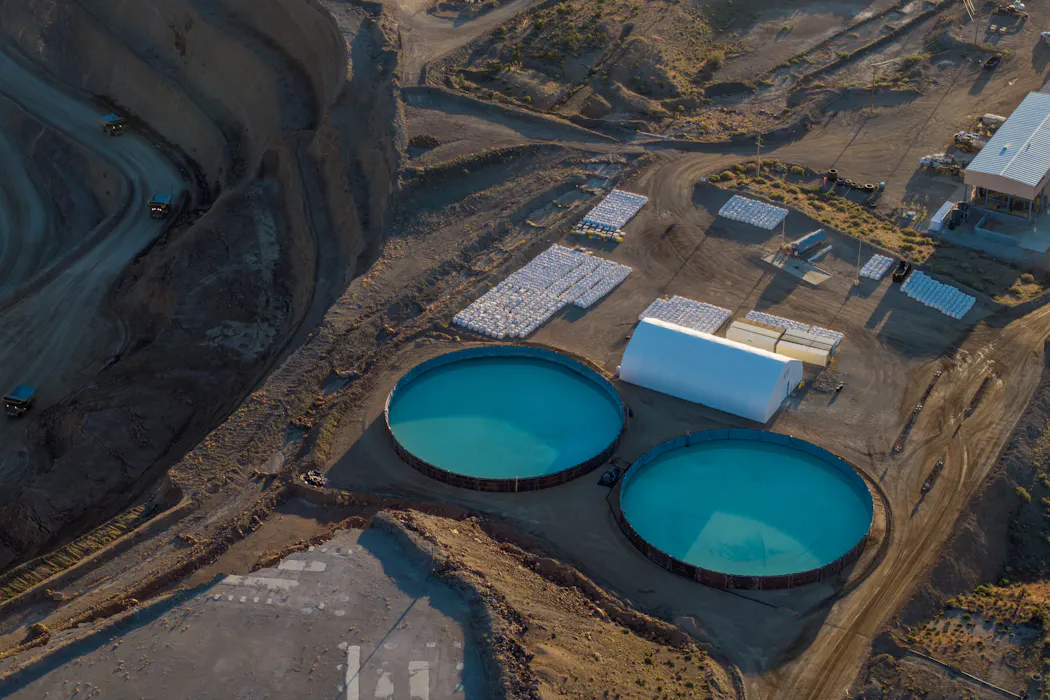
Rare earths are not actually rare. Cerium is about as common in the Earth's crust as copper. The hard part is separating those 17 metals from one another and from raw ore, a step that is dirty and expensive.
China handles roughly 91% of the world's separation and refining. Buyers got material cheaper than they could make it themselves; the price was handing the chokepoint to the processor.
How the US gave it away
California's Mountain Pass mine led world production into the late 1980s. Radioactive wastewater kept spilling into the Mojave Desert, and domestic production grew harder to sustain.
China expanded its own mining and undercut on price, so switching suppliers was an easy call. The separation plant closed in 1998; the mine stopped in 2002.
Mining restarted in 2017, but as recently as 2025 the US still imported more than two-thirds of the rare earths it used.
Buying it back is slow
A 2010 Government Accountability Office estimate said rebuilding the whole chain, from mining to magnets, would take 15 years. Reality has been slower: China has thousands of experienced engineers, the US far fewer.
The cutting-edge technology was developed in China, and in December 2023 Beijing banned exports of the separation technology itself.
Since April 2025 Washington has committed over $7 billion. The Pentagon bought $400 million of preferred stock in MP Materials, a 15% stake.
What happens on November 10
On October 9, 2025, China's commerce ministry issued six export controls at once. Announcement No. 61 reaches foreign factories too: a plant in Germany or Japan needs a Chinese licence to export if Chinese-origin rare earths make up 0.1% or more of its value.
After Trump and Xi met, Beijing suspended the six until November 10, 2026, in exchange for Washington pausing its affiliates rule for a year. If neither side moves, the controls snap back automatically.
Some rules were never suspended: licensing on seven heavy rare earths has applied since April 2025. Ford had to idle its Chicago plant for a week in May for want of magnets, its CEO describing supply as 'day to day'.
On June 22, 2026, China put 10 US companies on its control list, among them MP Materials and USA Rare Earth, the two federally backed firms closest to a full mine-to-magnet chain.
Washington has three paths: keep depending on China, fastest and cheapest and most exposed; rebuild at home, decades and billions plus acidic waste; or build with allies like Australia and Japan.
Beijing's logic is plain: whoever is best placed to take away its leverage gets controlled first.
Why it matters
The lesson of rare-earth processing is not that whoever has the resources wins, but that whoever accepts the dirty work holds the power. The US saved an environmental bill and some money and gave up a veto over fighter jets, EVs and wind turbines. The same trade is now playing out in chips, medicines and batteries.



Curated from high-quality sources, with concise summaries and key takeaways.

