After a century of ethnographic evidence, anthropologists conclude that no hunter-gatherer society was truly egalitarian, and the limited equality it did have usually came from people demanding it.
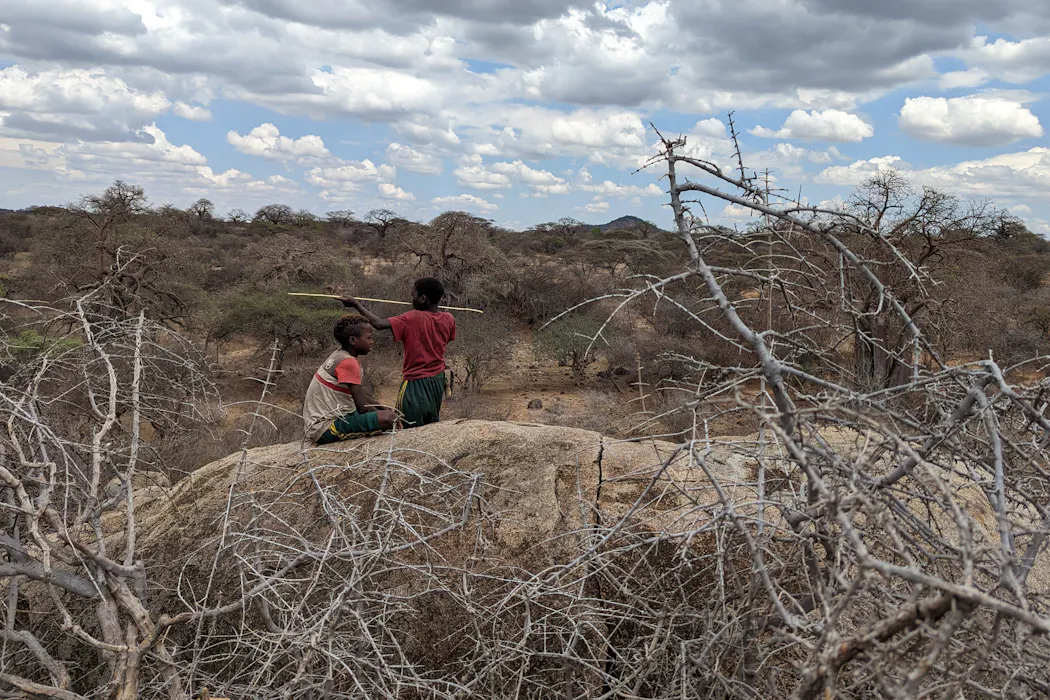
On the shores of Lake Eyasi in northern Tanzania, a small number of people still hunt and gather their food. A Hadza hunter shoots a kudu, cannot carry it alone, cuts out his poisoned arrow, covers the carcass in dry grass to hide it from hyenas, and runs home for help.
Word spreads across the camp. Everybody rushes to the kill. The meat is divided, carried back and divided again. Every family gets a share.
That scene is often held up as the picture of egalitarianism. But two anthropologists who have worked with the Hadza and with the Tsimane of Bolivia's Amazon say it is not that simple.
There is inequality even in the most equal societies
After pulling together more than a century of ethnographic sources, their conclusion is blunt: no society lacked inequality.
The Ju/'Hoansi of the Kalahari had little property and shared food widely, yet certain families controlled the hunting territory around waterholes. The Agta of the Philippines arranged their children's marriages and discriminated sharply against orphans. The Hadza reserve certain cuts of meat for older men and give more respect to better hunters.
Gender inequality was everywhere: women everywhere did more direct parenting, men more often took part in community-level decisions. Age was another fault line. In many Australian societies, older men controlled ritual secrets and had a say over younger relatives' marriages.
Equality is usually taken, not given
More interesting still: the mechanisms that limit inequality often require no generosity at all.
Hadza meat gets shared not because the hunter's family believes in total equality, but because other families ask for it, loudly. There is more taking than giving in it. Ridicule and mockery of stingy or boastful people keep greed in check too.
The authors' conclusion: egalitarianism is not perfection. It is a set of tools people use to secure their own autonomy and access to resources. Equality is what sometimes falls out of it.
Why it matters
Romanticising hunter-gatherers as naturally noble egalitarians makes equality look like something that happens on its own. It never did. It was extracted through demands, complaints, mockery and the threat of walking away — which is worth remembering the next time something is shared out fairly.



Curated from high-quality sources, with concise summaries and key takeaways.

