In July 1812 Napoleon had already decided to halt for the winter at Vitebsk, then marched on two weeks later and turned an army of 420,000 into 10,000. The essay holds him up against Kutuzov, Fabius, Hadrian and Washington to make one point: starting is easy, deciding not to continue is the hard part.
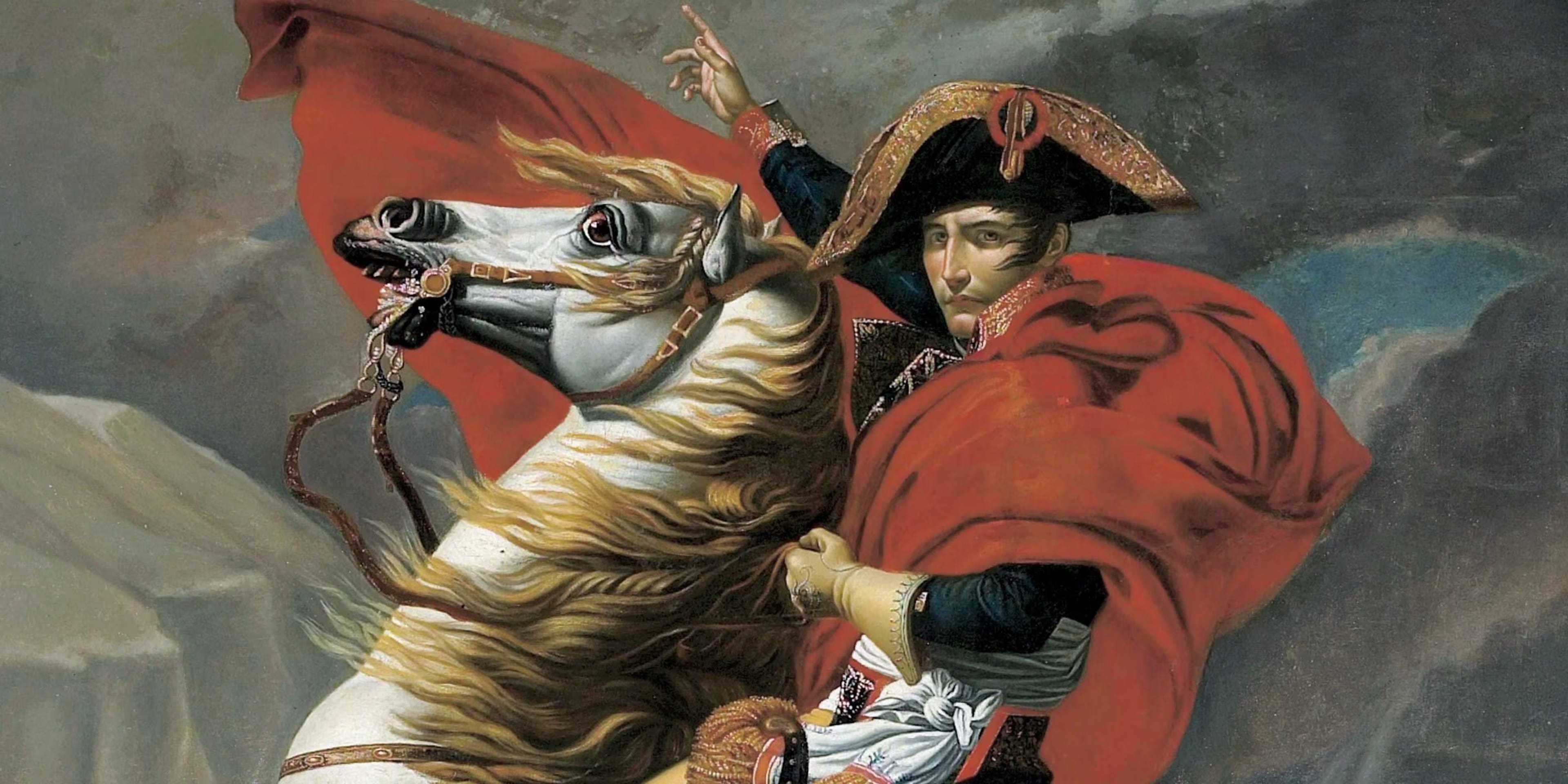
In July 1812 Napoleon took the largest army Europe had ever assembled into Russia. He had fought no major battle, yet dysentery and typhus had already killed off a good share of his men, and thousands of horses had starved.
Every argument for stopping was logistics, every argument for going was pride
At Vitebsk he announced the year's campaign was over. Maps were unrolled, winter quarters planned.
But he could not sit still. He was not thinking about supply lines. He was thinking about what Paris would say, what Vienna would say, what it meant for the master of Europe to spend a winter in a provincial Russian town having accomplished nothing.
Two weeks later he marched east again. Smolensk failed to deliver a decisive victory, so he went on to Moscow. At Borodino some 70,000 men fell in a single day, and the result was inconclusive. He entered Moscow to find it nearly empty; that night it burned.
He waited five weeks for Alexander to answer. No answer came. He left on 19 October, and the first heavy snow fell in early November. Of the 420,000 who went east, 10,000 came back.
Choosing is hard because continuing never feels like a choice
Starting feels like a decision. Continuing does not. Napoleon deliberated over crossing the Niemen, but he never really decided to march on Moscow - each step east justified the one before it.
People are rarely ruined by one bad yes. They are ruined by a long chain of yeses and one no they never managed to say.
A yes leaves something you can point to: a building, a book, a deal. A no leaves an empty space, and nobody builds a statue in an empty space. Fabius delayed and saved Rome, and Rome called him the Delayer.
Identity makes it worse. Stopping at Vitebsk meant admitting the whole invasion rested on a fantasy: that Alexander would behave the way Napoleon needed him to. Marching on postponed that admission.
So how do you know when to stop
Kutuzov made the opposite call at Fili: give up Moscow, keep the army. He knew what he was for - the army survives, everything else is negotiable.
The test: does this no protect your central purpose, or just your comfort? The first is strategy, the second is evasion, and from the outside they look identical.
Here is a simpler one: if this were offered to you fresh today, would you take it on?
George Washington won the war, handed back his commission and went home to farm. The king reportedly said that if he did that, he would be the greatest man in the world. Napoleon could do almost anything. The one thing he could not do was stop.
Why it matters
People judge a commitment by what it has already cost rather than by whether it still earns its keep. Sunk cost turns into a reason to keep spending, and the empty space left by the work you turned down never gets anyone keeping score.



Curated from high-quality sources, with concise summaries and key takeaways.

