Monday, 5 October 2026
Picked from the best of the world's press

Twin mills (front: green mill, 1856; rear: red mill or Schoof’s mill, 1706), Greetsiel, Krummhörn, Lower Saxony, Germany
In July 1812 Napoleon had already decided to halt for the winter at Vitebsk, then marched on two weeks later and turned an army of 420,000 into 10,000. The essay holds him up against Kutuzov, Fabius, Hadrian and Washington to make one point: starting is easy, deciding not to continue is the hard part.

A German teenager and an American boy never fully woke after ordinary anesthesia, and their symptoms traced back to a little-known mitochondrial mutation from one Venezuelan state that turns a common anesthetic gas into a lethal key.

AI data centers have absorbed the world's memory chip supply, pushing phone makers to drop their cheapest models; global handset prices are up roughly 15% this year.

In September 2026, OpenAI announced its models had cracked one of math's most famous problems. The proof checked out, but nobody understood it, and a field built entirely around solving problems has no system for that.

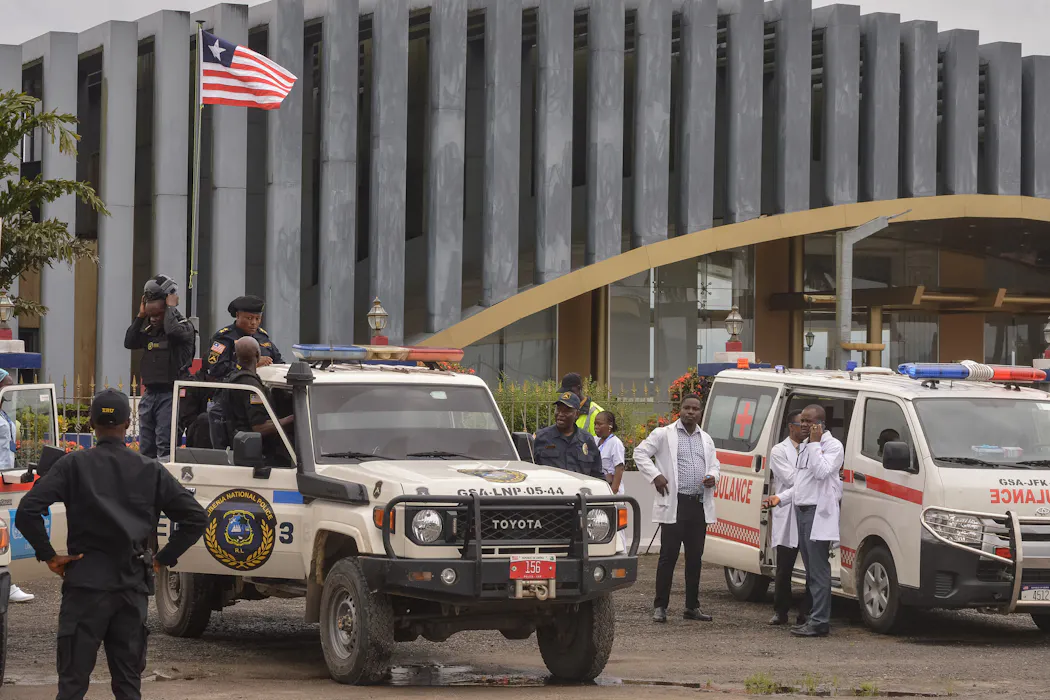
After the Supreme Court let third-country deportations proceed, at least 20 people have been flown to Liberia — a country whose very existence began as an American scheme to send Black people away.
In an experiment with 555 participants, teams led by managers picked at random outperformed teams led by people who volunteered for the job, and the best managers were the ones who allocated resources well.
Krugman calls AI a technology of, by and for oligarchs, but the data center buildout is already handing ordinary Americans construction jobs, tax revenue and consumer surplus.

China has about 120,000 households with a hundred million yuan in assets; the US has 1.1 million, and in the ten-million-yuan tier American families are 24 times more likely to qualify.

The oxygen-free muck at the bottom of ponds, swamps and oceans hosts invisible microbes that run the planet's carbon, nitrogen, phosphorus and sulfur cycles, and quietly archive its past climates.

China is often described as either indifferent to AI risk or newly safety-conscious; the real bottleneck is that independent AI safety work there has almost no funding.