In his Book of Prophecies, Columbus recast the naming, claiming and converting he did in the Caribbean as a divine plan, showing that religious zeal and conquest were one project from the first voyage onward.
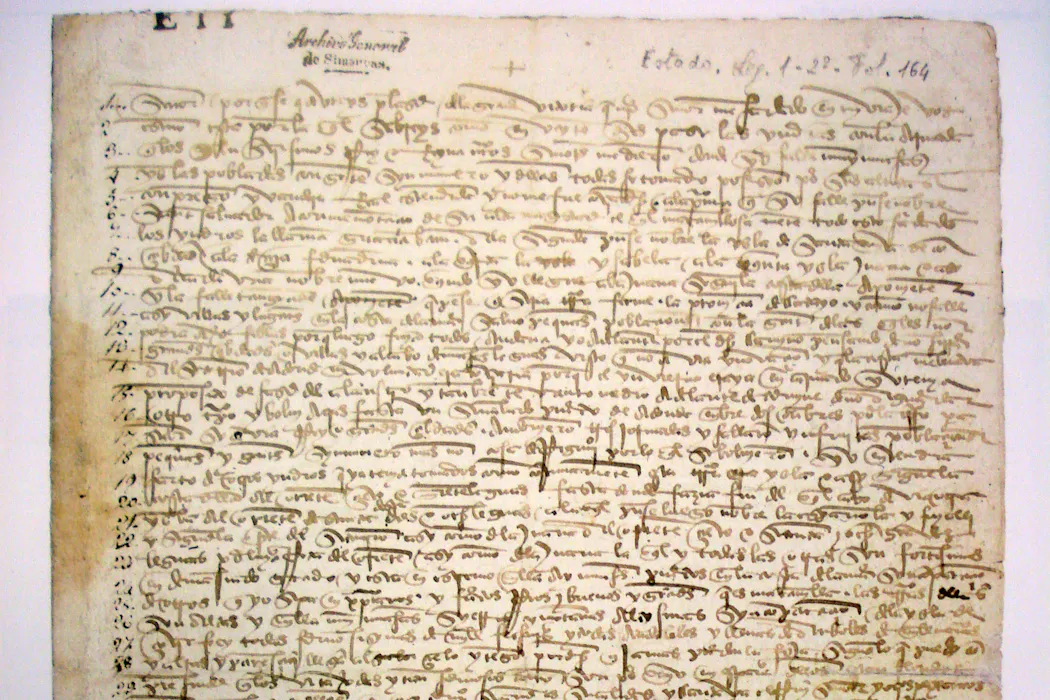
Few figures have been argued over as long as Columbus. Some still hold him up as the hero who found a new world. Others call him the arrogant conqueror who enslaved Indigenous Americans and set off the ecological ruin of the Western Hemisphere.
What almost nobody reads is what he wrote himself.
He named the place before he understood it
In 1492 his ships reached the Bahamas after 33 days at sea. He thought he had arrived in Asia, so he called the people he met Indios — Indians — a name that was wrong and stuck anyway.
He named the first island San Salvador, Holy Savior. Then came Santa Maria de Concepcion and Navidad, Nativity. He also seized some Taino and took them aboard, saying he wanted to teach them Spanish.
Back in Spain he had the report printed at once and copied across Europe. The whole of Christendom should rejoice, he wrote, because so many peoples would turn to our Holy Faith.
Sent home in chains, he started copying Scripture
Word soon spread that he had allowed forced Indigenous labour. In 1500 he was shipped back to Spain in chains to face charges of enslaving subjects of the realm.
To win back his patrons, above all Queen Isabella, who was most alarmed by his conduct, he buried himself in theology, copying long passages from the Bible and from Augustine and other scholars into a notebook with his own comments, meant as a gift for the crown.
His son later called it the Book of Prophecies. In it Columbus compared himself to the prophet Isaiah and claimed the Roman writer Seneca had foretold that a new sailor would discover a new world.
Every line he had drawn on a map was recast: not a land grab, but homework assigned by God.
What actually matters here
Today his statues get pulled down and splattered with red paint, then hauled out of rivers and put back up. Both sides argue about what he did and what it caused.
Almost nobody reads what he wrote. Do that, and you find that colonisation and conversion were the same project from the start, and were never separated.
Why it matters
The same argument — that the hemisphere belonged inside Christendom — was later used by Catholic Iberians, English Puritans and French Huguenots to carve up the Americas. Reading Columbus's own words shows the source that both sides of today's street fights over colonial monuments keep stepping around.
Curated from high-quality sources, with concise summaries and key takeaways.

