Human footprints spanning nearly two millennia at White Sands, New Mexico, show people repeatedly lived there during the coldest part of the last ice age.
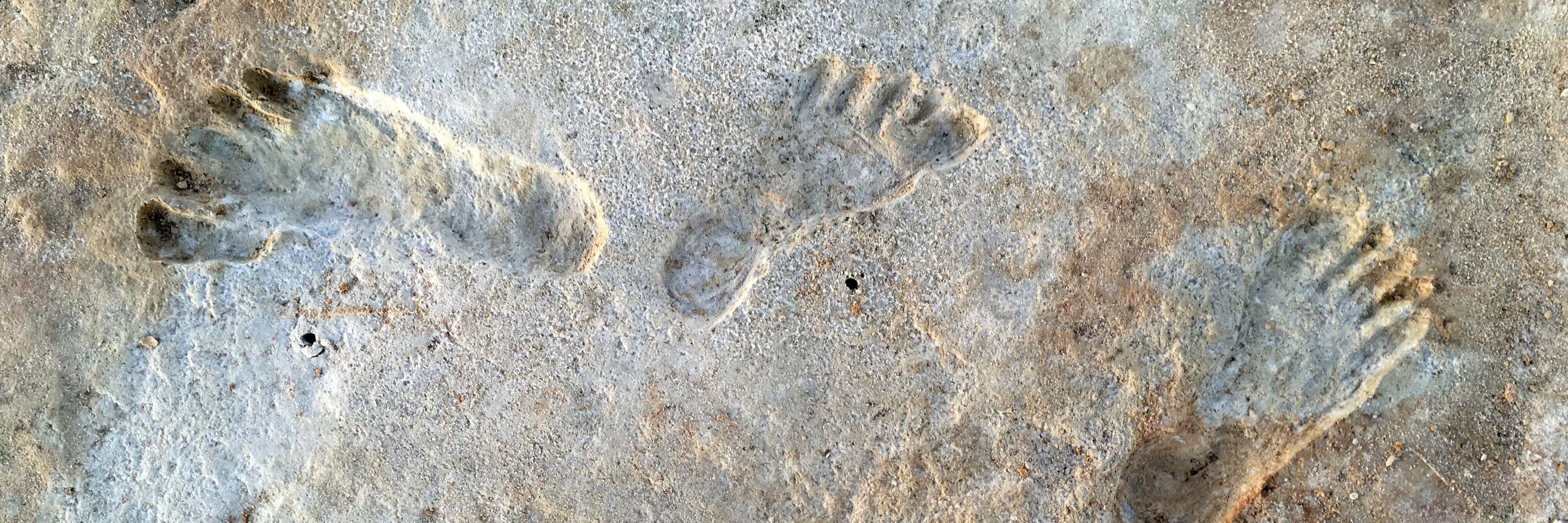
At the coldest point of the last ice age, around 23,000 years ago, someone walked across the muddy shore of an ancient lake in what is now New Mexico, leaving footprints. When the dates were reported in 2021, they upended the story of when people first reached the Americas.
A climate roller coaster
The latest research goes one step further: not just when people were there, but what sort of world they inhabited. The answer is one of rapid climate change.
Expanded excavations turned up 20 footprint layers spanning about 23,500 to 21,700 years ago. Pollen and leaf waxes preserved alongside them record temperature, rainfall and vegetation. At first the lake was large, with conifer forests around it and average yearly temperatures 4°C colder than today. Then it warmed, the lake shrank, and the conifers gave way to oak and sagebrush.
Snapshots, not a movie
Sharper swings were superimposed on the long-term trend. Around 23,200 years ago a short, severe drought hit, and people were there. The earliest footprint layer occurs right around this climatic transition.
But footprints have a catch: what survives is not necessarily a full picture. A computer model showed that preservation is much more likely during environmental transitions. The footprint surfaces appear as irregular pulses clustered around periods of climatic and hydrological change, exactly as the model predicts.
So a simple story in which people flocked to White Sands during droughts should be resisted. Two histories are entwined: one human, in which people repeatedly inhabited this landscape for almost two millennia; and one geological, in which only some fragments of those lives happened to survive. Each footprint is a still frame where human behaviour, mud, water and chance came together.
Why it matters
These footprints rewrite the peopling of the Americas: people were not only present at the height of the last ice age, but returned again and again over two millennia. The deeper lesson is methodological. Fossil records capture not only ancient behaviour but also the accident of preservation. Archaeologists must now ask what happened on the ground separately from what happened to enter the archive.

Curated from high-quality sources, with concise summaries and key takeaways.

