Researchers found that elephant carcasses keep reshaping soil and plants for years, flooding the ground with nutrients while leaving only a few species to thrive.
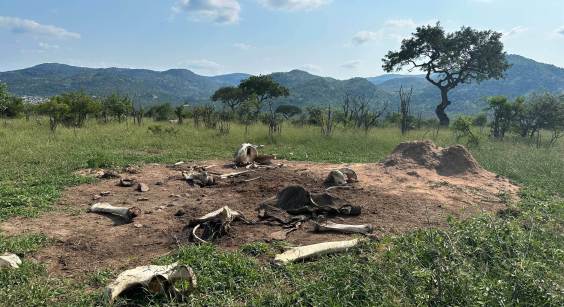
Elephants are called ecosystem engineers: they trample trees, loosen soil and carve out trails. A new study in the Proceedings of the National Academy of Sciences finds that their influence continues long after they die.
The research team, from the University of California, Santa Barbara, spent nearly eight years sampling 40 elephant carcass sites in South Africa's Kruger National Park.
Nutrients flood in, but only a few bacteria and grasses survive
As carcasses decay, nutrients seep into the soil, and nitrogen levels climb as high as 3,000 times normal.
That is poison for plants, but exactly what a handful of fast-breeding bacteria want. They take over the ground, and the variety of life there narrows.
When nitrogen falls back, plants return, but again only a few grasses dominate. The grasses are richer in nutrients and feed grazing animals for years, and their droppings keep fertilising the land.
According to the team, Kruger loses around 600 elephants a year. The researchers warn that if large animal carcasses disappear, the structure and function of ecosystems worldwide could fundamentally change.
Why it matters
Ecosystem engineer usually means a living animal, but dead elephants also remake the land. If large carcasses vanish from grasslands, the distribution of nutrients and species would shift too, so the case for protecting elephants does not rest on living ones alone.


Curated from high-quality sources, with concise summaries and key takeaways.

