Tuesday, 27 October 2026
Dozens of blogs and magazines, read for you every morning — the few worth talking about

Atakule TV tower with attached shopping mall in Ankara, Turkey
Long read
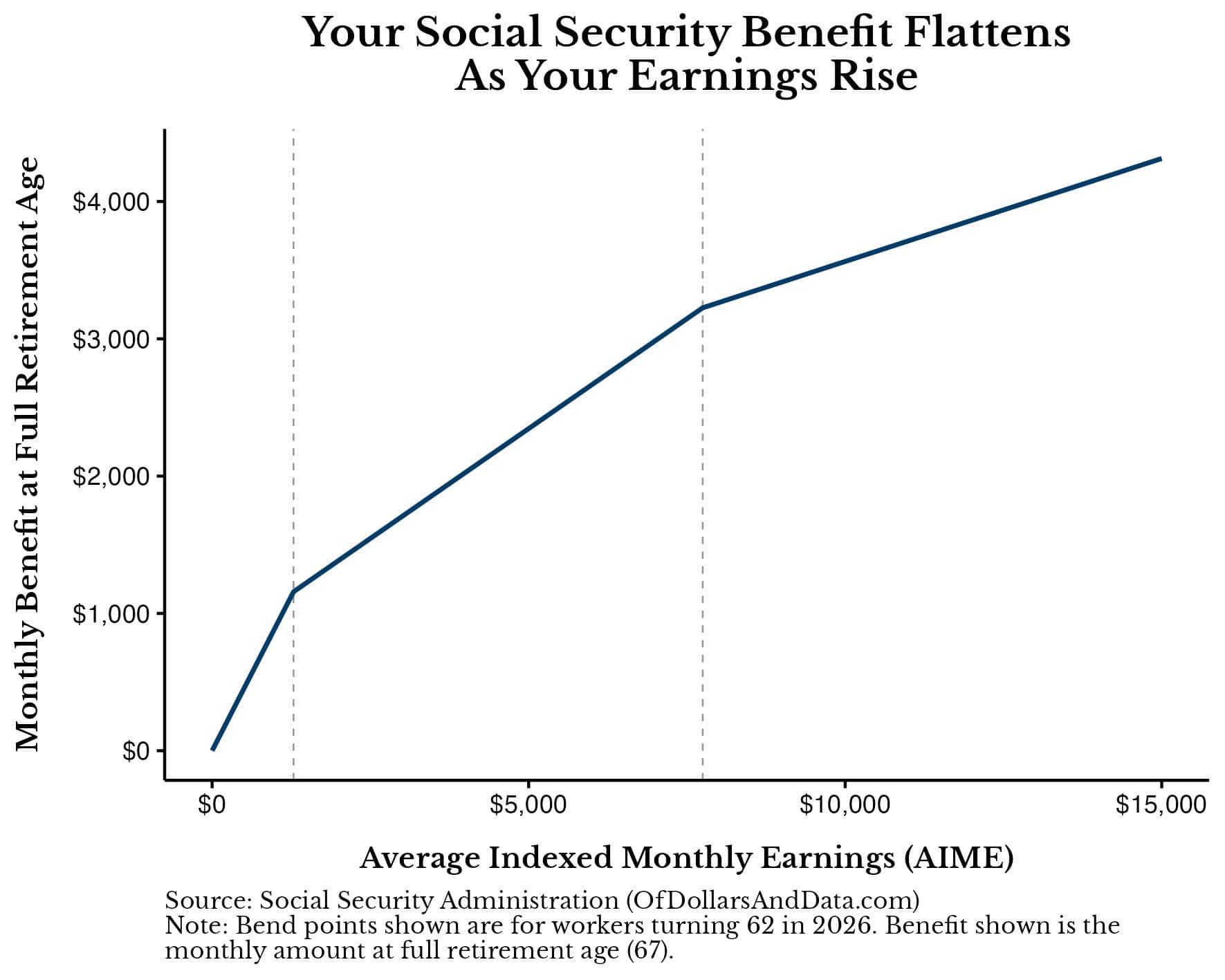
The US retirement trust fund is projected to run dry in 2032, yet payroll taxes would still cover about 78% of scheduled benefits, not zero.
Forget a semicolon in C and the computer slaps you immediately; write prompts in English and there are no guardrails, the AI never asks what you meant, it just plays the statistical odds.
The sharpest example is 1999: two teams of actual rocket scientists at Lockheed and NASA failed to align their units, one used pound-force seconds and one newton-seconds, and a $125 million probe burned up in the Martian atmosphere.
I now stop for thirty seconds and read my own words back as if I were a literal-minded alien.

In 2001 a train derailed and caught fire in a Baltimore tunnel, where temperatures reached 1,000 to 1,500 degrees and burned the cables running through it. Traffic from several internet providers was packed into that one passage, and web speeds in Atlanta and Los Angeles crawled.
The author points out that cloud providers, undersea cables and a handful of companies hold the internet together far more centrally than we imagine. AI has now dragged the data centres, chips and supply chains behind the cloud into plain view.
What stayed with me is simple: we say we put things in the cloud, but they have always been lying in the ground.

What share of global development aid goes to climate-related projects? The answer is that it depends on how you count. In 2024, 34% of bilateral project aid carried a climate tag, but more than half of that funding went to projects where climate was only a secondary objective.
The most absurd case is a South Korean-funded hospital in Tanzania: because it was built with energy-efficient design, all $163 million of it was counted as climate aid. The hospital itself has little to do with climate.
What surprised me most is the author's admission: 'My guess is that both are happening' — crowding out and relabeling — but the data can't say how much of each. A paper that admits what it can't measure is more convincing than one with a confident conclusion.
Asked to name three things she loves about her daughter, Mayer let the AI she had just launched answer: empathetic, creative, an animal lover. What is stranger is her take on gender: it fades into the background, and passion is a gender-neutralising force. Half of women in tech leave by 35, and women founders get half the funding men do.
This year the Grace Hopper Celebration was cancelled; about 15,000 people attended in 2025, the fewest since 2016. An attendee from 2023 described men flooding the recruiter booths, waving resumes in people's faces and shoving those in line.
Mayer may genuinely believe her own line. Her new app Dazzle analyses your camera roll, and she suggests letting AI plan a birthday party.
The Kiel Institute measured how market shares in third countries shifted over ten years, and found that apart from leather goods, art and weapons, EU manufacturers lost share in almost everything while Chinese ones gained.
Germany stands out: in its core strengths, from cars to machinery, electrical equipment, optical and medical equipment, it lost ground faster than the European average.
The author draws a conclusion many German manufacturers still deny: Chinese goods now win not just on price but on quality and innovation. My take is that tariffs cannot protect an industry that will not invest in its own future.

Tech writer Cory Doctorow clicked a link to an LA Times article and hit a pop-up: press continue and you agree to arbitration, waive your right to a class action, and let the paper collect data through cookies and pixels.
He looked up the fine print: an 8,865-word privacy policy and a 7,103-word terms of service. He also found a counter-move buried in the terms, an email you can send within 30 days to opt out of arbitration.
Reading it, I just thought this idea that scrolling counts as signing a contract is a lot more annoying than any ad pop-up.

Eating a pork bun on the Shinkansen is known in Japan as 'pork-bun terrorism'. The author studies smell for a living, finds the odour unbearable, and has long been unable to grasp how anyone could fail to notice it.
The answer is in the genes. Pork fat contains androstenone, a compound people read as animal-like, and how strongly it hits depends on the olfactory receptor gene OR7D4; those who inherit the sensitive versions of both copies need only a trace.
Neither side is exaggerating. The same bun simply takes two noses on very different journeys, which is a more useful place to start than an argument about manners.

The author says AI can now do in minutes what used to take him hours, yet his overall productivity is up only about 50%.
What struck me most is his complaint about AI writing: the problem is not formulaic style but that its proofs make no goddamned sense. It has the technical skills but cannot break an argument into modular pieces with clear assumptions and conclusions, so it descends from simple into a rampage of complexity.
I also nodded at his self-warning: every time he lets AI run until dawn, ends up with nothing, and has to start over, he feels foolish.

Empathy in narcissists is not missing, it is off-sync. A team at Aalto University put 58 people in an MRI scanner and showed them an actor recounting moments of being admired and being snubbed.
In people low in narcissistic traits, brain activity moved together, as if they were cringing along with the actor; in those high in the traits, the brains were not aligned with each other. The researchers suggest this may mean they were attending to different details, not that they did not care at all.
That explanation is kinder than 'narcissists are cold', and harder to verify.

“English is a terrible programming language because it compiles everything and validates nothing.”
“It had technological redundancy, but not diversity.”
“If this is simply an exercise in relabeling, they are ticking off these commitments without providing any new money.”
“Tariffs won't help manufacturers survive if they are not innovative enough.”
“A newspaper's job is to inform its readership, not mislead it.”
“Neither party is exaggerating. Instead, their brains are constructing qualitatively different perceptual experiences from the same source.”
“The problem is it doesn't make any goddamned sense.”
“People with a high number of narcissistic traits respond to another person's vulnerable experience differently than others.”

