The US retirement trust fund is projected to run dry in 2032, yet payroll taxes would still cover about 78% of scheduled benefits, not zero.
Younger readers keep asking: will Social Security still be there when I retire? Short answer: yes, but at a discount.
2032 is not the end
The retirement trust fund is projected to empty in 2032. But Social Security cannot borrow; it pays out only what it takes in. Payroll taxes alone would then cover about 78% of scheduled benefits.
The average benefit is roughly $2,000 a month, so 78% leaves about $1,560. Not comfortable, but not zero.
How your benefit is calculated
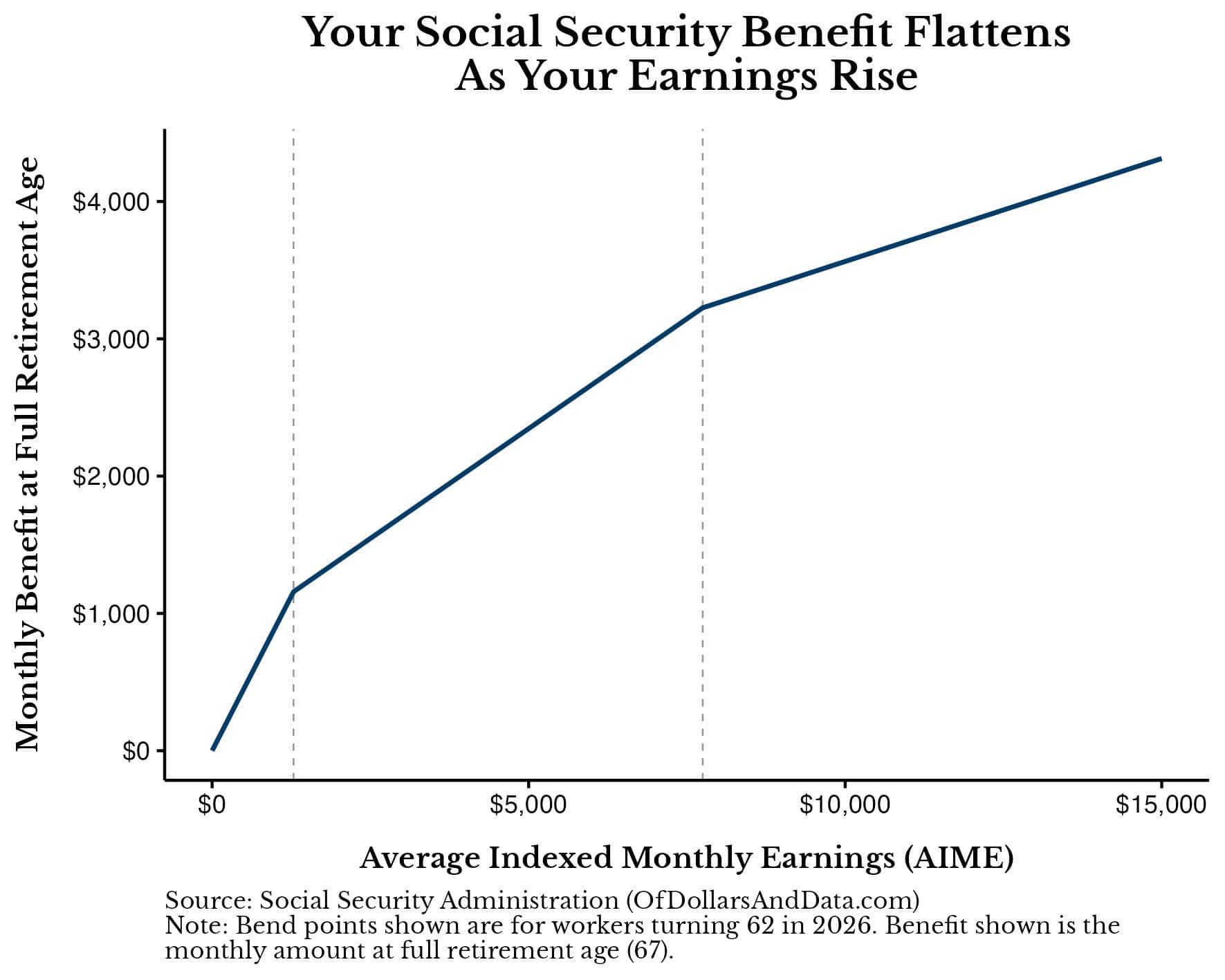
It is not simply more years, more money. Each year's earnings are indexed to national wage growth. The top 35 years are summed and divided by 420 months to get your Average Indexed Monthly Earnings.
Then a bend-point formula: 90% of the first $1,286, 32% from $1,286 to $7,749, and 15% above that. Low earners get a higher replacement rate; high earners a lower one.
Fixing it means taxes or cuts
Raise revenue or cut benefits. A survey found 85% would rather raise taxes than see benefits maintained or increased. The author expects a mix of tax hikes and tweaks, and plans on 70%.
Look up your estimate on the SSA website, multiply by 0.7, and use the 4% rule to size the gap.
The bigger mistake is planning as if it won't exist.
Why it matters
For younger workers, the useful number is 70%: it is conservative enough to keep you saving, but not so alarmist that you assume the system disappears — a planning base that avoids both panic and complacency.


Curated from high-quality sources, with concise summaries and key takeaways.

