More than three decades after the 1989 cold-fusion announcement was debunked, physicists are studying exotic atoms on its ruins — swapping electrons for heavier particles, shrinking atoms thousands of times over, and testing quantum electrodynamics.
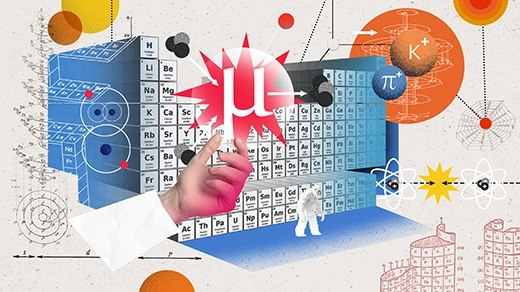
In 1989 two chemists held a press conference to say that hydrogen nuclei were fusing at room temperature in a tabletop experiment and would solve all our energy problems. Labs around the world could not reproduce it, and the claim collapsed within months; one group that had corroborated it was found to have deliberately spiked its samples with fake fusion products.
But dig along that line and you hit a field that is genuinely doing work: replacing the electron in an atom with a muon or an antiproton. An antiproton is 1,800 times as heavy as an electron, so the atom shrinks to the size of a single football, and the electric field inside gets strong enough to boil the vacuum.
Muon-catalysed fusion really does happen, except a muon has to repeat the trick 300 times to break even. What I did not expect was that a direction that began with a lie could grow physics this serious.



Curated from high-quality sources, with concise summaries and key takeaways.

