Saturday, 7 November 2026
Dozens of blogs and magazines, read for you every morning — the few worth talking about

Aekingerzand Drents-Friese Wold National Park. Pinus sylvestris on the sand drift.
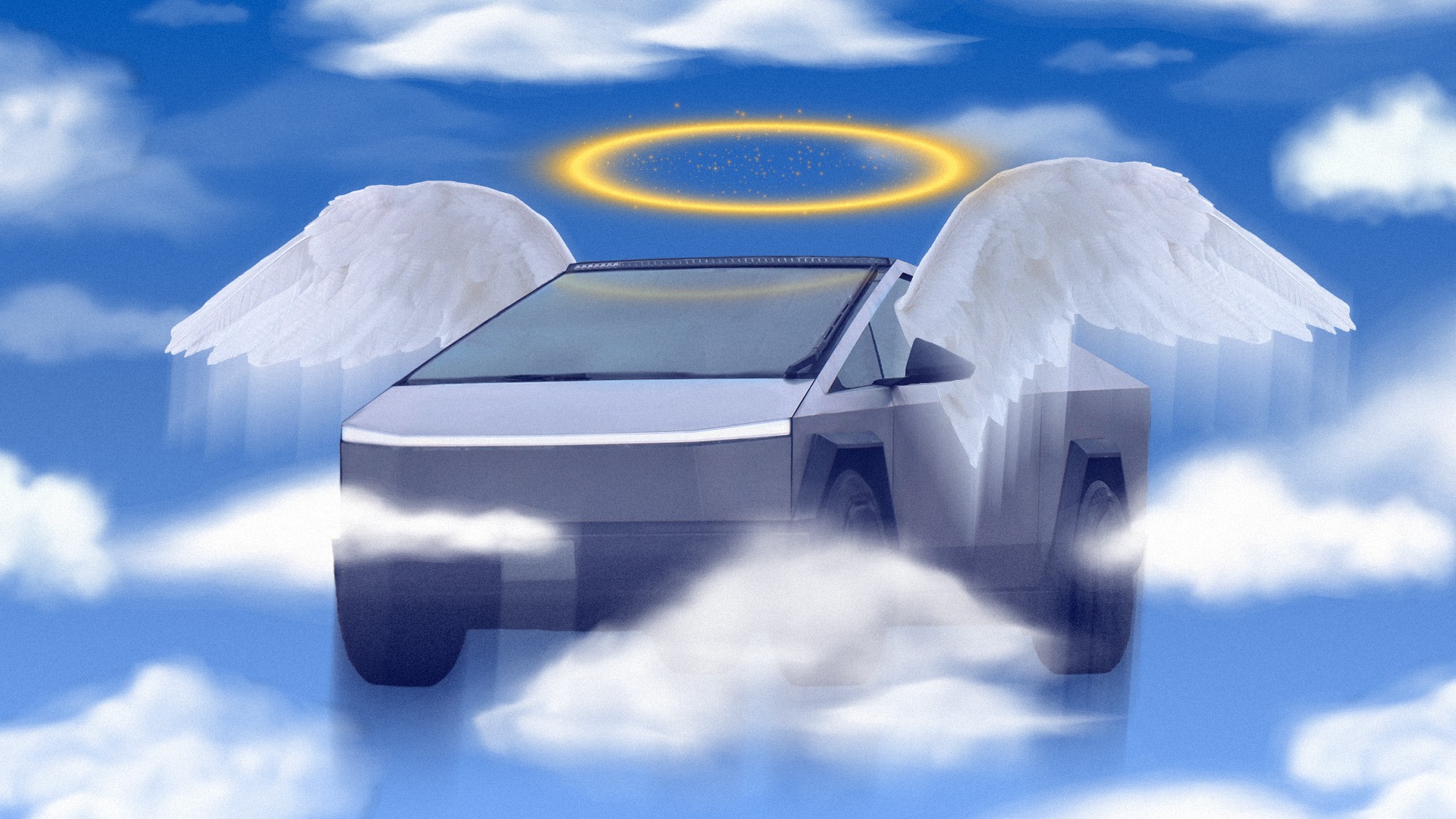
Musk has announced the Cybertruck will stop production by the middle of next year, after selling only 70,000 units in three years.
The AI bubble missed a variable: the ballot box. Thirty-three separate measures to restrict data centres passed or were leading, and in Ohio alone 21 municipalities voted to restrict them.
What stands out most is the players turning: in 12 states the winning governor called for a pause on data centre development, and 34 of 36 winners back ratepayer protections.
I used to think the bubble's story was hard, but it turns out to be soft on one point: having to ask the neighbours first.

The pope, nationalism, economic collapse, Afghanistan, Reagan — these are the usual explanations for the Soviet collapse. This piece takes them apart one by one: the Soviet economy formally entered recession only in 1990, after the reforms.
What surprised me most is the claim that what destroyed the USSR was Communist ideology itself. Gorbachev wanted a 'socialism with a human face', but every time political monopoly was relaxed, the monopoly unravelled all the way.
That is why China survived, and the secret is just one thing: no Gorbachev. I paused at that. Such a simple lesson, paid for with an entire country.
Researchers at Johannes Gutenberg University Mainz had seven chatbots, including ChatGPT and Gemini, and 70 people fill out the same personality questionnaires, then read each other's texts and guess who was human.
Humans correctly identified AI writing about 83% of the time; the bots managed only 67%, and were not even good at recognising their own output. When the texts were matched for length, the humans got noticeably worse.
What stays with me is that even when you are told a text was written by AI, you still end up sensing a temperament in it. That kind of trust, placed in a model that still makes things up, feels risky.

A Brazilian research group went through Meta's election ads this year: between July and September, about R$2 million (US$400,000) in foreign money paid for 1,613 ads, all billed in foreign currencies and boosted by pages registered in other countries. Brazilian law expressly bans donations from abroad; the ads still ran to Brazilian users.
The sharpest part is the blackout period: political ads are banned from 48 hours before the polls to 24 hours after, yet hundreds of ads for or against candidates circulated on Meta with no apparent restrictions across both rounds. Fake profiles posing as the Electoral Supreme Court even paid to promote a claim that people could vote from home this year.
Lula's campaign page was also temporarily disabled, which Meta blamed on an incorrect anti-fraud review. Meanwhile fraudulent ads about federal programs kept running. I don't know if this is incompetence or indifference, but a company that can price ads precisely ought to be able to manage this.

The screen on Apple's new MacBook Pro is the best the reviewer has ever used on a laptop: a tandem OLED with two emissive layers, 2,000 nits peak on HDR highlights and 1,000 nits sustained.
He tried to find a flaw and could not, settling for mocking Apple's name for it, 'PROLED XDR', as silly.
But it lands at an awkward moment to buy a computer: RAM and SSD prices are climbing, the reviewed configuration costs $7,399, and Bloomberg reports the M7 chip due in 2027 is designed primarily around on-device AI. If you are waiting, waiting another year may genuinely pay off.

In 1935 Einstein proposed the EPR thought experiment to save the commonsense reality in which the moon is still there when nobody looks. In 1964 Bell showed the world cannot be both real and local.
The real final blow came from the PBR theorem: using a card-game analogy, it showed that a quantum state cannot merely be information in your head. After the 2012 paper, one colleague remembered thinking: 'That's it. The program's dead.'
What surprised me most is that PBR does not tell you which side is right. It just closes the middle road: either accept a surreal but objective reality, or give up reality altogether.
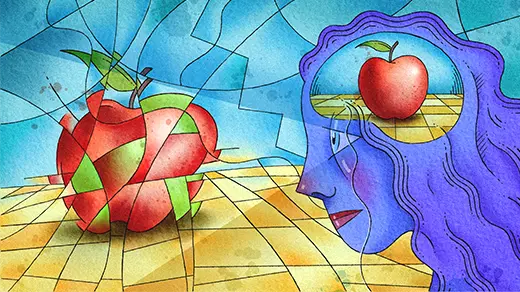
Earth is careless about keeping archives. Cambrian sandstone often sits directly on basement rock that dates back 1.2 billion to 1.8 billion years, with over a billion years of strata missing in between; that is the Great Unconformity.
Researchers at the University of Wollongong modelled it: when a supercontinent broke up, the mantle pushed whole landmasses upward, and exposed to glaciers, weather and eventually oceans, they were sanded down. Their models, they say, also explain why the gap is best preserved in North America.
What stays with me is the closing note: whatever caused it, complex life partly owes its arrival to this great deletion.

When people take on a project, they count the time to write the strategy, build the site, edit the manuscript. What they leave out is the client tax: the kickoff call, the Slack pings, the extra revision rounds, the half-hour therapy session when a client gets nervous about launch.
None of that shows up in the proposal, but you still work it. Across ten or twenty clients, 40% of the week disappears.
The author's fix is blunt: add a 30% buffer for support when you price, then divide the price by real total hours to see what you actually earn per hour. It is the first time I have seen someone formally list hand-holding as a line item.

“The hubris of the AI bubble is the belief that it could continue to grow unfettered without seeking the consent of those who have to live with its consequences.”
“If the pope, nationalism, dissidents, economic collapse, Afghanistan, the military-industrial complex, or Reagan were not decisive, what was? The Soviet Union, paradoxically, was destroyed by the one thing that almost everyone thought was itself dead: Communist ideology.”
“Users may not be consciously aware of it, but anthropomorphism is often the most accessible way to relate to unfamiliar agents.”
“What is clear is that, for these platforms, defending their economic interests and maximizing their profits prevails above user rights, public interest, and democracy itself.”
“I find myself trying to find something negative to say about the MacBook Pro's screen to avoid sounding too effusive, but I can't think of anything substantive.”
“Do you bite the bullet, or do you try and dodge the bullet?”
“These processes have not been dynamically tested, with limited comparison between global models and global datasets to explain the spatial distribution of the Great Unconformity.”
“You never put those hours in the proposal. But you still work them.”

