Geologists found gaps of hundreds of millions of years between rock layers on several continents; new research uses supercomputer models of mantle motion to explain why.
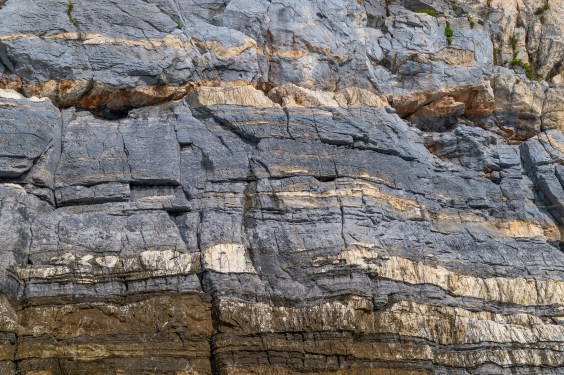
Since the 1870s, geologists have noticed that in many parts of the world, rock layers are missing hundreds of millions of years of record, with the largest gaps accounting for up to a quarter of Earth's history.
A new study used the Australian supercomputer Gadi to model mantle motion over the past billion years. It found that the ancient blocks Laurentia, Baltica and North China were slowly lifted from about a billion years ago, then sank again around 540 million years ago. The uplift coincided with Snowball Earth, when enormous ice sheets scraped the raised continents clean.
The disappearance of a layer of rock turns out to be the whole planet breathing, very slowly.



Curated from high-quality sources, with concise summaries and key takeaways.

