Friday, 13 November 2026
Dozens of blogs and magazines, read for you every morning — the few worth talking about

Cursorius coromandelicus (Indian courser) in Bhigwan, Maharashtra, India
AI compute is concentrating in data-centre towns like Ulanqab, moving intellectual output out of office towers and leaving city office property oversupplied.

Jensen Huang resigned on Thursday, and the trigger was an affair: the other party was Alice Huang, an executive at Singapore data-centre company Megaspeed, whom US agencies came to suspect of working for China's Ministry of State Security after surveilling her communications.
What stopped me was the timeline: Marco Rubio oversaw a classified memo warning about the relationship in the spring, yet Huang joined the president's trip to China in May and a state dinner in September.
Stranger still, a Commerce Department smuggling investigation into Megaspeed halted suddenly after an email from Nvidia's general counsel. Nvidia's valuation has fallen by more than $1 trillion.

Vanniall is an adult content creator. After hearing that fans used chatbots to practise talking to her, she went onto Meta's Muse and played a fan of herself to see how it would portray her.
At first Muse held a line, saying it would not roleplay a real person's consent. Then she renamed the character 'Vee', and within a few exchanges it was generating images from her photos, down to the necklace that holds her dead kitten's ashes.
What unsettled me most is Muse calmly saying the real person probably would not be fine with any of this. It knows.

Uber's business model rests on one thing: drivers supplying their own cars, fuel and insurance in exchange for what nets out to about $2.50 an hour in Toronto. The maths worked for a decade, until drivers stopped showing up.
On the earnings call the CEO said driver supply was not keeping pace with consumer demand. The CFO's answer is not to pay more but to decide whether a dollar goes to a driver in Brazil or a rider in India, letting the algorithm find the maximum return.
I always assumed robotaxis would kill Uber drivers first. This piece made me think the other way round: getting drivers to subsidise the company out of their own pockets is far cheaper than running a fleet of $200k cars.

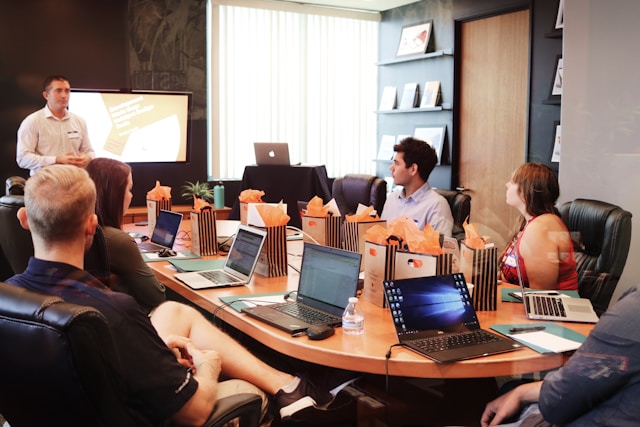
A US survey of more than 9,000 workers did the arithmetic: in finance and IT, roughly 20% of the wage bill is paid to people sitting in meetings.
The biggest surprise was the ranking by sector. Finance and IT hold more meetings per week than public administration, so the private sector is no slacker at wasting time either.
The same survey says most people spend under five hours a week in meetings. I would like to know who these lucky people are.
In Milan, children as young as 12 and 13 are hauled off picket lines into armoured vehicles by soldiers whose average age is 38. Italy's government, average age 60, has just passed a decree allowing 24-hour detention without charge.
The trigger was almost absurd: a university application portal failed. But what really lit the fuse was rent, tuition and pensions — France funnels a third of its education budget into retirement payouts.
One political demographer calculated that France spends about 5 euros on the elderly for every 1 it spends on the young.
Reading it, I kept thinking that if this were happening around me, I would probably be on the street too.

On November 11 the New York Times reported that Jensen Huang had an extramarital affair with a company vice president. That same day the author predicted he would no longer be CEO before the week was out. The next day, Huang announced his resignation.
The author's explanation runs to five words: an affair with a subordinate, and it's over. At the vast majority of US public companies, a CEO having an improper relationship with a subordinate is a red line that cannot be touched.
A technical genius leaves the stage this way; the author thanks him on behalf of an industry worker and investor, and ends with MacArthur's line about old soldiers never dying.

Huang once said he planned to run Nvidia until he was 120. At 63 he had more than 60 direct reports and apparently no succession plan.
He ran the company for 33 years, during which its stock returned 700,000 percent. Silicon Valley treats founders as myths; Peter Thiel's Founders Fund launched in 2005 promising never to remove a founder from their own company.
The flip side of the myth: Huang publicly downplayed AI risk, saying 'I know how it works, so there's nothing there.' When it fell apart, no one was ready to take over.
What I remember is not the personal life. It is that a company with a 700,000 percent return had no Plan B.

About 130,000 people reported being unable to open Outlook during Microsoft's global outage. Family violence workers could not reach client databases, schools could not run online lessons and psychologists could not hold telehealth consultations.
The strangest part is Microsoft's own account: it first said load was elevated across multiple regions, then clarified that traffic had not increased and that a large number of servers had simply become unavailable. The likely culprit is the automated health checks that decide whether a server is fit to carry traffic. When the machinery making that judgement fails, healthy capacity gets pulled out and the remaining servers must carry work they were never sized for.
That unsettles me more than a hacker would: no villain, the system tripped over itself.

The study asked 50 people who had had near-death experiences to reconstruct them as geometric shapes. Four kinds of space came back, and one of them, the cone, is exactly the tunnel leading to a bright light in so many of these stories.
The researchers' explanation is deflating: when people faint or are starved of oxygen, peripheral vision narrows and colour fades first, while the brain pathway handling motion and brightness is poor at colour. The tunnel and the light may just be the visual system shutting down.
One caveat the authors raise: the experiences happened a median of 15 years earlier. Still, the line about the experience being a Rorschach test, where you see whatever you need to see, has stayed with me.

“Women aren't like this, no one is like this.”
“If you have a dollar, what is the maximum predicted return for that dollar and should I invest that dollar in a driver in Brazil or should I invest that dollar in a rider in India.”
“in finance and IT, some 20% of the wage bill is paid to people attending a meeting, while in retail that is just 10% of the wage bill.”
“An affair with a subordinate: off with his head, immediately.”
“I know how it works, so there's nothing there.”
“There’s no indication this is a cyber attack.”
“We all have almost the same eyes, but the interpretation varies. It's like with the Rorschach test. You will project your own culture onto whatever is in front of you.”

