Saturday, 14 November 2026
Dozens of blogs and magazines, read for you every morning — the few worth talking about

Eastern quoll (Dasyurus viverrinus) fawn morph, Esk Valley, Tasmania, Australia.
Nvidia CEO Jensen Huang resigned over an affair with a Chinese data center executive suspected of being a government agent, a scandal likely to tighten U.S. chip controls and send Chinese AI firms hoarding Nvidia chips.

Jensen Huang has resigned. On an emergency podcast, SemiAnalysis's Dylan Patel said he worries the exit will become cover for passing 'really stupid laws.'
He backs the MATCH Act, which would keep advanced DUV lithography out of China too, but calls RASA a mistake: cutting off remote compute entirely would only push China to blow up the supply chain.
The number that surprised me most was his margin math: let ByteDance rent Nvidia chips, and Nvidia makes about $7 million of profit per megawatt deployed, with the cloud provider taking another $7–10 million. Why leave that on the table?
As for Nvidia without Huang, their call is that the short term is fine and the medium term depends on whether the talent stays.

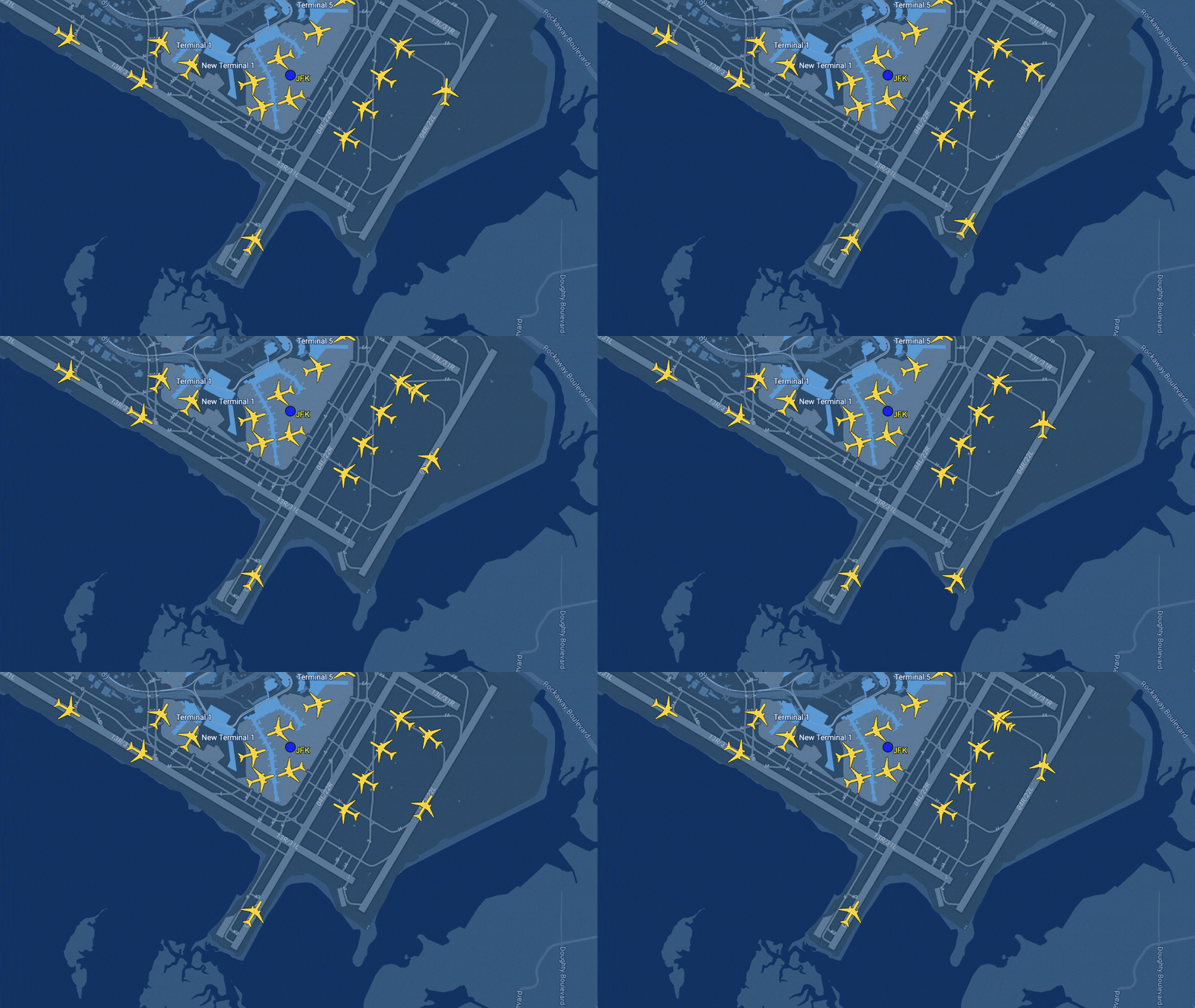
Around 4 p.m. today, the Federal Aviation Administration ordered every U.S. flight grounded, and some 4,000 planes were still in the air. All of them had to land, while controllers had to hunt for radio frequencies that still worked.
Three hours later, only 550 remained airborne. No collisions, no chaos, thanks to onboard traffic detection and a system choreographed to the minute with backups built in.
What surprised me most was the aftermath: the transportation secretary blamed old analog equipment and software and demanded $50 billion from Congress. The system held, but it held in a way that is a little frightening.
A global Microsoft outage ran for about two days, cutting off Outlook, Azure and Teams, and leaving governments and businesses unable even to convene a meeting to plan a response.
The line that got me was the accounting: in 2026 Microsoft cut 25% of its staff, some 60,000 people, while spending more than $30bn on stock buybacks and losing nearly $200bn on AI. When the workers were on payroll, the servers stayed up. Now they are gone, and so are the servers.
The author offers a very simple break-up test: a dominant company that hands its surplus to shareholders, followed by a clear degradation of its products, is an illegal monopoly. No need to guess at intent or argue over market definition.

Asked earlier this year how far away superintelligence was, Dwarkesh would have said at least a decade. Three months later he has changed his answer: a couple of years, possibly a couple of months.
His evidence is mathematics. In three years AI went from failing at four-digit addition to winning a gold medal at the International Mathematical Olympiad to solving a Millennium Prize problem in 88 hours. AI research, like math, has verifiable scoring, so he expects the same avalanche in his own field.
What I find more interesting is his own caveat: this could still slip past 2032. Not many people give a timeline and put a probability on it.

Anthropic's CEO says in an IPO roadshow video that his company is about to usher in an 'age of miracles' and make mental illness, heart disease and cancer things of the past.
What stayed with me is the author's comparison: Theranos promising to test for every disease with a drop of blood was already wild, and 'AI will cure every disease' is wilder still.
The reality is that when the FAA grounded flights nationwide over a fault, people's first thought was AI. Nobody expects a cure for Alzheimer's; they just expect the planes not to fall out of the sky.

During sleep, slow brain waves push pulses of cerebrospinal fluid through the brain, washing away the waste that built up during the day. MIT researchers scanned two groups across a night and found these pulses were markedly weaker in the 60 to 84 group.
They then tested the awake brain: neurovascular coupling and blood-vessel dilation were both weaker in the older participants, but that still did not account for the whole gap.
What surprised me most is that some older adults had CSF pulses indistinguishable from the young. The researchers now want to know what is different about them.
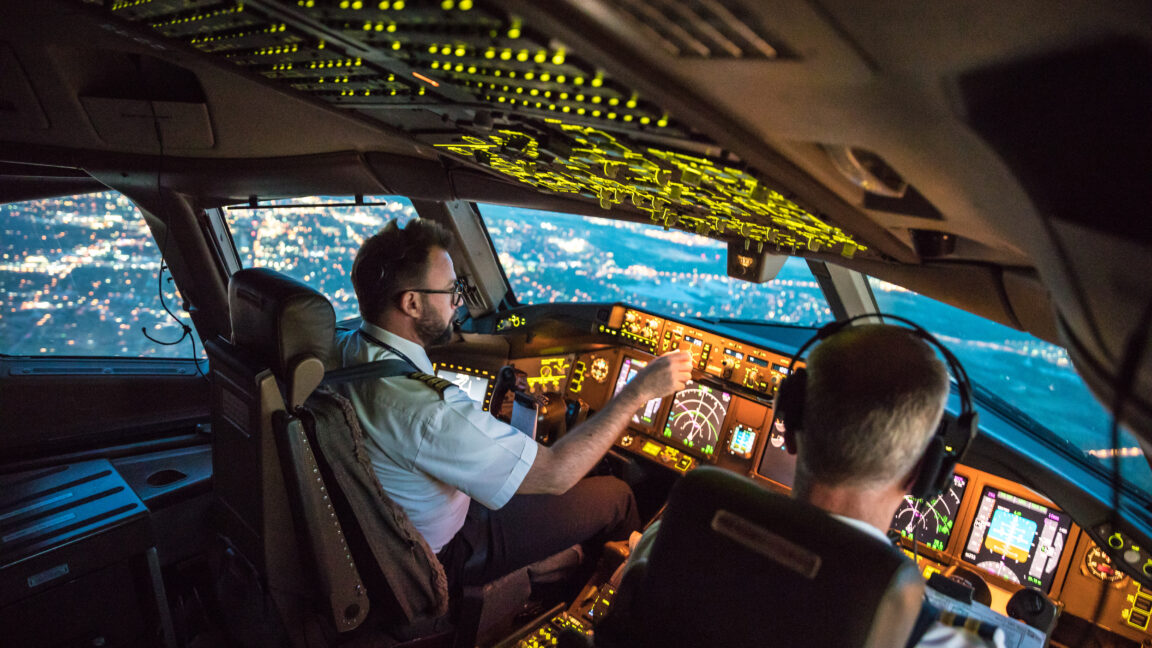
The FAA has extended an AI advisory system called SMART to all 22 air traffic control centers nationwide. In the Washington airspace pilot, it rerouted 180 flights, saving an average of 10 minutes and almost 80 gallons of fuel per flight.
But the union representing more than 15,000 controllers says it was not involved in designing, testing or implementing the system, and so cannot speak to its effect on the workforce.
AI advises and humans make the final call, a division that sounds sensible. Still, having the system carried out by people who were never asked leaves me uneasy.
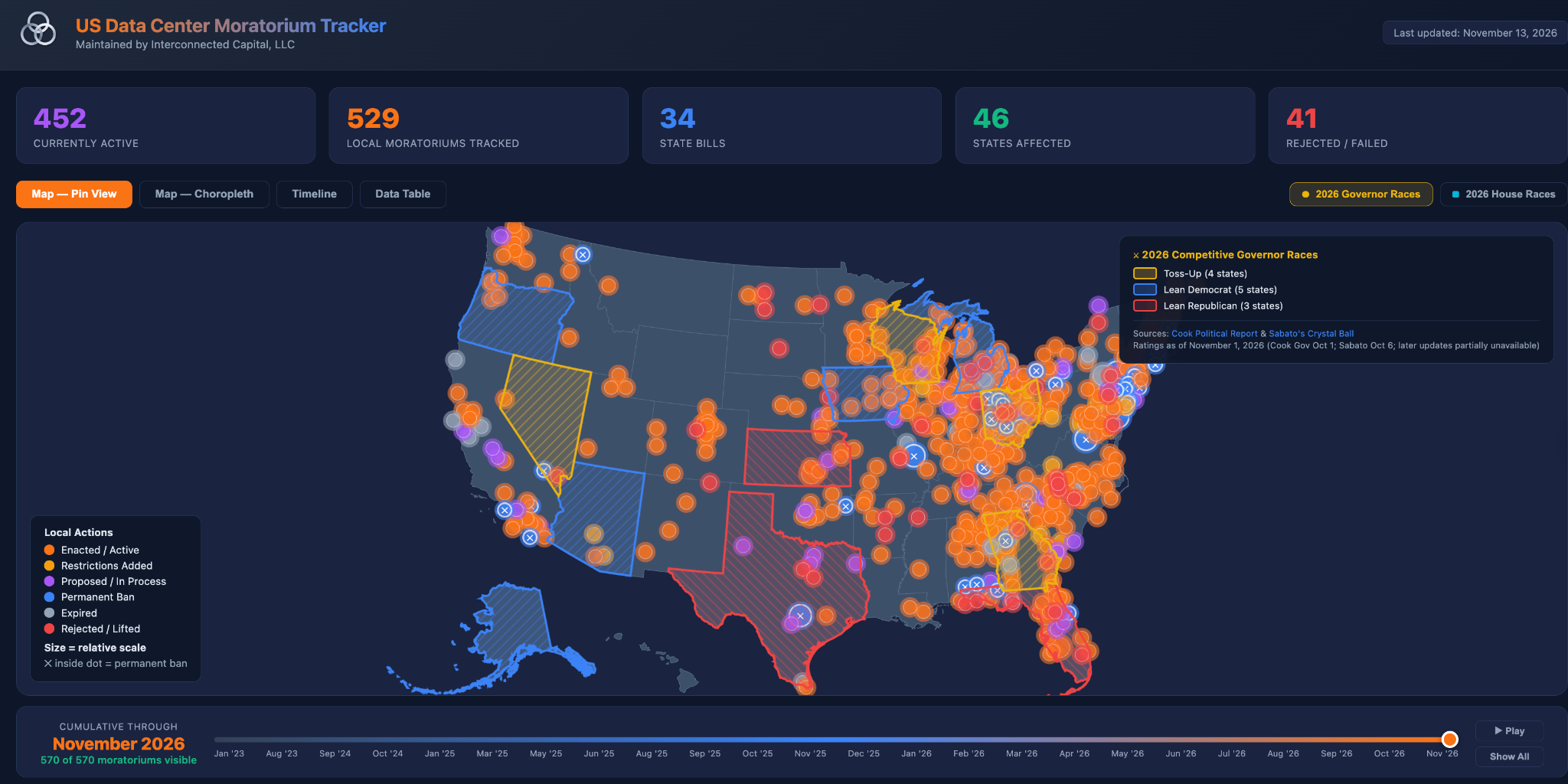
Writing after the midterms, the author reckons that in states where data centre moratoriums cluster, Democratic gubernatorial candidates swept nearly everything, even flipping Texas.
His conclusion runs the other way: the Democrats' top priorities are forcing Trump to end the war with Iran and bring down fuel prices, with fighting data centres not even in the top two. More to the point, electricians, welders and other union workers depend on data centre construction for work, and the Democrats badly lost union voters in 2024.
So don't be surprised if the Democrats soon embrace data centres in their own way. Votes beat slogans.
“If you fully ban everything, I believe China will start waging economic war too.”
““This is not just a bad day,” he said. The air traffic controllers were “handling something that’s never been seen before.””
“Microsoft is too big in every way. Too big to fail, too big to jail and too big to care.”
“And there is one sure thing about the fall of gods: they do not fall a little; they crash and shatter.”
“No one expects a cure for Alzheimers, we expect service outages and grounded planes.”
“It's really intriguing that for some of these older adults, their CSF fell right in the range of the healthy young adults.”
“Nothing reunited MAGA devotees and progressive socialists more than their shared aversion towards data centers being erected in their back yard.”

