Thursday, 19 November 2026
Dozens of blogs and magazines, read for you every morning — the few worth talking about

Eurasian hoopoe (Upupa epops) eating in Keoladeo National Park, India
ICE is paying AT&T millions a year for a service in which AT&T's own analysts sift through vast stores of raw call and location data for immigration investigations, all on an administrative subpoena rather than a judge's warrant.

A Yale scholar spent six years following this industry, and the sharpest detail is a price gap: Outlier, a platform run by Scale AI, advertises up to $180 an hour for U.S. cardiologists, while Tagalog workers in the Philippines get up to $7.50 for the same job.
The playbook is not new. Pay well to assemble a workforce, then cut rates, and tasks vanish without warning. In Venezuela a computer science teacher and his 13-year-old son labelled data; the boy earned 18 cents for a few hours, and the father just over $2 on his first day.
A cardiologist can walk away. What everyone shares is that the platform can make the work disappear overnight.
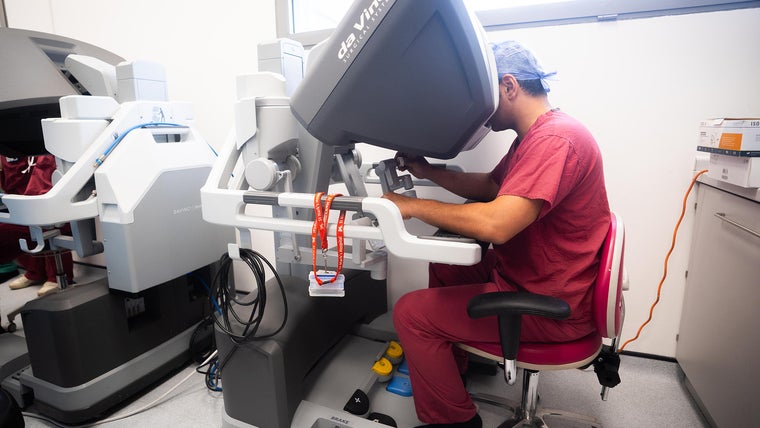
Within one week, Outlook, U.S. air traffic control, banking systems and the NSA's secure phone system all went down, and panic buyers emptied the shelves at Costco. Senator Josh Hawley of Missouri said that if this is all a coincidence, it is the greatest coincidence in the history of the world.
But a Defense Department official offered a deflating explanation: the problems are banal, you run a patch and it's fixed. The old systems were already crumbling, the senior engineers who understood legacy code have left, and the newcomers happily vibe code anything into the existing stack.
So AI really is responsible for the failures, just not in a Terminator way: it is breaking systems that were already held together with duct tape, and breaking them faster.

A company building supersonic aircraft says it does not design hardware; it designs the algorithm for designing hardware. Wing loads go in, spar sizing comes out; thermal loads go in, air-conditioning sizing comes out. It is all calculation, and calculation is software.
What stopped me was how the CEO described his own aircraft's software: like a script kiddie. The fix sounds simple enough that 50 people built a boomless supersonic airplane.
What I am more curious about is the other thing: once writing code is itself handed to AI, what is left of the line between hardware and software.

More than 90% of rare earth mining, refining and magnet-making sits in China. So the Trump administration went on a deal spree, signing financing agreements with over a dozen magnet and rare earth companies in a little over a year, from just under $100 million to $2.2 billion.
The standout: the Department of War bought $400 million of MP Materials stock, making it the largest shareholder of the only rare earth mine currently operating in the US.
The new Congress wants to investigate these deals, but the money is already out and the equity already bought. What I would watch is not whether the old deals can be unwound, but whether Congress can avoid failing on both counts: cracking down on yesterday's agreements today while passing nothing tomorrow.
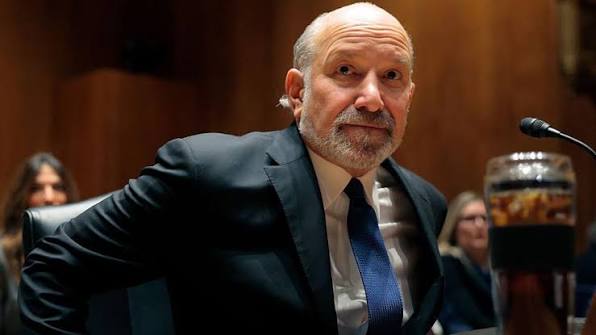
The Netherlands once let highly paid foreign employees pay a maximum 30% income tax rate for up to ten years. When the rules were tightened in 2012, a study tracked what happened: the bottom 90% stayed and paid more, while the top 5% and top 1% moved away.
The accounting is striking. Those who left paid €516.9m less in tax over five years; those who stayed paid €497.3m more. On average the government lost €1.6m a year.
The authors note that against Dutch income tax receipts of almost €67bn in 2019, this radical policy was, in terms of taxable labour income, ultimately cost neutral. I had assumed a tax rise would at least bring in something; this one did not even cover its own change.

Mei, a four-year-old in Shanghai, received a custom gene-editing therapy for a rare genetic mutation; her family paid $860,000. After viral particles were injected into her spinal cord, she developed a fever and kidney failure and died within days.
A year later the team published its preclinical findings in Nature, Chinese media called it a 'world-class breakthrough,' and neither the death nor the money was mentioned. An investigation in Science this July found the consent form did not warn of possible death, and the hospital approved the treatment before toxicology results showed liver and kidney damage in monkeys.
The author asks not about a villain but about why the system keeps letting this happen.
What stings most, I think, is that a family's desperate hope was treated as a market.

Nvidia made $65.3 billion in net profit in a single quarter, a net margin of 56%. That works out to $720 million of net profit every day.
What stopped me was the per-head number: 42,000 employees, each generating $5.39 million of net profit over the past year. Very few listed companies anywhere can match that.
In a financial report this is just a few lines, but as 'half a million dollars of profit per person per month' it shows how concentrated the money in the AI boom has become.

Los Santos in GTA V is a near-exact replica of Los Angeles, so two researchers simply used it as a climate model: they flooded it under IPCC scenarios, and under high emissions the sea rises almost eight feet by 2100 and nearly 27 feet by 2500, drowning close to seven percent of the city.
They compared the results with documented flood-risk models for the real Los Angeles, and the two matched closely.
What I keep thinking about is why they picked a fake city at all: players feel attached to places they have walked through themselves, and watching one drown lands harder than coloured patches on a map.

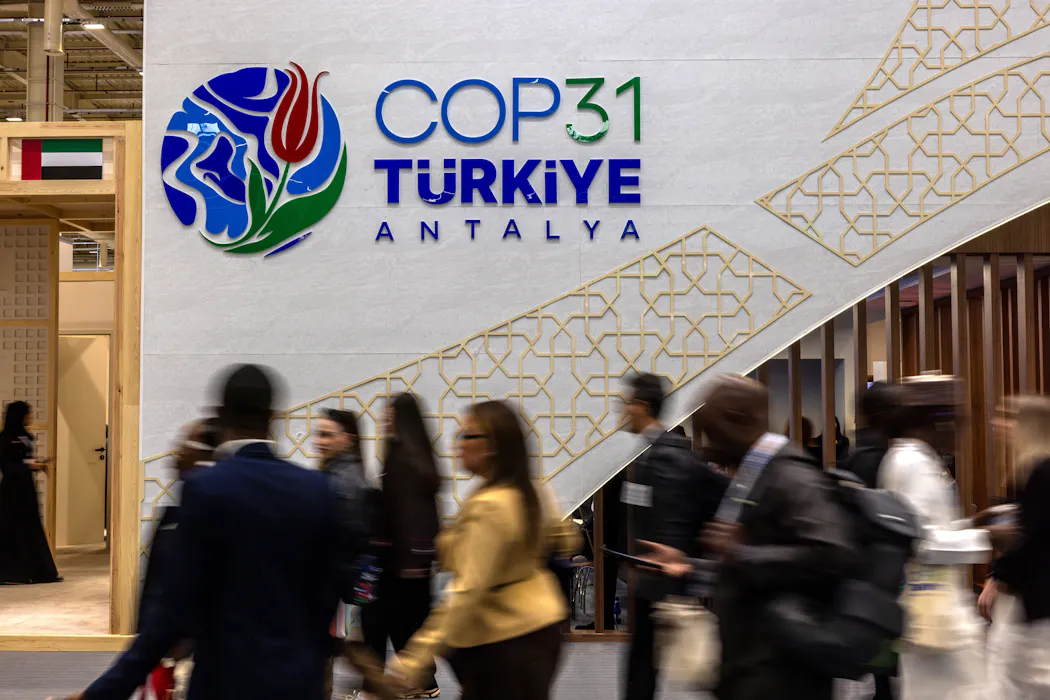
COP31 is meeting in Turkey, and 100 corporations and industry groups tied to fossil fuel interests have sent delegations, including ExxonMobil and TotalEnergies.
Their playbook is what academics call discourses of delay: gas is a transition fuel, carbon capture will save us, and it is already too late to act. More than 1,600 fossil fuel lobbyists attended COP30 last year.
Host country Brazil tried to push back, launching an international partnership against climate disinformation. But this year’s negotiating text still has no clear code of conduct for lobbyists.
Just before the summit opened, UN Secretary-General António Guterres said the dinosaurs did not have a lobby, but fossil fuels do. It sounds like a joke, but it is the structural problem that matters most right now.
“An oil field stays put, while a platform can send the next batch of tasks to workers somewhere else.”
“Our airplanes and engines are built with the software sophistication of a script kiddie.”
“Throwing them out with the bathwater accomplishes nothing.”
“Given that the income tax receipts were almost €67 billion in the Netherlands for 2019, we can conclude that, at least in terms of a change in taxable receipts from labour, this radical policy was in the end cost neutral.”
“Responsible innovation should not entice patients to stake their lives in the name of hope.”
“In other words, the company nets $720 million every day.”
“If this familiar, personally explored virtual landscape changes, players can engage with the effects of climate change on an emotional level.”
“The dinosaurs did not have a lobby. Fossil fuels do.”

