TL;DR
The decline of San Francisco's Market Street wasn't just the pandemic and crime; the city's ban on cars, without creating space for pedestrians, made it worse.
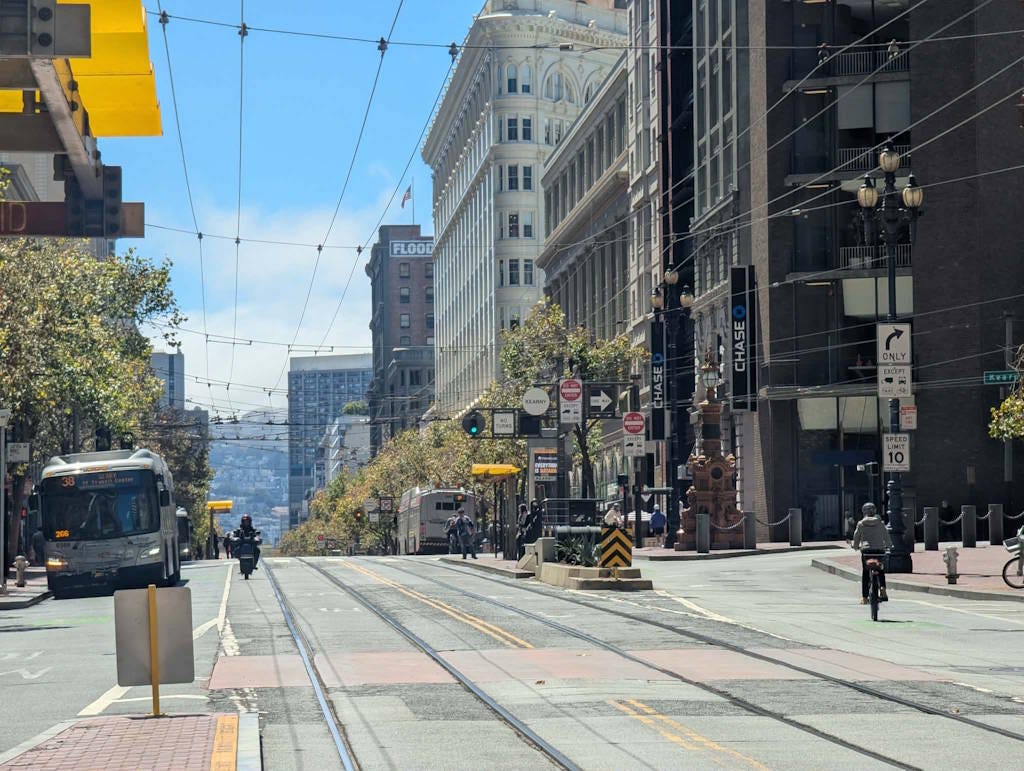
The author remembers his first time on Market Street, when it was the bustling commercial heart of San Francisco. Now, at noon on a Monday, it's nearly empty—just gray asphalt and a few buses.
How the street died
The pandemic and remote work emptied the downtown, and a crime wave shut down stores. People and shops dragged each other down: the emptier it got, the more crime; the more crime, the emptier it got. In 2026, the iconic San Francisco Centre mall closed.
Banning cars didn't bring pedestrians
In 2019, the city banned private cars from Market Street, but buses, trucks, and taxis were still allowed. They expected crowds of walkers, but instead fewer people showed up.
Why? Nobody wants to stroll down a street full of fast-moving buses, and shops and restaurants lost business because customers couldn't park or get dropped off. Bikes didn't boom either, because the planned bike lanes were never built.
Paris, but not really
Paris's limited traffic zone lets residents drive, just bans through-traffic. Market Street banished cars without making the street a destination. The easiest fix: let cars back in and bring back the crowds.
Curated from high-quality sources, with concise summaries and key takeaways.

