TL;DR
Technological stagnation is not due to engineers' lack of effort—rather, society's demand for grand projects is insufficient, as people prefer convenient daily services.
Peter Thiel's famous quip, 'We wanted flying cars, instead we got 140 characters,' is often quoted. But this author, Noah Smith, thinks it's actually backwards.
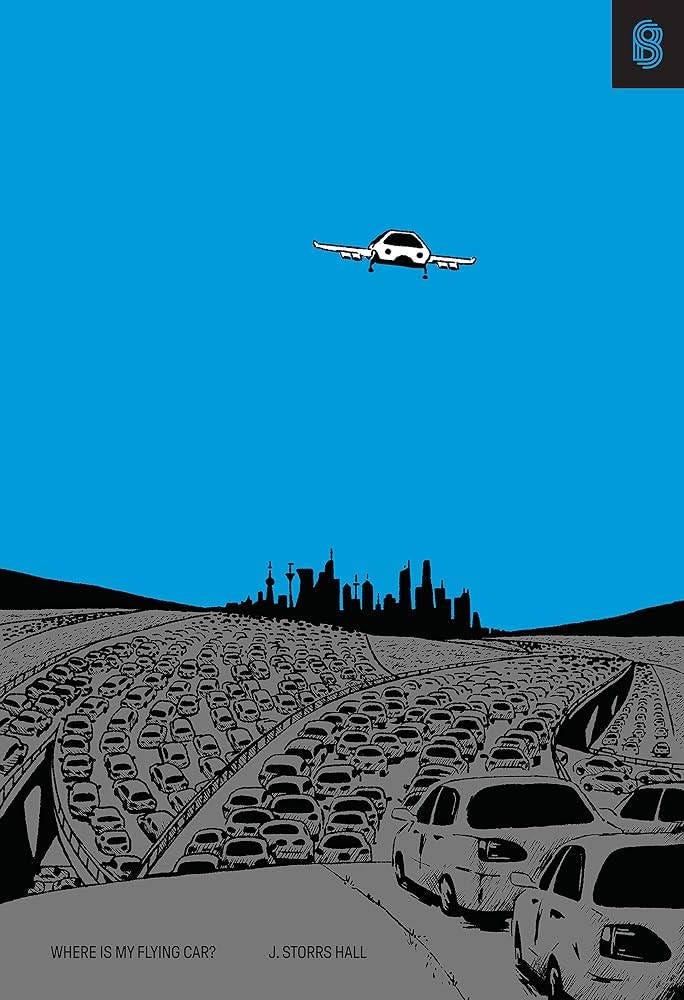
He read a book called 'Where Is My Flying Car?' Its author, J. Storrs Hall, is a prime specimen of 'engineerism'—the belief that anything that can be built, should be built.
The engineering obsession: cold fusion and nuclear power
Hall laments that flying cars, cold fusion, nanotech, and nuclear power should have made the 21st century a sci-fi paradise, but were strangled by regulation, prejudice, and the environmental movement.
But Smith points out that cold fusion was studied by multiple institutions with tens of millions of dollars each, and none managed to replicate the results. Engineers love to say 'if they say it's impossible, then it must be possible,' but most people persecuted by the Church are not Galileo.
Hall also puts his faith in nuclear power and dismisses solar. Yet China is rapidly building solar plants because solar has clearly won the technology race. The engineering fixation on nuclear looks like a grudge against 70s environmentalists.
Demand is the true driver of technology
Back to flying cars: technically, AI autopilot might solve safety, but the real issue is nobody needs them. Short trips have cars, long trips have planes, and in between, high-speed rail does better.
Even if a bunch of new resorts popped up 150-500 miles away, people wouldn't want to drive an hour each way just for dinner. Besides, young people are traveling less—they're happy with phones and streaming. In 2022, young Americans drove half as many miles per day as twenty years earlier.
Smith's conclusion: engineers ask 'Can we build it?' but rarely 'Who wants it?' Technology ultimately follows the everyday needs of ordinary people—parents buying diapers will shape the future more than engineers dreaming of stars.
Curated from high-quality sources, with concise summaries and key takeaways.

