TL;DR
Workers' feelings about AI are determined by their power at work: bosses like AI because it cuts costs and they face no accountability, while frontline workers hate it because it creates more work, anxiety, and stress.
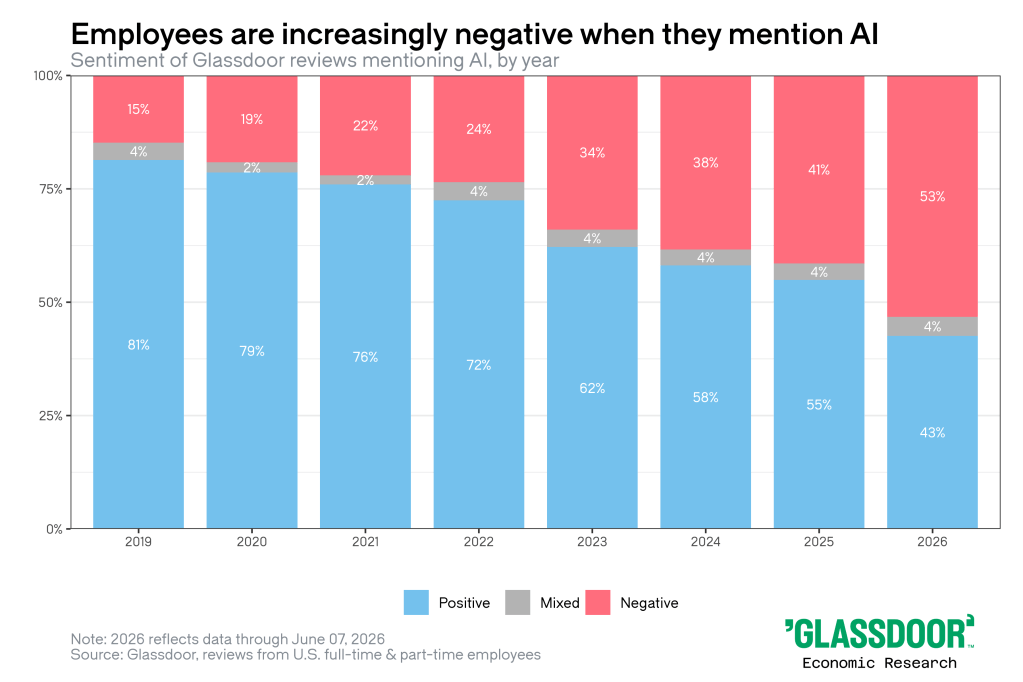
A Glassdoor report shows worker resentment toward AI is growing. In 2026, 53% of reviews mentioning AI were negative, versus 81% positive in 2019. The most positive mentions come from executives; the most negative from accountants, customer service, IT workers, and especially insurance claims adjusters.
Who loves AI, who hates it?
Those who love AI are almost all leaders: director-level and up, sales managers, product managers, recruiters, software engineers. Those who hate it: insurance adjusters with 98% negativity, accountants, customer service, IT workers. Programmers find AI helpful for writing code; IT troubleshooters find it adds to their headaches.
Why the hate? Because they bear the blame
Bosses push AI without fear of mistakes—nobody disciplines them. But frontline workers are forced to use AI and are held accountable when it fails. Claims adjuster Ahmad Jackson said AI misclassified claims and created extra work; he eventually quit. Among reasons for disliking AI, fear of job loss is just 20%; more resent being force-fed AI tools, see the company neglecting core business, or dislike AI surveillance.
More exposure, more resentment
The harder bosses push AI, the more workers dislike it. AI hasn't made work easier; it adds workload, stress, and burnout. This anger connects with protests against data centers and Meta's AI glasses. People are fed up with being forced to use technology that benefits employers and gives them no say.
Curated from high-quality sources, with concise summaries and key takeaways.

