TL;DR
The author argues that the decline of mass literacy is hollowing out the very foundations of modern civilization—rational discourse, democratic politics, and cultural innovation cannot survive without it.
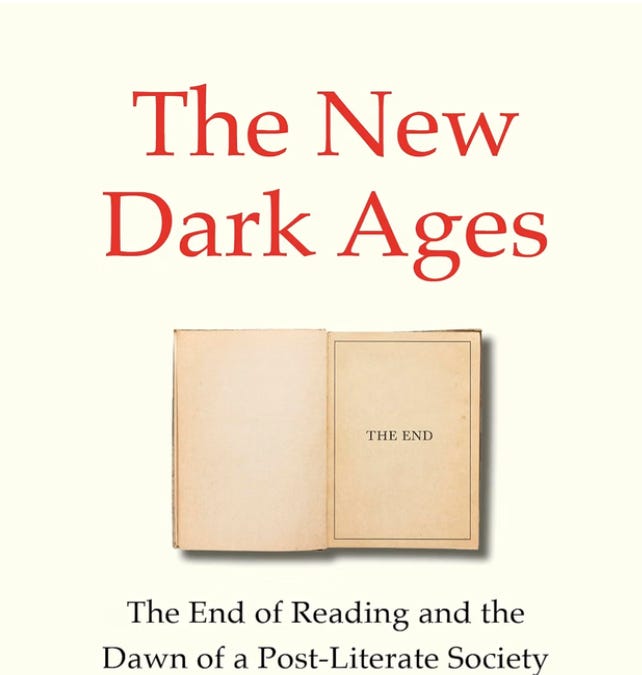
A father stares at his son's phone screen, seeing a parade of crazy videos, while the kid has largely stopped reading. This isn't just one family's anxiety; it's a full-blown social crisis. British writer James Marriott has turned the problem into a new book, 'The New Dark Ages'.
His conclusion is unnerving: the decline of reading is about far more than 'kids not liking books.'
Reading as a universal faith
When Marriott grew up, reading was as natural as scrolling is today. His family even had a tradition: baking a cake every year for Shakespeare's birthday and going on pilgrimages to his birthplace.
That love of the written word is now fading. The data backs it up: reading comprehension is dropping, and fewer people read for pleasure. Phones are the prime suspect.
From TV to phone: how attention got eaten
But Marriott believes the real turning point came earlier—television. Back in the 1980s, scholar Neil Postman had warned that TV hurts rational public debate by favoring triviality and personality. He was ignored then; now he looks like a prophet.
TV turned family rooms toward a screen. Worse, it ate leisure time. Then came the smartphone: the average person checks it 144 times a day, and TikTok is called 'the crack cocaine of the smartphone.'
Politics and culture get dumber
The consequences are not just personal. Debate in parliaments is shallower; leaders like Trump reportedly can't even read a one-page memo. Cultural innovation has dried up—even pop songs are getting simpler. Meanwhile, the elites have abandoned elite culture: college graduates today read less than many workers did in the mid-20th century.
When the powerful stop reading, how far can the ship of civilization sail?
Curated from high-quality sources, with concise summaries and key takeaways.

