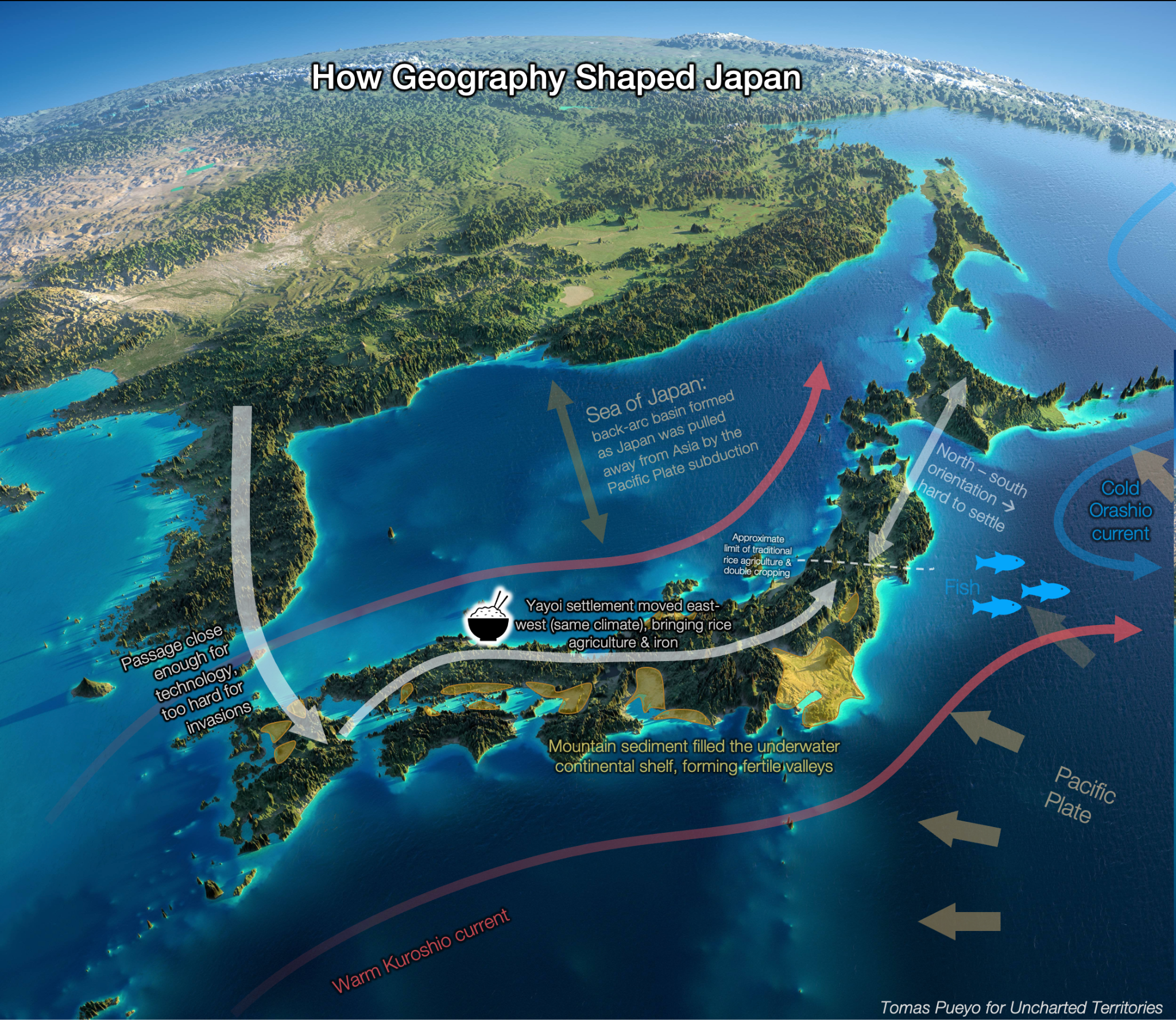
Japan is crowded because rice paddies and cold-meets-warm currents feed a lot of people; Tokyo became the world's biggest city because it sits on the Kanto Plain, the country's largest flatland.
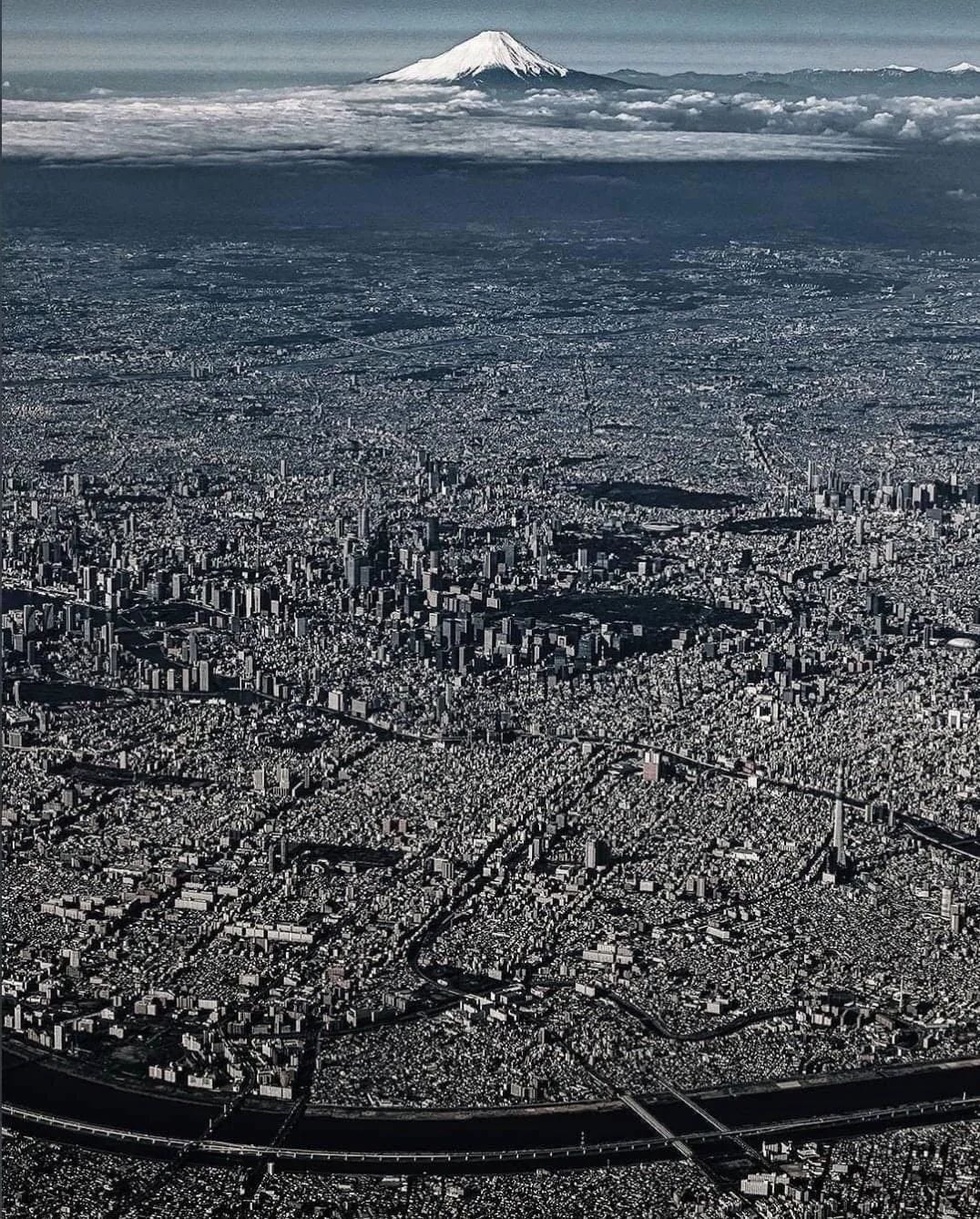
Tokyo holds about 37 million people, the most of any city on Earth, and walking across it takes five days.
It happens to sit where earthquakes, tsunamis, typhoons and volcanoes all pile up. That is not bad luck. It is why the city grew.
More food, more people
Southern Japan gets two harvests a year, rice in summer and wheat or barley in spring, so a single square kilometre feeds a lot of mouths.
Off the northeast coast, warm and cold currents meet and the seafood is abundant. The islands were also isolated enough to escape wave after wave of war and disease.
So every flat patch in Japan is paved over and every hill is green, with people packed into whatever land will hold them.
Tokyo won by spreading out
Oddly, Tokyo's people per square kilometre is close to Nagoya's or Osaka's. Density is not its edge.
Its edge is area: roughly 15,000 square kilometres of high-density land, which is why crossing it takes five days.
And it can spread because it stands on the Kanto Plain, Japan's largest, which historically held somewhere between a tenth and a fifth of the country's farmland.
Where the food was richest, the people were densest, and in the end that became the capital. As for why that plain is there at all, the author says nobody has answered yet.
Why it matters
How large a city can grow is often set not by policy or housing prices but by how many people the ground beneath it can feed. Any argument about where people should live still runs into plains, water and calories first.


Curated from high-quality sources, with concise summaries and key takeaways.

